
Roof Repairs
Why Is My Roof Still Leaking After a Repair?
You've arranged a roof repair, the damaged area has been fixed, and everything seems back to normal. Then the next heavy rainfall arrives, and suddenly, there's another damp patch spreading across your ceiling. Finding your roof leaking after repair can be frustrating, especially when you expected the original work to solve the problem.
By Aztech Roofing ·
Quick guide
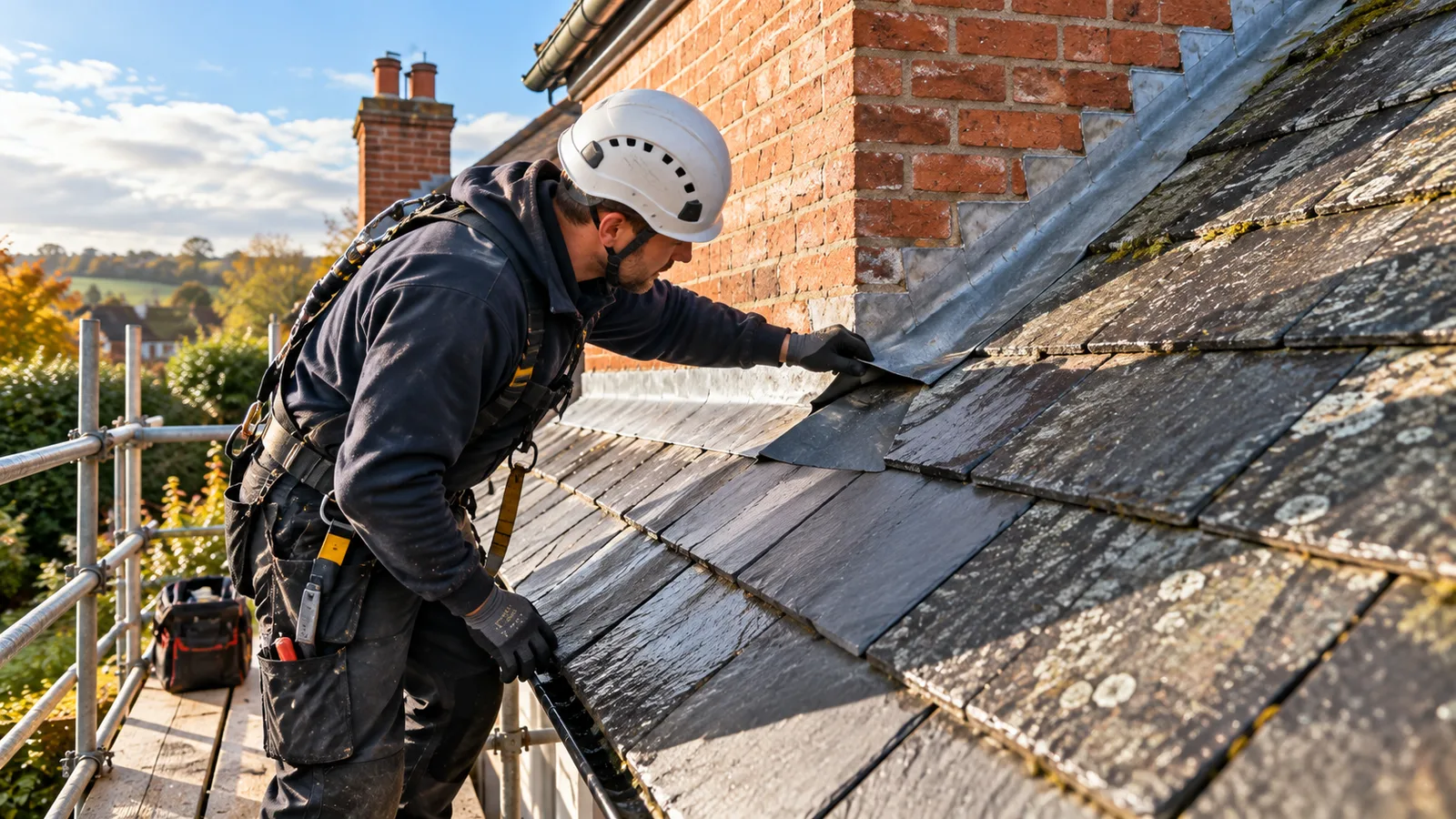
If you notice your roof leaking after repair, it does not automatically mean the previous work was unsuccessful. The original repair may have addressed one source of water ingress while another defect remains, or moisture already trapped within the roof structure may still be drying out.
- The original leak source may have been misidentified. Water can travel along roofing materials before appearing inside the property.
- Multiple roofing defects may exist. Damaged tiles, flashing, valleys and roof junctions can allow water to enter from different locations.
- Flashing problems are easily overlooked. Defective seals or leadwork around chimneys and roof intersections can contribute to persistent leaks.
- Existing moisture may remain after repairs. Damp insulation, plaster or timber can take time to dry, even after water ingress has stopped.
- Weather conditions can reveal hidden problems. Strong winds and prolonged rainfall may expose defects that remain unnoticed during lighter showers.
- Professional inspections help establish the cause. A detailed assessment can determine whether additional repairs are required.
The most important step is to avoid assuming that every recurring stain comes from the same defect. Identifying whether water is actively entering the property is essential before deciding on further work.
Introduction
Unfortunately, roof leaks are not always as straightforward as replacing a broken tile or sealing a visible gap. Water can travel through different parts of a roofing system before appearing inside your home, making the actual source difficult to identify without a thorough assessment.
In some cases, the original repair successfully addressed one defect, but another problem remains elsewhere on the roof. In others, damaged flashing, deteriorated underlay or hidden moisture may explain why signs of leakage continue.
For homeowners in Worcester and the surrounding West Midlands, understanding the reasons behind recurring roof leaks is essential for preventing unnecessary repairs and further property damage.
At Aztech Roofing, we recognise the importance of identifying the underlying cause of water ingress rather than simply treating the most visible symptoms. This guide explains why a roof may continue leaking after repairs, what warning signs to watch for and how to determine the next appropriate steps.
Why Is My Roof Still Leaking After a Repair?
A roof is made up of several components working together to protect the building from rainfall and changing weather conditions.
Tiles or slates form the outer covering, while underlay, flashings, valleys, fixings and roof junctions help manage water and maintain weather resistance.
If one component fails, water may enter the roofing system and travel along concealed surfaces before becoming visible indoors.
This can make diagnosing a leak more complicated than simply identifying the nearest damaged tile.
When homeowners discover their roof leaking after repair, the explanation often involves one or more underlying issues that were not fully resolved during the original work.
1. The Original Source of the Leak Was Not Identified Correctly
One of the most common explanations for a roof leaking after repair is that the visible damage was not the actual source of water ingress.
For example, a homeowner may notice a ceiling stain directly beneath several cracked roof tiles. Replacing those tiles seems like the obvious solution.
However, the water may actually be entering through defective flashing farther up the roof and travelling along the underlay or timber before reaching the ceiling.
Why Water Can Appear Far from the Entry Point
Rainwater does not always move vertically through a roofing system.
It can follow the slope of underlay, travel along battens or move through gaps between structural components.
The eventual dripping point may therefore be several feet away from the original opening.
This is particularly relevant around:
- Chimneys and roof penetrations
- Roof valleys and junctions
- Dormer windows
- Roof windows and surrounding flashings
- Damaged or displaced tiles
- Areas with deteriorated roofing underlay
A repair that focuses only on the visible damage may leave the actual entry point untouched.
Professional Roof Repairs should therefore begin with an appropriate assessment of the affected area, particularly when leaks have occurred repeatedly.
Identifying the source accurately helps reduce unnecessary work and improves the likelihood of achieving a lasting repair.
2. Damaged Roof Flashing Was Overlooked
Roof flashing is designed to help prevent water entering vulnerable junctions where roofing materials meet another surface.
These areas include chimneys, walls, roof windows and certain roof intersections.
Depending on the roof design, flashing may be made from lead or other suitable weather-resistant materials.
When flashing becomes loose, damaged, incorrectly installed or deteriorated, water may enter through gaps that are difficult to identify from ground level.
How Flashing Problems Cause Recurring Leaks
Imagine that several broken tiles near a chimney have been replaced.
The surrounding roof covering may now be sound, but if the chimney flashing remains defective, rainwater can still enter the same general area.
This can create the impression that the tile repair failed, even though the leak has a separate cause.
Common flashing-related problems include:
- Loose or displaced flashing sections
- Cracks or splits in flashing materials
- Defective junctions between flashing and masonry
- Poorly formed overlaps
- Deteriorated surrounding mortar or pointing
- Previous repairs that did not address the underlying defect
Where flashing is responsible, suitable Lead Work & Flashing repairs may be necessary to restore weather protection.
The correct solution depends on the flashing material, roof design and extent of deterioration.
3. More Than One Roof Leak May Be Present
Another reason for a roof leaking after repair is that the property has multiple water entry points.
This is particularly possible on older roofs or properties that have experienced repeated storm damage.
A roofer may successfully repair one damaged section while another defect continues allowing moisture into the roof space.
Common Areas Where Multiple Leaks Develop
Several roofing components can deteriorate independently.
For example:
- Cracked or missing roof tiles may expose the underlay.
- Damaged flashing may allow water through roof junctions.
- Blocked valleys may interfere with normal rainwater drainage.
- Deteriorated underlay may provide reduced secondary protection.
- Defective roof window junctions may allow water ingress.
- Damaged ridge or hip details may create additional vulnerabilities.
Because these problems can produce similar internal symptoms, distinguishing between them is important.
Our guide to the Common Causes of Roof Leaks explores the different defects that can allow rainwater to enter a property.
A broader inspection may be appropriate when a roof has developed several leaks over time, particularly if previous repairs have addressed only isolated areas.
4. The Roof Underlay May Be Damaged or Deteriorated
Roofing underlay sits beneath the outer roof covering and provides an additional layer of protection against moisture.
On many pitched roofs, it helps redirect water that passes beneath tiles or slates towards the eaves.
However, underlay can deteriorate, tear or become damaged through ageing, movement, previous roofing work or prolonged exposure to moisture.
Why Underlay Matters After Tile Repairs
Suppose cracked tiles have been replaced successfully.
If the underlay beneath them is already torn or deteriorated, water entering through another vulnerable point may still reach the roof space.
Similarly, damage around laps, penetrations or junctions may affect how water is redirected.
The condition of the underlay is therefore an important consideration when investigating persistent leaks.
Not every roof requires extensive underlay replacement, and some older roofing systems use different construction methods.
The appropriate repair depends on the existing roof design and the location of the defect.
5. Chimney Problems May Be Responsible for the Continuing Leak
Chimneys are among the more complex areas of a pitched roof because they interrupt the normal flow of rainwater.
They contain several junctions where roofing materials, flashing and masonry meet.
If any of these components deteriorate, moisture may enter the surrounding roof structure.
Common Chimney-Related Leak Sources
Potential problems include:
- Damaged or displaced chimney flashing
- Deteriorated mortar joints
- Cracked chimney masonry
- Defective chimney crowns or flaunching
- Damaged junctions between the chimney and roof covering
- Problems with chimney pots, caps or other exposed components
A leak near a chimney does not automatically mean the flashing is defective.
Water may enter through the masonry itself or another exposed component.
Our guide on Chimney Leak Causes explains how different chimney defects can contribute to water ingress.
Understanding the distinction is important because replacing nearby roof tiles will not necessarily resolve a problem originating from damaged chimney masonry.
6. Previous Flashing Repairs May Not Have Addressed the Full Problem
Sometimes, a roof continues leaking because a previous repair addressed only part of a defective flashing system.
For example, sealing one visible gap may reduce water ingress temporarily, but additional weaknesses may remain along the same junction.
Flashing systems rely on suitable materials, correctly formed overlaps and appropriate integration with the surrounding roof covering.
A localised repair may be sufficient when damage is limited, but more extensive deterioration can require additional work.
Signs That Flashing Needs Further Investigation
Homeowners may notice:
- Damp patches appearing near chimneys or adjoining walls
- Water stains becoming worse during wind-driven rainfall
- Repeated leakage after temporary sealing work
- Visible lifting or displacement of flashing materials
- Moisture entering around roof windows or other penetrations
Our guide to Roof Flashing Repairs explains how flashing defects can develop and why the appropriate repair depends on the condition of the surrounding materials.
When a roof remains vulnerable after previous work, investigating the complete junction can be more effective than repeatedly treating individual gaps.
7. Trapped Moisture May Still Be Drying Out After the Repair
Not every damp patch appearing after a repair means fresh rainwater is entering the property.
If the roof leaked for an extended period before repairs were completed, moisture may remain within plaster, insulation, timber or other building materials.
These materials can take time to dry, depending on the amount of moisture present, ventilation, temperature and surrounding conditions.
How to Distinguish Residual Moisture from a New Leak
Residual moisture may gradually reduce as the affected materials dry.
However, warning signs of continuing water ingress include:
- Fresh dripping during rainfall
- Damp patches expanding after heavy rain
- New stains appearing in previously unaffected areas
- Moisture levels increasing rather than decreasing
- Repeated wetting of insulation or roof timbers
Visual observations alone may not establish whether a leak is active.
Where uncertainty remains, professional moisture assessment and roofing investigation may be necessary.
It is also important to remember that condensation can sometimes produce symptoms similar to roof leakage.
Correct diagnosis helps prevent unnecessary roofing work.
8. Heavy Rain and Strong Winds May Expose Another Weakness
A roof may appear watertight during ordinary rainfall but begin leaking again during more demanding weather conditions.
Wind-driven rain can reach gaps and junctions that remain relatively dry during calm weather.
Prolonged rainfall can also increase the amount of water moving across valleys, roof coverings and drainage areas.
Why Weather Conditions Affect Roof Leaks
Several factors can influence water ingress:
Wind direction: Rain may be driven beneath vulnerable overlaps or against exposed roof junctions.
Rainfall duration: Persistent rain increases the time that roofing defects are exposed to moisture.
Roof pitch: Lower roof pitches may require particular attention to tile suitability, overlap and installation details.
Drainage conditions: Blocked gutters or valleys may interfere with the intended movement of rainwater.
Existing deterioration: Small defects can become more noticeable when roofing materials experience demanding weather conditions.
If a roof leaks only during storms, that pattern can provide useful information during diagnosis.
Recording the weather conditions when leakage occurs may help a roofer identify the most likely entry points.
What Should You Do If Your Roof Is Still Leaking After a Repair?
Finding your roof leaking after repair can be discouraging, but a structured response can help identify the problem without creating additional risks.
Step 1: Check Whether Water Is Actively Entering
Look for fresh dripping, expanding stains or new damp patches.
Avoid entering unsafe roof spaces or approaching electrical equipment affected by moisture.
If water is entering near electrical installations, seek appropriate professional assistance.
Step 2: Protect the Affected Area
Move furniture and belongings away from the leak where safe.
Use suitable containers to collect dripping water if there are no electrical or structural hazards.
Avoid disturbing sagging ceilings or saturated materials that may be unstable.
Step 3: Document the Symptoms
Take photographs of visible stains and water damage.
Record when the leak appears, how long it lasts and whether it is associated with heavy rain or strong winds.
This information may help establish whether the original problem has returned or a separate defect is present.
Step 4: Contact the Original Roofing Contractor
If the repair was completed recently, contact the contractor who carried out the work.
Explain the symptoms and provide photographs where available.
Ask whether the affected area can be reassessed and whether any applicable workmanship guarantee covers the issue.
A recurring leak does not automatically prove that the original repair was defective, so further investigation is important.
Step 5: Arrange a More Detailed Inspection if Necessary
If the source remains uncertain, a broader roofing assessment may be needed.
Our Free Roof Inspections provide an opportunity to investigate visible roofing concerns and understand whether additional repairs may be appropriate.
An inspection can help distinguish between recurring water ingress, separate defects and moisture remaining from an earlier leak.
How Can You Prevent Roof Leaks from Returning?
Although no roofing repair can guarantee that an entire roof will never develop another defect, preventative maintenance can reduce the likelihood of avoidable problems.
Address the Underlying Cause
The most important step is to identify why water entered the roof in the first place.
Replacing a damaged tile may be sufficient for an isolated defect, but recurring leaks may require investigation of flashing, underlay, valleys or surrounding components.
Maintain Roof Drainage
Gutters and roof valleys should be kept clear through appropriate, safe maintenance.
Blocked drainage areas can interfere with rainwater movement and contribute to moisture-related problems.
Monitor Previously Affected Areas
After repairs, keep an eye on ceilings, loft spaces and previously damp areas.
New staining or fresh dripping should be investigated rather than assumed to be leftover moisture.
Arrange Inspections After Significant Storms
Strong winds can displace tiles, loosen flashing and expose existing weaknesses.
If a property has experienced severe weather or visible roofing damage, a professional assessment may help identify problems before further rainfall occurs.
Keep Repair Records
Retain invoices, photographs, inspection findings and details of completed work.
These records can help future roofing professionals understand previous defects and identify patterns of recurring damage.
A well-documented repair history can also be useful when discussing warranties or insurance matters.
Key Takeaways
Discovering your roof leaking after repair does not necessarily mean the original work was unsuccessful. Roofing systems contain several interconnected components, and water may enter through a different defect or remain trapped in building materials after the initial problem has been resolved.
The most effective approach is to establish whether fresh water ingress is occurring and identify the underlying cause before arranging further work.
Here are the most important points:
- A roof leaking after repair may have more than one underlying cause. Replacing damaged tiles will not resolve unrelated flashing or chimney defects.
- Water can travel before becoming visible indoors. The location of a ceiling stain may not reveal the actual entry point.
- Damaged flashing and roof junctions are important areas to investigate. These components help maintain weather protection around vulnerable sections.
- Residual moisture can remain after successful repairs. Fresh dripping or expanding damp patches, however, require further investigation.
- Severe weather can expose additional defects. Wind-driven rain may reach weaknesses that remain unnoticed during lighter rainfall.
- A professional assessment can prevent unnecessary repeat repairs. Accurate diagnosis helps determine whether targeted or more extensive work is appropriate.
- Ongoing maintenance supports long-term roof performance. Monitoring previous leaks and addressing new defects early can reduce further damage.
Ultimately, recurring roof leaks should be treated as a sign that further investigation may be needed, not as a reason to immediately replace the entire roof.
Understanding how roofing components work together and taking prompt action when fresh water ingress appears can help protect your home and avoid unnecessary repair costs.
FAQs
Is it normal for a roof to leak again after being repaired?
A roof should not continue allowing water through a defect that has been successfully repaired, but a separate problem may still cause leakage. Sometimes, moisture remaining in plaster or insulation can also create the appearance of a continuing leak. Fresh dripping or expanding damp patches should be investigated to establish whether water is still entering.
Can damaged flashing cause a roof to leak after tiles have been replaced?
Yes, damaged flashing can allow rainwater to enter even when nearby roof tiles have been replaced correctly. Flashing protects vulnerable junctions around chimneys, walls and other roof penetrations. If the flashing remains defective, additional repairs may be needed to restore weather resistance.
How long does it take for a ceiling to dry after a roof leak is repaired?
Drying time varies depending on the amount of trapped moisture, ventilation, temperature and materials affected. Minor dampness may improve relatively quickly, while saturated plaster, insulation or timber can take considerably longer and may require professional assessment. If staining expands or fresh water appears during rainfall, the possibility of continuing leakage should be investigated.
Should I contact the original roofer if my roof is still leaking?
Yes, contacting the original roofing contractor is generally a sensible first step when leakage appears to continue after recent work. Provide photographs, explain when the leak occurs and ask whether the repaired area can be reassessed. The contractor can help determine whether the issue relates to the original repair or another roofing defect.
Does a recurring roof leak mean I need a complete roof replacement?
No, a recurring roof leak does not automatically mean the entire roof needs replacing. Many leaks result from localised defects involving tiles, flashing, valleys or other components that may be repairable. A professional inspection can help establish whether targeted repairs are sufficient or whether wider deterioration makes replacement worth considering.
Related reading
Explore local roofing help
A guide cannot diagnose a specific roof. Explore our services and local coverage, or arrange a free inspection.
Need advice on your roof?
Start with a free inspection and a clear explanation of the options.