
Roof Repairs
Why Do Ridge Tiles Come Loose After Strong Winds?
You wake up after a night of howling winds, look outside, and spot a roof tile lying in the garden. Not exactly the morning surprise you were hoping for.
By Aztech Roofing ·
Quick guide
Why do ridge tiles come loose after strong winds? Ridge tiles commonly become loose when powerful gusts act on weakened mortar, damaged fixings, or poorly installed ridge systems.
- Deteriorating mortar: Ageing mortar cracks and loses its grip on ridge tiles.
- Strong wind uplift: Wind pressure places additional stress on exposed roof components.
- Poor installation: Incorrect bedding or inadequate fixing makes ridge tiles vulnerable.
- Temperature changes: Expansion and contraction gradually weaken mortar joints.
- Ageing roof materials: Older roofing components become more susceptible to movement.
- Damaged mechanical fixings: Loose or corroded fixings reduce the security of ridge systems.
- Previous storm damage: Small defects left unrepaired can worsen during subsequent storms.
What should you do? Keep clear of damaged areas, check for visible problems from ground level, and arrange a professional inspection.
Introduction
If that tile came from the very top of your roof, it could be a ridge tile. And if you're wondering why do ridge tiles come loose, the answer usually involves a combination of wind pressure, ageing mortar, deteriorating fixings, or installation problems.
Ridge tiles sit along the highest point of a pitched roof, covering the joint where two roof slopes meet. Their exposed position makes them particularly vulnerable during severe weather.
For homeowners in Worcester and the surrounding areas, Aztech Roofing provides professional roofing services to help identify storm damage and assess suitable repairs.
The important thing to understand is that strong winds don't always create the original problem. Sometimes, they simply expose weaknesses that have been developing for years.
Let's explore why ridge tiles become loose, what warning signs to look for, and how to prevent a small roofing problem from becoming a much bigger headache.
1. Cracked or Deteriorating Ridge Mortar
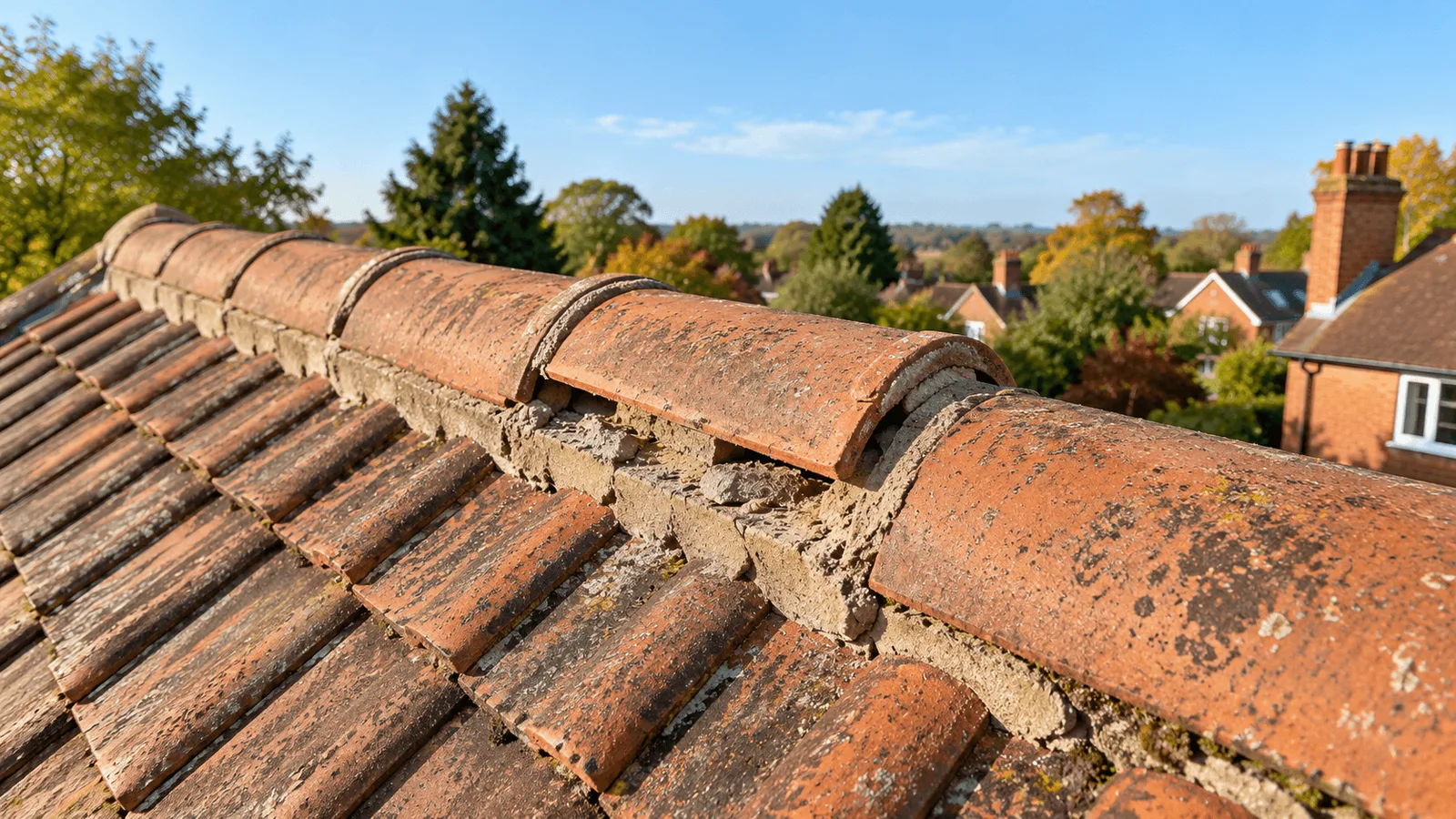
One of the most common reasons ridge tiles become loose is deteriorating mortar.
Traditional ridge tiles are often bedded onto a cement-based mortar that helps secure them along the roof's highest point.
Over time, exposure to rain, frost, sunshine, and movement can cause this mortar to crack or crumble.
Once the mortar loses its strength, ridge tiles may begin to shift.
Common warning signs include:
- Cracks along ridge mortar joints.
- Small pieces of mortar collecting in gutters.
- Visible gaps beneath ridge tiles.
- Ridge tiles appearing uneven or displaced.
How to fix it: A roofer may need to remove loose mortar, inspect the affected tiles, and securely rebed or replace the ridge components using an appropriate fixing method.
Simply applying mortar over deteriorated material may not provide a reliable long-term repair.
2. Strong Wind Pressure and Uplift
Ridge tiles occupy one of the most exposed positions on a roof.
During strong winds, air moving across and around the roof creates changing pressure conditions.
These forces can produce uplift, placing additional strain on ridge tiles and their fixings.
If the tiles are already poorly secured, a powerful gust may be enough to dislodge them.
The Met Office provides seasonal weather advice to help UK homeowners prepare for storms and other challenging conditions.
How to fix it: A professional should assess whether the damage is limited to individual ridge tiles or affects a longer section of the ridge.
If a storm has displaced several components, the surrounding roof should also be checked for hidden damage.
3. Poor Ridge Tile Installation
Sometimes, the answer to why do ridge tiles come loose is straightforward: they weren't secured correctly in the first place.
Installation problems may include:
- Inadequate mortar bedding.
- Incorrectly positioned ridge tiles.
- Insufficient mechanical fixing.
- Poorly installed dry ridge components.
- Unsuitable materials for the roof design.
A ridge system must be installed according to the applicable roofing standards and the manufacturer's instructions.
In the UK, BS 5534 provides a recognised code of practice for slating and tiling, including requirements relevant to securing roof coverings against wind forces.
How to fix it: A qualified roofer should identify the installation defect and recommend a suitable repair rather than simply replacing the displaced tile.
For localised ridge problems and related roof damage, professional Roof Repairs may restore the roof's weather resistance without requiring a complete replacement.
4. Expansion, Contraction, and Frost Damage
British weather doesn't exactly give roofing materials an easy life.
During warmer periods, roof components expand slightly. As temperatures fall, they contract.
Repeated temperature changes can contribute to gradual movement and stress within traditional mortar joints.
Water entering small cracks may also freeze during cold weather, expanding and potentially making those cracks worse.
Over time, this deterioration can weaken the connection between ridge tiles and the roof.
How to fix it: Damaged mortar and loose components should be assessed and repaired using a suitable ridge fixing system.
Addressing small defects early can help prevent further movement during the next period of strong winds.
5. Ageing Roof Components
Even a well-installed roof needs maintenance eventually.
As a roof ages, mortar, fixings, underlay, battens, and other components can deteriorate at different rates.
The ridge tiles themselves may still be in reasonable condition while the materials securing them have weakened.
This is why an older roof can experience ridge tile movement without every tile needing replacement.
Signs of wider ageing may include:
- Repeated ridge tile movement.
- Multiple areas of cracked mortar.
- Slipped tiles elsewhere on the roof.
- Recurring leaks after rainfall.
- Visible deterioration around roof junctions.
How to fix it: A roofer should inspect the overall ridge condition and determine whether targeted repairs or a more extensive ridge refurbishment would be appropriate.
6. Loose or Damaged Mechanical Fixings
Not all ridge tiles rely solely on mortar.
Many modern roofs use dry ridge systems, which secure ridge tiles with mechanical fixings rather than traditional mortar bedding.
These systems are designed to provide secure attachment and, where specified, ventilation.
However, they still need correct installation and maintenance.
Problems can develop if components become loose, damaged, corroded, or incorrectly fitted.
How to fix it: A professional may need to replace damaged clips, brackets, screws, or other system components.
Repairs should follow the relevant manufacturer's specifications to maintain the integrity of the ridge system.
7. Previous Storm Damage That Was Never Repaired
A ridge tile doesn't always become completely detached during the first storm.
An earlier period of strong winds may have weakened mortar, shifted a tile, or damaged a fixing.
The roof might appear normal from the ground, even though some components are no longer secure.
Then another storm arrives.
That existing weakness can develop into a more serious problem, resulting in displaced tiles or water entering the roof.
How to fix it: Arrange an inspection after significant storms, particularly if you notice debris, new leaks, or changes to the roofline.
For practical advice on responding to severe weather, read What to Do After Storm Damage.
What Happens If You Ignore Loose Ridge Tiles?
A loose ridge tile might look like a minor problem, but leaving it unattended can create several risks.
Water Can Enter the Roof
Ridge tiles protect a vulnerable junction between roof slopes.
If they become displaced, wind-driven rain may reach the materials underneath.
Depending on the roof's construction and condition, moisture can enter the loft and damage insulation, timber, or ceilings.
For more information about how water enters roofing systems, explore Common Causes of Roof Leaks.
Falling Tiles Can Cause Injury or Damage
A dislodged ridge tile can fall from a considerable height.
Because ridge tiles are relatively heavy, falling pieces can damage vehicles, conservatories, garden structures, or anything beneath them.
Never walk beneath visibly loose roof components during strong winds.
Nearby Tiles May Become Vulnerable
When one ridge tile becomes displaced, adjacent tiles and fixings may also be affected.
This doesn't mean the entire ridge will necessarily fail, but it makes a proper inspection important.
Can Loose Ridge Tiles Be Repaired Without Replacing the Whole Roof?
Yes. In many cases, loose ridge tiles can be repaired without replacing the entire roof.
The correct solution depends on the extent of the damage and the condition of the existing ridge system.
For example, if two ridge tiles become loose after a storm but the remaining roof is sound, a targeted repair may be sufficient.
However, if mortar is crumbling along the entire ridge, repairing only the visibly displaced tiles may leave other weak points unresolved.
A professional inspection helps distinguish between these situations.
What Should You Do After Ridge Tiles Come Loose?
If you suspect ridge tile damage after strong winds, follow these steps.
Step 1: Keep Away From the Affected Area
Avoid standing beneath loose tiles or walking near fallen roofing debris.
Keep children and pets away until the area is safe.
Step 2: Check for Damage From Ground Level
Look for missing ridge tiles, uneven rooflines, or fallen mortar.
Do not climb onto the roof or use a ladder during windy or wet conditions.
Step 3: Look for Internal Water Damage
If it's safe to access your loft, check for new damp patches, dripping water, or wet insulation.
Avoid touching electrical installations near any water ingress.
Step 4: Document Visible Damage
Take photographs from a safe position.
These may be useful when discussing the damage with a roofer or your insurer.
Step 5: Arrange Professional Repairs
If tiles are loose, missing, or at risk of falling, prompt attention is important.
Professional Urgent Roof Repairs can help assess damage and determine what work is needed to make the roof safe.
If other tiles have moved during the storm, the guide to Slipped Roof Tiles explains additional warning signs and appropriate next steps.
How to Prevent Ridge Tiles From Coming Loose
While you can't control the weather, you can reduce the likelihood of existing roof defects developing into serious problems.
Consider these practical measures:
- Arrange periodic roof inspections. Check the condition of ridge mortar, tiles, and fixings.
- Repair cracked mortar promptly. Small defects can worsen through weather exposure.
- Check the roof after storms. Look for displaced tiles and fallen debris from a safe location.
- Consider appropriate mechanical fixing systems. Where suitable, properly installed dry ridge systems can offer a secure alternative to traditional mortar-bedded ridges.
- Use experienced roofing professionals. Correct installation and compatible components are essential.
The National Federation of Roofing Contractors provides information about roofing industry standards and professional roofing practices.
The goal isn't to make your roof immune to every storm. It's to keep its components properly secured and identify deterioration before severe weather exposes it.
Key Takeaways
So, why do ridge tiles come loose after strong winds?
The most common reasons include deteriorating mortar, wind uplift, ageing materials, damaged mechanical fixings, and poor installation.
Here's what homeowners should remember:
- Strong winds often expose existing weaknesses rather than causing every problem from scratch.
- Cracked mortar is a common warning sign that ridge tiles may be losing their secure attachment.
- Loose ridge tiles can create safety hazards and allow rainwater into vulnerable roof areas.
- Localised repairs are often possible without replacing the entire roof.
- Professional inspections help identify hidden damage and prevent repeated problems.
If you've noticed displaced ridge tiles, fallen mortar, or storm-related roofing damage in Worcester or the surrounding areas, don't wait for the next storm to test your roof again.
Explore Free Roof Inspections to understand the condition of your roof and the repair options available.
Strong winds might be unavoidable, but leaving loose ridge tiles unattended doesn't have to be.
FAQs
Why do ridge tiles come loose even when the rest of the roof looks fine?
Ridge tiles are more exposed to wind pressure because they sit along the highest point of the roof. Their mortar or fixings may deteriorate independently of the surrounding roof tiles. As a result, ridge tiles can become loose even when the rest of the roof appears to be in good condition.
Can loose ridge tiles be repaired without replacing the entire roof?
Yes, individual ridge tiles or damaged ridge sections can often be repaired without replacing the whole roof. The repair method depends on whether the problem involves mortar, mechanical fixings, or damaged tiles. A professional inspection will determine whether localised repairs are sufficient.
Are loose ridge tiles dangerous?
Yes, loose ridge tiles can fall during strong winds and potentially injure people or damage property. Missing or displaced tiles may also expose vulnerable areas of the roof to rainwater. Keep clear of the affected area and arrange professional attention promptly.
Is a dry ridge system better than traditional mortar?
A properly installed dry ridge system uses mechanical fixings to secure ridge tiles without relying on mortar bedding. This can reduce maintenance associated with cracked or deteriorating mortar, although the system still requires correct installation and suitable components. The best option depends on the roof's design, condition, and applicable installation requirements.
How much does it cost to repair loose ridge tiles in the UK?
Repair costs depend on the number of affected tiles, the ridge system, roof accessibility, and the extent of any underlying damage. A small localised repair will generally cost less than refurbishing an entire ridge or replacing damaged supporting components. An inspection and itemised quotation are the most reliable ways to establish the likely cost.
Related reading
Explore local roofing help
A guide cannot diagnose a specific roof. Explore our services and local coverage, or arrange a free inspection.
Need advice on your roof?
Start with a free inspection and a clear explanation of the options.