
Roof Repairs
Can a Slate Roof Be Repaired Without Replacing the Whole Roof?
A cracked slate, a suspicious damp patch, or a few missing roof tiles can make any homeowner wonder whether an expensive roof replacement is around the corner.
By Aztech Roofing ·
Quick guide
Can a slate roof be repaired? Absolutely, provided the damage is localised and the underlying roof structure remains sound.
- Broken or missing slates: Individual slates can often be replaced.
- Loose slates: Failed fixings may be repaired using appropriate slate repair methods.
- Minor roof leaks: Damaged flashing or isolated defects may be repairable.
- Widespread deterioration: Extensive slate failure may make replacement more economical.
- Older roofs: Age alone doesn't mean a slate roof needs replacing.
- Professional inspection: A roofer can assess the slates, fixings, underlay, and roof structure before recommending work.
Bottom line: A few damaged slates don't necessarily mean a new roof. The overall condition of the roofing system determines whether repair is a sensible long-term solution.
Introduction
But can a slate roof be repaired without stripping everything off and starting again?
Yes! In many cases, a slate roof can be repaired without replacing the entire roof. Individual damaged slates, loose fixings, and certain flashing problems can often be addressed through targeted repairs.
The real question is whether the surrounding roof is still in good enough condition to make those repairs worthwhile.
For homeowners in Worcester and the surrounding areas, Aztech Roofing helps assess roofing damage and identify practical solutions based on the roof's condition.
Before assuming your slate roof needs replacing, let's explore what can be repaired, how the process works, and when a complete replacement might be the smarter investment.
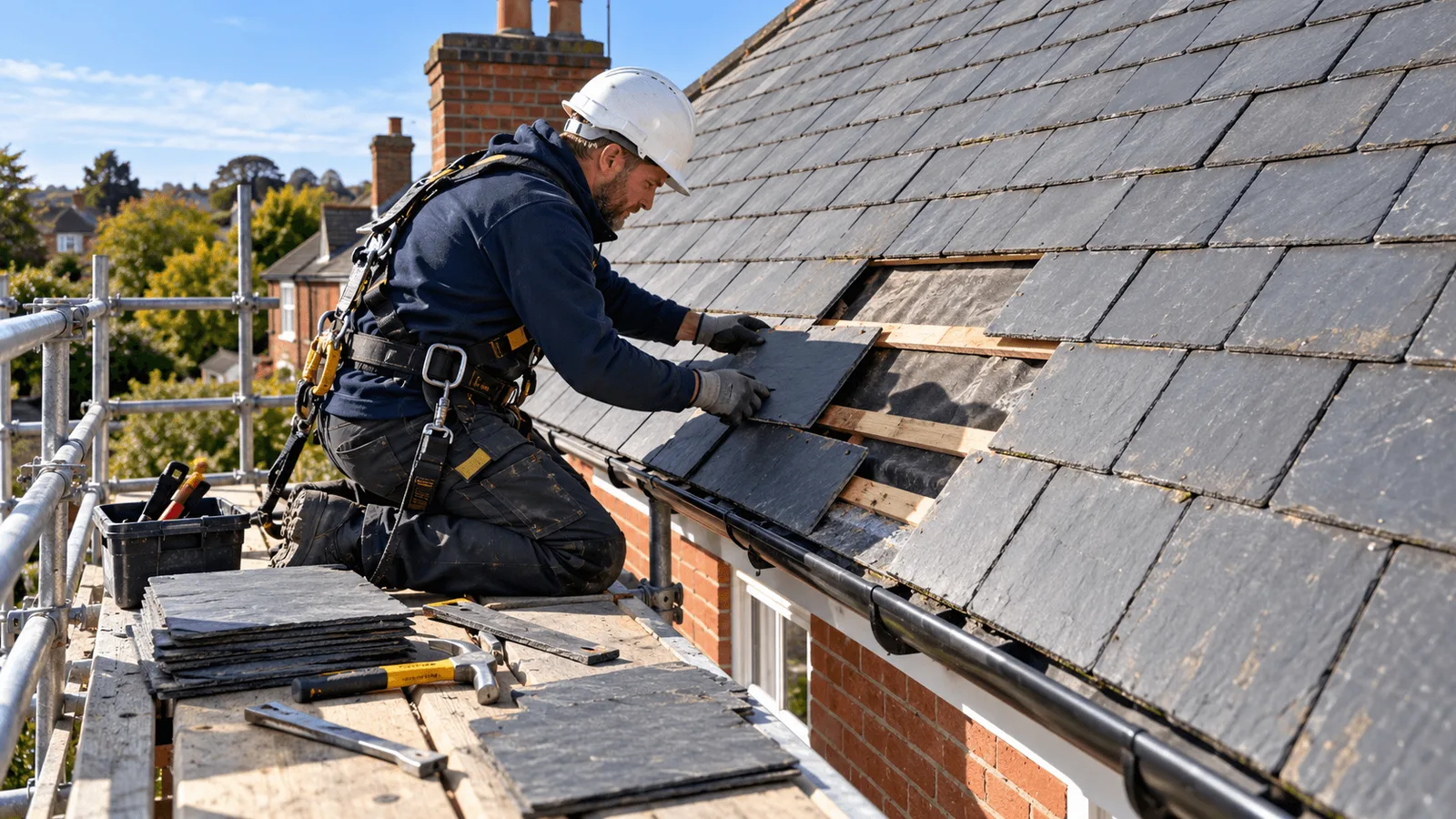
1. Replacing Individual Broken or Missing Slates
One of the biggest advantages of slate roofing is that individual slates can often be replaced without disturbing the entire roof.
Slates may crack or become dislodged because of:
- Strong winds and storms.
- Accidental impact damage.
- Deteriorating nails or fixings.
- Previous installation defects.
- Natural weathering over time.
When only a handful of slates are damaged, a roofer can remove the affected pieces and install suitable replacements.
The replacement slates should match the existing roof as closely as practical in size, thickness, and appearance.
Important: Matching the slate isn't just about looks. Incorrect sizing or overlapping can affect how effectively the roof sheds rainwater.
For isolated damage, professional Roof Repairs may restore the roof's weather resistance without extensive replacement work.
2. Repairing Loose Slates and Failed Fixings
Sometimes, the slate itself is perfectly usable.
The problem is what's holding it in place.
Traditional slate roofs commonly rely on nails to secure individual slates to the battens. Over time, fixings may corrode, loosen, or fail, allowing otherwise sound slates to slip.
This is sometimes associated with nail sickness, particularly on older roofs where numerous fixings have deteriorated.
A roofer may secure an individual replacement slate using a suitable fixing or slate hook, depending on the roof design and repair requirements.
However, there's an important distinction:
- One or two slipped slates: Often suitable for localised repairs.
- Repeated slipping across multiple areas: May indicate widespread fixing deterioration.
If slates keep slipping after repairs, the underlying problem needs further investigation.
3. Fixing Leaks Around Flashing and Roof Junctions
Not every leak on a slate roof comes from a damaged slate.
Water can also enter around vulnerable roof details, including:
- Chimney flashing.
- Roof valleys.
- Dormer windows.
- Abutments where the roof meets a wall.
- Roof penetrations and junctions.
Lead flashing, for example, helps prevent rainwater entering where roofing materials meet adjoining structures.
If flashing becomes loose, cracked, or incorrectly fitted, moisture may penetrate even when the surrounding slates remain intact.
Can a slate roof be repaired when the flashing is damaged? Often, yes.
A professional may be able to repair or replace the defective flashing while retaining most of the existing slate covering.
The Lead Sheet Training Academy provides specialist industry information about leadwork and its correct application in roofing.
4. Repairing Storm Damage to Slate Roofs
British weather can be tough on roofs.
Strong winds may lift or dislodge slates, while falling branches and airborne debris can cause impact damage.
After a storm, look for warning signs such as:
- Slates lying in the garden.
- Visible gaps in the roof covering.
- Cracked or displaced ridge materials.
- New damp patches in the loft.
- Water stains appearing after rainfall.
If the damage affects only a limited area, targeted repairs may be possible.
However, storm damage can extend beyond the visible slates, particularly when battens, flashing, or other roof components have been affected.
Safety tip: Never climb onto a slate roof to inspect storm damage. Slates can be slippery and fragile, and damaged roofing may be unstable.
The Met Office offers seasonal advice to help UK homeowners prepare for severe weather.
When Is Slate Roof Repair Better Than Replacement?
The decision isn't simply about how many slates are missing.
It's about whether the roof can continue performing reliably after the damaged sections are repaired.
Signs Your Slate Roof Is a Good Candidate for Repair
Repair may be the better option when:
- Damage is limited to a small section.
- Most existing slates remain sound.
- Roof battens and supporting timbers are in satisfactory condition.
- Leaks can be traced to specific defects.
- Slates are not repeatedly slipping across the roof.
- Repairs are likely to provide a durable solution.
For example, imagine a Worcester homeowner discovers three missing slates following strong winds.
If the surrounding roof is sound and the fixings remain secure, replacing those slates could resolve the problem without requiring a complete re-roof.
This is an illustrative example rather than a diagnosis; an inspection would still be needed to confirm the extent of damage.
For a broader comparison, explore Repair or Replace Your Roof.
When Might a Slate Roof Need Replacing?
Although slate is a durable roofing material, it doesn't last forever.
Natural slate can remain serviceable for many decades, sometimes considerably longer, depending on the slate's quality, exposure, installation, and maintenance.
However, the supporting components may deteriorate before the slates themselves.
1. Widespread Slate Deterioration
If numerous slates are cracking, splitting, or becoming brittle, isolated repairs may become increasingly frequent.
When deterioration affects large areas, replacement may provide a more dependable solution.
2. Extensive Nail Sickness
Repeatedly slipping slates can indicate that the fixings are failing across the roof.
Replacing individual slates may not solve the wider issue if the remaining fixings are similarly deteriorated.
3. Damaged Roof Battens or Structural Timbers
A slate roof depends on more than its visible covering.
Rotten battens, damaged rafters, or significant moisture penetration may require more extensive work than simply replacing slates.
4. Recurring Leaks and Increasing Repair Costs
If repairs are becoming a regular expense, it's worth comparing their cumulative cost with a properly specified replacement.
A full replacement may be more cost-effective when the roof has widespread defects and limited remaining service life.
You can explore the Signs You Need a New Roof to understand when replacement deserves serious consideration.
Slate Roof Repair vs Replacement: What's the Difference?
If you're considering different roofing materials, the guide to Tile vs Slate Roofing explains some of the practical differences.
For roofs that genuinely require extensive renewal, professional Roof Replacements can provide an opportunity to address ageing materials and underlying defects together.
How Much Does Slate Roof Repair Cost in the UK?
There's no universal price for slate roof repairs because every property and roof is different.
The final quotation will depend on several factors.
What Affects the Cost?
Number of damaged slates: Replacing a few slates is generally less expensive than repairing a large section.
Slate type: Natural slate varieties differ in availability, size, and cost, particularly when matching an older roof.
Roof access: Steep pitches, tall buildings, and difficult access may require specialist equipment or scaffolding.
Underlying damage: Repairs involving battens, flashing, or structural timber are more involved than straightforward slate replacement.
Urgency: Emergency work following a storm may involve different labour and access arrangements.
Rather than relying on a generic estimate, request an itemised quotation that explains the defect, proposed repair method, and any additional access costs.
A professional should also explain whether the proposed repair is likely to be durable or whether further work may be needed.
How to Keep Your Slate Roof in Good Condition
Good maintenance helps identify problems before they become expensive surprises.
Consider these practical steps:
- Check visually after storms: Look for missing or displaced slates from ground level.
- Keep gutters clear: Blocked gutters can cause water to overflow against roof edges and walls.
- Monitor your loft: Watch for damp insulation, water staining, and unusual moisture.
- Investigate small leaks promptly: Delaying repairs can allow water damage to spread.
- Arrange professional inspections: Particularly if the roof is older or has a history of recurring problems.
The National Federation of Roofing Contractors provides industry information about roofing standards and professional roofing work.
Remember, slate roofing should not be walked on casually. Incorrect access can crack otherwise sound slates and create additional problems.
Key Takeaways
So, can a slate roof be repaired without replacing the whole roof?
Yes. Many slate roofs can be repaired successfully when the damage is isolated and the remaining roofing system is in good condition.
Here's what matters most:
- Individual slates can often be replaced without removing the entire roof.
- Loose slates and damaged flashing may be repairable using appropriate techniques.
- Repeated slipping can indicate wider fixing problems that require investigation.
- Widespread deterioration may justify replacement rather than ongoing patch repairs.
- A professional inspection helps avoid unnecessary expense by identifying the true condition of the roof.
If you're dealing with missing slates, roof leaks, or recurring damage in Worcester or nearby areas, don't assume you need an entirely new roof.
Explore Free Roof Inspections to understand the condition of your roof and the repair options available.
A damaged slate doesn't have to become a new-roof-sized bill. The key is knowing when a repair will genuinely last.
FAQs
Can a slate roof be repaired if only a few slates are broken?
Yes, individual broken or missing slates can often be replaced without removing the entire roof. A roofer will assess the surrounding slates, fixings, and battens before carrying out the repair. If the remaining roof is sound, a localised repair may provide a durable solution.
How long does a repaired slate roof last?
The lifespan of a slate roof repair depends on the condition of the existing roof, the quality of the materials, and the repair method. Properly installed replacement slates can remain serviceable for many years when the surrounding components are in good condition. However, repairs may not last as long if widespread deterioration or fixing problems remain unresolved.
Is it cheaper to repair or replace a slate roof?
Repairing a small number of damaged slates is generally cheaper initially than replacing the entire roof. However, repeated repairs can become expensive when the roof has extensive deterioration or recurring leaks. Comparing the roof's overall condition and likely future maintenance costs will help determine the better long-term option.
Can old slate roof tiles be reused during repairs?
Yes, existing natural slates may sometimes be reused if they remain sound and are carefully removed without damage. A roofer must check each slate for cracks, weakness, and suitability before reinstalling it. Damaged or unsuitable slates should be replaced with compatible materials.
How do I know if my slate roof needs replacing rather than repairing?
Warning signs include widespread broken slates, repeated slipping, persistent leaks, and deterioration of supporting roof components. A roof that needs frequent repairs across different areas may be approaching the point where replacement offers better value. A professional inspection can determine whether targeted repairs are sufficient or more extensive work is necessary.
Related reading
Explore local roofing help
A guide cannot diagnose a specific roof. Explore our services and local coverage, or arrange a free inspection.
Need advice on your roof?
Start with a free inspection and a clear explanation of the options.