
Lead Work & Flashing
Why Is My Roof Window Flashing Leaking?
Roof windows are a brilliant way to bring natural light into loft conversions, bedrooms and upstairs living spaces. But when water starts dripping around the frame or damp patches appear on the surrounding ceiling, that extra daylight suddenly comes with an unwanted surprise.
By Aztech Roofing ·
Quick guide
Leaking roof window flashing is often associated with damaged flashing components, incorrect installation, deteriorated surrounding roofing materials or drainage problems.
- Flashing creates a weather-resistant junction. It helps direct rainwater away from the gap between the roof window and surrounding tiles or slates.
- Incorrect installation can cause leaks. Poor overlaps, unsuitable flashing kits or incorrectly fitted components may allow water ingress.
- Blocked drainage channels can create problems. Leaves, moss and debris may interfere with water movement around the window.
- Damaged roofing materials may be responsible. Cracked tiles or deteriorated underlay above the window can direct water towards the opening.
- Condensation can resemble a roof leak. Moisture forming on the inside of the glazing or frame may have a different cause.
- Repairs depend on the defect. Some problems can be resolved locally, while extensive deterioration may require replacement flashing components.
- Professional inspections help avoid unnecessary work. Identifying the entry point is essential for a reliable repair.
If you notice fresh dripping, expanding damp patches or water collecting around a roof window, take steps to protect the affected area and arrange an appropriate assessment.
Introduction
One of the possible causes is leaking roof window flashing.
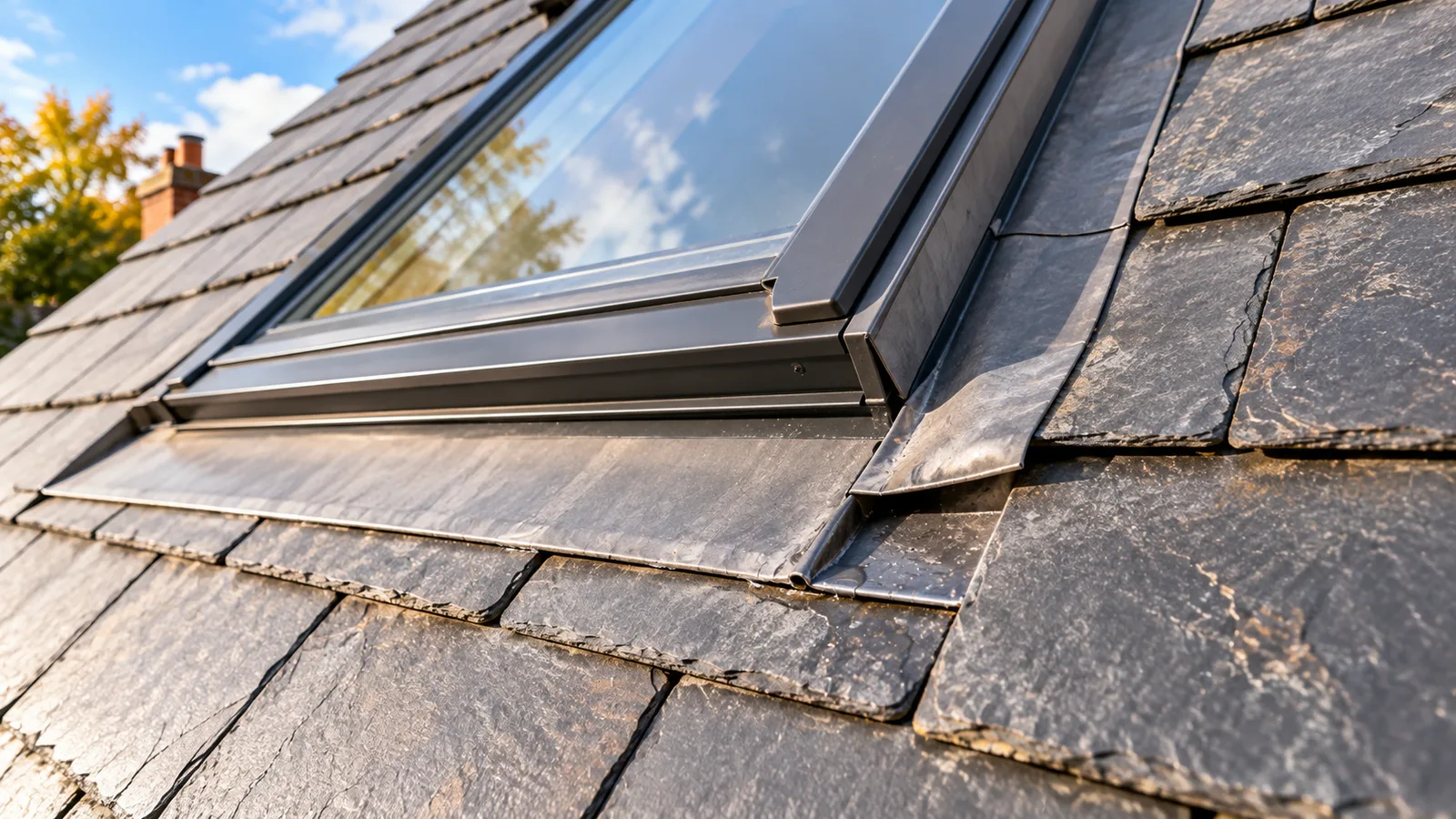
Roof window flashing forms a weather-resistant connection between the window and the surrounding roof covering. When this connection becomes damaged, incorrectly installed or obstructed, rainwater may find its way into the roof structure.
However, a leak around a roof window does not automatically mean the flashing is responsible. Damaged tiles, deteriorated underlay, blocked drainage channels and condensation can produce similar symptoms.
For homeowners in Worcester and the surrounding West Midlands, identifying the actual source of water ingress is essential before arranging repairs.
At Aztech Roofing, we understand that roof leaks can be difficult to diagnose, particularly around windows, chimneys and other roof penetrations. This guide explains why roof window flashing may leak, how to recognise warning signs and what steps can help prevent further damage.
What Is Roof Window Flashing and Why Is It Important?
Roof window flashing is a system of shaped components installed around a roof window to help prevent rainwater entering where the window meets the roof covering.
Because roof windows interrupt the continuous surface of a pitched roof, they create several junctions that must be carefully weatherproofed.
The flashing system helps guide rainwater around these junctions and back onto the surrounding roof covering.
How Roof Window Flashing Works
A typical roof window flashing arrangement may include:
- An upper flashing section that helps manage water approaching from above
- Side flashing components that protect the junctions alongside the window
- A lower flashing section or apron that directs water onto the roofing material below
- Seals, weathering details and drainage components specified for the system
- Connections to the surrounding tiles, slates and underlay
The exact arrangement depends on the roof window, roofing material and installation specification.
For example, a roof window installed in profiled tiles may require different flashing components from one installed in natural slate.
Correct compatibility is essential.
Our Lead Work & Flashing service covers weatherproofing details around vulnerable roof junctions, including appropriate flashing-related repairs.
It is worth noting that many roof window flashing kits use purpose-designed metal components rather than traditional leadwork.
The important factor is selecting and installing a system suitable for the window and surrounding roof.
1. Incorrectly Installed Roof Window Flashing
One of the main causes of leaking roof window flashing is incorrect installation.
Roof window flashing must be fitted in the correct sequence and integrated with the surrounding roofing materials.
If components are positioned incorrectly, rainwater may pass beneath the intended weatherproofing layers.
Common Installation Problems
Potential issues include:
- Flashing components installed in the wrong order
- Incorrect overlaps between adjoining sections
- Inadequate integration with the surrounding roof covering
- Unsuitable flashing components for the tile or slate profile
- Incorrect positioning of the roof window within the roof
- Poorly formed junctions around the window frame
- Missing or incorrectly fitted drainage details
These problems may not become obvious immediately.
A roof window could appear watertight during light rainfall but begin leaking when wind-driven rain reaches vulnerable junctions.
Why Installation Quality Matters
Roof window flashing is designed to work as part of a complete system.
Replacing a single component without understanding how the surrounding sections connect may not resolve the underlying problem.
Our guide to Roof Flashing Repairs explains how flashing defects can develop and why correct detailing is important for long-term weather protection.
2. Damaged or Deteriorated Flashing Components
Even correctly installed flashing can become damaged over time.
Roofing materials are exposed to rain, wind, temperature changes and general weathering.
Physical damage or movement around the roof window may affect the flashing's ability to direct water away from vulnerable areas.
What Can Damage Roof Window Flashing?
Possible causes include:
Storm damage: Strong winds or wind-blown debris may displace or damage roofing components around the window.
Physical impact: Falling branches or objects can damage exposed flashing sections.
Roof movement: Normal building movement and temperature changes can place stress on poorly detailed junctions.
Previous roofing work: Repairs or alterations near the window may disturb existing flashing components.
Age-related deterioration: Some seals, coatings and associated materials may deteriorate over time.
The flashing material and system design influence which types of damage are most likely.
Can Damaged Flashing Be Repaired?
Sometimes.
A localised defect may be repairable if the surrounding components remain suitable and compatible repair methods are available.
However, severely damaged or incorrectly installed flashing may require replacement with an appropriate system.
The decision should follow an inspection rather than relying on temporary surface sealing.
3. Blocked Drainage Channels Around the Roof Window
Roof window flashing systems often incorporate features designed to manage rainwater moving around the window.
Leaves, moss and other debris can interfere with these drainage paths.
When water cannot move as intended, it may accumulate around vulnerable junctions.
Why Blockages Matter
A roof window is installed within a sloping roof surface.
Rainwater naturally moves down the roof towards the window opening.
The surrounding weatherproofing components must redirect that water safely.
If debris collects above or beside the window, it may obstruct drainage routes or hold moisture against roofing materials.
This can increase the risk of water finding a vulnerable gap.
Common Signs of Drainage Problems
Look for:
- Leaves collecting above the roof window
- Moss or debris around the surrounding tiles
- Water appearing after prolonged rainfall
- Repeated dampness near the upper window reveal
- Visible debris around accessible drainage areas
Do not climb onto the roof or lean out of the window to clear external channels.
Roof windows are often positioned in steep or difficult-to-access areas, and cleaning should be carried out using suitable safety arrangements.
4. Cracked or Slipped Roof Tiles Near the Window
Sometimes, leaking roof window flashing is suspected when the real problem is damaged roofing material nearby.
Tiles and slates provide the main outer covering of a pitched roof.
If they become cracked, displaced or missing, rainwater may reach the underlay and surrounding roof junctions.
How Nearby Tile Damage Causes Window Leaks
Imagine that a roof tile above the window becomes cracked during a storm.
Rainwater may pass through the damaged area and travel along the underlay.
Depending on the roof construction and condition of the surrounding details, that water may eventually appear near the roof window.
The internal damp patch could make the flashing appear defective even when the main problem is elsewhere.
What Should Be Checked?
A suitable inspection may consider:
- Tiles directly above the roof window
- Roofing materials along both sides of the opening
- Slipped or broken tiles below the window
- Damaged battens or underlay
- Signs of water tracking from higher roof areas
- The condition of adjacent roof junctions
Our Roof Repairs service covers a range of roofing defects that can contribute to water ingress, including damaged tiles and associated roof details.
Identifying whether the leak originates from the flashing or surrounding covering helps avoid replacing components unnecessarily.
5. Damaged Roofing Underlay Around the Window
Roofing underlay sits beneath the outer covering on many pitched roofs.
It provides an additional layer of protection against moisture reaching the roof structure.
Around roof windows, the underlay must be correctly integrated with the window installation and associated weatherproofing details.
Why Underlay Problems Can Cause Leaks
Water can enter through a defect higher up the roof and travel beneath the tiles.
If the underlay around the roof window is damaged, incorrectly cut or poorly connected to the window's drainage arrangement, moisture may enter the surrounding structure.
Potential problems include:
- Torn or deteriorated underlay
- Incorrectly formed underlay connections
- Missing or unsuitable drainage details above the window
- Poorly sealed penetrations
- Damage caused during previous roofing work
These defects may be hidden beneath tiles and flashing components.
A professional inspection may therefore require careful examination of the surrounding roofing system.
Simply applying sealant around the visible window frame is unlikely to resolve a defect within concealed underlay details.
6. Wind-Driven Rain Entering Vulnerable Junctions
Some roof window leaks appear only during heavy rain or strong winds.
This pattern can provide useful clues.
Under calm conditions, rainwater generally travels down the roof slope.
During strong winds, rain may be driven sideways or upwards against exposed junctions.
Why Certain Weather Conditions Reveal Leaks
Wind-driven rain can reach areas that remain relatively dry during ordinary showers.
For example:
- Rain may be pushed beneath incorrectly overlapped flashing.
- Water may reach gaps around damaged side components.
- Strong winds may expose weaknesses in nearby roof tiles.
- Prolonged rainfall may reveal drainage restrictions.
A leak occurring only during storms does not automatically prove that the flashing is defective.
However, the timing and weather conditions can help narrow down possible causes.
Record when the leak occurs, the approximate rainfall intensity and whether strong winds are present.
This information can be useful during diagnosis.
7. Condensation May Be Mistaken for Leaking Flashing
Not every wet roof window has an external leak.
Condensation can form when warm, moisture-laden indoor air meets a sufficiently cold surface.
Roof windows may be particularly noticeable locations because glazing and frame surfaces can be colder than surrounding room surfaces.
Signs of Condensation
Possible indicators include:
- Water droplets forming on the inside of the glass
- Moisture appearing mainly during cold mornings
- Condensation increasing after showers or cooking
- Dampness reducing when indoor humidity is controlled
- Moisture appearing without corresponding rainfall
However, condensation and external leaks can sometimes occur together.
How to Tell the Difference
A leak may be more likely when fresh water appears during rainfall or when damp patches expand after storms.
Condensation may be more likely when droplets form on the internal glazing during cold conditions, particularly in humid rooms.
Neither pattern provides a definitive diagnosis on its own.
Our guide to the Common Causes of Roof Leaks explains how different roofing defects can create similar signs of water ingress.
If moisture repeatedly appears around the roof window, identifying whether it comes from outside or inside the property is essential before arranging repairs.
8. The Roof Window Itself May Be Damaged
Sometimes, the problem is not the flashing or surrounding roof covering.
A roof window contains several components that help maintain weather resistance.
Depending on the design, these may include seals, frame joints, glazing components and drainage features.
If these parts become damaged or deteriorated, water may appear around the window.
Potential Window-Related Problems
These include:
- Damaged or deteriorated seals
- Defective frame joints
- Problems with the glazing assembly
- Incorrectly closed or adjusted opening mechanisms
- Damaged drainage components
- Age-related deterioration of window materials
A roofing inspection can help determine whether water appears to be entering through the surrounding roof junction.
However, defects within the window unit itself may require assessment by an appropriate roof window specialist.
This distinction matters because replacing flashing will not resolve a failed glazing seal or defective window component.
What Are the Warning Signs of Leaking Roof Window Flashing?
Water ingress around a roof window may become visible in several ways.
Some symptoms are obvious, while others develop gradually.
Damp Patches Around the Window Reveal
Water staining on the plaster surrounding a roof window is a common warning sign.
The stain may appear above, beside or below the window.
However, its location does not necessarily identify the original entry point.
Peeling Paint or Damaged Plaster
Repeated moisture exposure can cause paint to bubble or peel.
Plaster may also become discoloured or damaged.
These symptoms should be investigated rather than repeatedly covered with fresh decoration.
Dripping During Rainfall
Fresh water dripping from the window reveal or surrounding ceiling suggests active water ingress.
Protect nearby belongings where safe and arrange an assessment.
Mould or Musty Smells
Persistent dampness can encourage mould growth in suitable conditions.
However, mould can also result from condensation or other indoor moisture problems.
Damage to Surrounding Timber
Prolonged water exposure may affect timber components around the roof window.
If deterioration is suspected, professional assessment is important.
Early investigation can help prevent a relatively localised defect from causing more extensive internal damage.
How Is Leaking Roof Window Flashing Repaired?
The correct repair depends on the source and extent of the problem.
There is no single repair method suitable for every roof window leak.
Step 1: Identify the Water Entry Point
A professional assessment should consider the roof window, flashing, surrounding tiles or slates, underlay and accessible internal areas.
The aim is to establish whether the moisture originates from the roof covering, flashing system, window unit or condensation.
Step 2: Assess the Condition of the Flashing
If flashing is responsible, the damaged components should be identified.
The assessment may consider whether the system is compatible with the roof covering and correctly integrated with adjacent materials.
Step 3: Select the Appropriate Repair
Depending on the findings, work may involve:
- Repositioning suitable displaced components
- Replacing damaged flashing sections
- Installing a compatible flashing kit
- Repairing surrounding roof tiles or slates
- Correcting defective underlay connections
- Addressing drainage obstructions
- Repairing related roof junction details
The exact work depends on the window design and roofing system.
Step 4: Check the Surrounding Roof
It is important to consider nearby defects that could allow water to enter again.
A repair that addresses only the visible symptom may not resolve the underlying problem.
Step 5: Monitor the Area After Repairs
Following repair work, homeowners should monitor previously affected areas during subsequent rainfall.
Existing damp plaster may take time to dry, so residual moisture should be distinguished from fresh water ingress.
New dripping or expanding stains should be reported promptly.
Can You Fix Leaking Roof Window Flashing Yourself?
Roof window flashing repairs are generally best left to professionals.
The work often involves accessing a pitched roof, removing roofing materials and working around exposed junctions.
These activities carry significant fall risks.
Why DIY Repairs Can Be Problematic
Temporary sealants may appear to stop a leak, but they can also conceal the underlying defect.
Using incompatible products may interfere with the intended drainage or weatherproofing arrangement.
Incorrectly removing flashing components can create additional openings.
Working at height without suitable access equipment presents serious safety risks.
Homeowners can safely document visible internal symptoms and protect belongings, but roof-level investigation should be carried out by appropriately equipped professionals.
How Can You Prevent Roof Window Flashing Leaks?
Not every leak can be prevented, but regular observation and timely maintenance can reduce the likelihood of avoidable problems.
Monitor the Surrounding Roof
Look for visible damage to tiles or slates around the roof window from a safe position.
After significant storms, check for obvious changes in the surrounding roof covering.
Keep Drainage Areas Clear
Leaves and debris can accumulate around roof windows, particularly beneath nearby trees.
Where cleaning requires roof access, arrange suitable professional assistance.
Investigate Dampness Early
Do not ignore recurring water stains or moisture around the window.
Early investigation may help prevent damage to plaster, insulation and surrounding timber.
Use Compatible Replacement Components
If flashing requires replacement, the new system must suit the roof window and surrounding covering.
Different roof window designs and tile profiles may require different flashing arrangements.
Arrange Appropriate Roof Inspections
A professional inspection can help identify visible defects and assess whether repairs are necessary.
Our guide to the Roof Inspection Process explains what homeowners can expect when roofing concerns are investigated.
A structured assessment can be particularly useful when leaks occur intermittently or only during certain weather conditions.
When Should You Arrange a Professional Roof Inspection?
You should consider an inspection when fresh water appears around a roof window, damp patches continue expanding or previous repairs have not resolved the problem.
An assessment may also be appropriate when flashing components appear damaged or nearby roofing materials have been displaced.
Our Free Roof Inspections provide homeowners in Worcester and the surrounding West Midlands with an opportunity to discuss visible roofing concerns and understand whether further work may be required.
The inspection scope depends on the roof design, safe access and the condition of the affected area.
Where a defect is concealed or involves the roof window unit itself, additional investigation may be necessary.
Identifying the true cause before arranging repairs can help avoid unnecessary costs and reduce the likelihood of recurring leaks.
Key Takeaways
Leaking roof window flashing can cause frustrating damp patches, dripping water and damage to surrounding interior finishes.
However, water appearing near a roof window does not always mean the flashing itself is defective.
Damaged tiles, deteriorated underlay, blocked drainage channels, window component faults and condensation can create similar symptoms.
The most effective approach is to identify the source of moisture before choosing a repair.
Here are the main points to remember:
- Roof window flashing protects vulnerable junctions. It helps direct rainwater around the window and back onto the roof covering.
- Incorrect installation is a common source of problems. Unsuitable components, poor overlaps or defective connections can allow water ingress.
- Physical damage can affect flashing performance. Storms, impacts and previous roofing work may disturb weatherproofing details.
- Blocked drainage can contribute to leaks. Debris may interfere with the intended movement of rainwater.
- Nearby roofing defects should not be overlooked. Cracked tiles or damaged underlay can direct water towards the window.
- Condensation can resemble external leakage. Identifying the moisture source prevents unnecessary repairs.
- Repairs should address the underlying defect. Replacing components without proper diagnosis may not resolve the problem.
- Professional inspections support accurate decisions. A broader assessment can help distinguish flashing defects from other roofing issues.
Ultimately, a roof window should provide natural light without allowing unwanted rainwater into your home.
By responding promptly to signs of moisture, maintaining the surrounding roof and arranging appropriate repairs, you can help protect both the window installation and the wider roof structure.
FAQs
Why is water leaking around my roof window?
Water around a roof window may result from damaged flashing, incorrectly installed components, blocked drainage or defects in nearby roofing materials. Condensation or problems with the window unit itself can also create similar symptoms. A professional assessment can help identify the actual source before repairs are arranged.
Can roof window flashing be repaired without replacing the window?
Yes, some flashing defects can be repaired or resolved by replacing compatible flashing components while retaining the existing window. The appropriate solution depends on the condition of the window, surrounding roof covering and flashing system. If the window frame or glazing assembly is defective, additional specialist work may be necessary.
Why does my roof window only leak during heavy rain?
Heavy or wind-driven rain can reach vulnerable roof junctions that remain relatively dry during lighter showers. Prolonged rainfall may also reveal blocked drainage channels or defects in surrounding roofing materials. The pattern of leakage can help guide an inspection but does not confirm the cause on its own.
Is leaking roof window flashing an emergency?
A small damp patch should be investigated promptly, while active dripping or significant water ingress may require more urgent attention. Water near electrical installations, unstable plaster or damaged structural components can create additional safety concerns. Protect the affected area where safe and seek appropriate professional assistance based on the severity of the problem.
How can I stop roof window flashing from leaking again?
The most effective approach is to identify and repair the underlying defect using suitable components and installation methods. Regular observation of surrounding tiles, drainage areas and roof junctions can help identify developing problems. Professional inspection is advisable if leaks return or moisture continues appearing after previous repairs.
Related reading
Explore local roofing help
A guide cannot diagnose a specific roof. Explore our services and local coverage, or arrange a free inspection.
Need advice on your roof?
Start with a free inspection and a clear explanation of the options.