
Lead Work & Flashing
How to Tell If Roof Flashing Is Damaged Before It Starts Leaking
Learn how to tell if roof flashing is damaged with 7 early warning signs, common causes, and practical tips to prevent costly roof leaks.
By Aztech Roofing ·
Quick guide
- Learn how to tell if roof flashing is damaged with 7 early warning signs, common causes, and practical tips to prevent costly roof leaks.
TL;DR – Quick Guide
- What is roof flashing? Weather-resistant material that protects vulnerable roof junctions from rainwater.
- Early warning signs: Rust, cracks, lifting edges, loose fixings, and deteriorated joints.
- Where should you check? Around chimneys, roof valleys, skylights, and wall junctions.
- Can damaged flashing cause leaks? Yes, gaps or failed joints can allow water beneath the roof covering.
- Does damaged flashing always need replacing? No, some localised defects can be repaired.
- Best prevention: Arrange periodic roof checks and investigate visible defects promptly.
What Is Roof Flashing and Why Does It Matter?
Roof flashing is a weatherproofing component used where different roofing surfaces or building elements meet.
Common locations include:
- Chimney bases and sides
- Roof-to-wall junctions
- Roof valleys
- Skylights and roof windows
- Dormer windows
- Other exposed roof penetrations
Flashing may be made from lead, aluminium, zinc, or other compatible materials.
Its main job is to direct rainwater away from vulnerable joints and prevent moisture from entering the roof structure.
For homeowners dealing with deteriorated flashing, Aztech Roofing's Lead Work & Flashing service provides information about protecting these important roof junctions.
7 Warning Signs That Roof Flashing Is Damaged
If you're wondering how to tell if roof flashing is damaged, start by looking for these seven common warning signs.
1. Rust or Visible Corrosion
Metal flashing can deteriorate when protective coatings fail or the material is exposed to unsuitable conditions.
Rust is particularly relevant to steel-based components, while other metals may show different forms of corrosion or surface deterioration.
Look for:
- Reddish-brown corrosion on steel flashing
- Pitting or thinning metal
- Flaking protective coatings
- Holes or weakened sections
Not every change in metal colour indicates failure. Lead, for example, naturally develops a protective surface patina.
What to do: Have visibly corroded or perforated flashing assessed before water starts entering the roof.
2. Cracks, Splits, or Holes
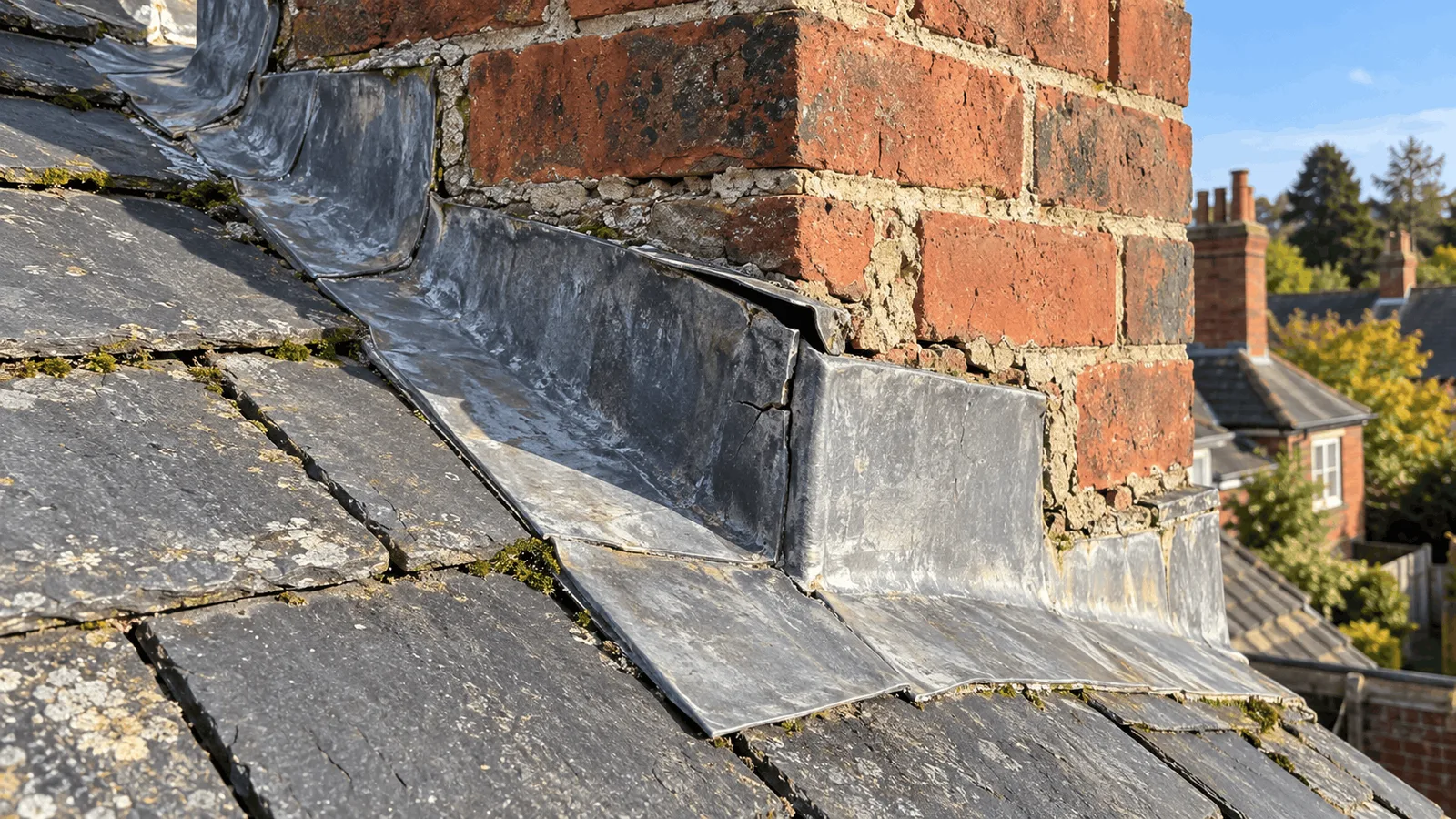
Flashing can crack because of age, movement, impact damage, or incorrect installation.
Small splits may be difficult to see from the ground, particularly around chimney corners or roof junctions.
Even a narrow opening can allow wind-driven rain to reach the materials underneath.
What to do: Arrange an inspection if you notice obvious splits, punctures, or missing sections.
3. Loose or Lifting Flashing Edges
Flashing should remain correctly positioned against the surrounding roofing materials.
If an edge lifts, curls, or becomes displaced, rainwater may pass beneath it.
Strong winds, deteriorated fixings, and thermal movement can all contribute to this problem.
Watch for:
- Flashing pulling away from a wall
- Raised metal edges
- Loose sections around chimneys
- Visible gaps beneath overlapping components
What to do: Avoid trying to push or nail flashing back into place yourself, as this can damage the waterproofing.
4. Cracked Mortar or Failed Sealant
Some flashing systems rely on properly formed joints where metal meets masonry.
Over time, mortar or sealant around these details may deteriorate.
Cracked joints can create routes for rainwater to enter behind the flashing.
However, not every flashing system relies on surface sealant, and applying more sealant isn't always an appropriate repair.
What to do: Have the joint assessed to determine whether it needs repointing, resealing, or more extensive correction.
5. Gaps Around Chimneys and Walls
Flashing around chimneys and roof-to-wall junctions must accommodate the relationship between the roof covering and adjacent masonry.
Gaps may develop if components become loose, distorted, or incorrectly positioned.
These areas are especially vulnerable to wind-driven rain.
If you notice staining near a chimney breast, flashing may be one possible cause.
Aztech Roofing's guide to Chimney Leak Causes explains other defects that can allow water into chimney areas.
6. Bent, Distorted, or Poorly Fitted Flashing
Flashing should follow the intended roof detail without leaving exposed openings.
Distorted sections may indicate physical damage, movement, or installation problems.
Common warning signs include:
- Buckled metal
- Poorly aligned overlaps
- Sections that no longer sit correctly
- Flashing displaced by surrounding roofing materials
These problems can interfere with the roof's normal drainage path.
What to do: Ask a roofer to check whether the affected flashing can be refitted or requires replacement.
7. Damp Patches or Water Stains
Sometimes, the first noticeable warning appears inside the property.
Water stains, damp insulation, or discoloured timber may indicate that moisture has entered the roof.
However, these symptoms don't automatically confirm flashing damage.
Leaks can also result from broken tiles, deteriorated underlay, condensation, or other roofing defects.
What to do: Investigate the source rather than assuming the nearest visible flashing is responsible.
Where Should You Look for Damaged Roof Flashing?
Knowing how to tell if roof flashing is damaged also means understanding where problems commonly develop.
You may be able to spot some defects from the ground using binoculars.
Never climb onto a roof or lean out of an upstairs window to inspect flashing. Roof inspections should be carried out using appropriate access and safety precautions.
What Causes Roof Flashing to Become Damaged?
Several factors can shorten the useful life of flashing.
Weather Exposure
Wind, rain, temperature changes, and repeated wetting can gradually affect roofing components.
Poorly secured flashing may become displaced during storms.
Natural Building Movement
Buildings and roofing materials move slightly as temperatures and moisture levels change.
Flashing must be detailed to accommodate this movement without splitting or pulling away.
Poor Installation
Incorrect overlaps, unsuitable materials, and inadequate fixings can lead to premature problems.
Flashing that isn't compatible with the surrounding roof covering may also fail to direct water correctly.
Ageing Materials
Even durable flashing materials can eventually deteriorate.
The rate depends on the material, installation quality, exposure, and maintenance history.
Blocked Drainage
Leaves, moss, and debris can obstruct roof valleys and other drainage routes.
Trapped water may increase exposure around vulnerable flashing details.
Can Damaged Roof Flashing Be Repaired?
Yes, many localised flashing defects can be repaired without replacing the entire roof.
The appropriate repair depends on the material, condition, and cause of the damage.
Possible solutions include:
- Refitting displaced flashing
- Renewing failed joints
- Replacing split or perforated sections
- Correcting unsuitable overlaps
- Repairing damaged surrounding roof coverings
However, extensive deterioration or fundamentally incorrect installation may require full replacement of the affected flashing.
Aztech Roofing's guide to Roof Flashing Repairs explains common repair options and why identifying the underlying problem matters.
For wider roofing defects, the company's Roof Repairs service is another relevant resource.
How Much Does It Cost to Repair Damaged Roof Flashing?
Flashing repair costs vary considerably depending on the work involved.
The main factors include:
- Location: Chimney and high-level flashing can be harder to access.
- Material: Lead and other metals have different material and installation costs.
- Extent of damage: Small localised repairs may cost less than replacing an entire junction.
- Roof complexity: Steep pitches and awkward roof shapes can increase labour.
- Access equipment: Scaffolding may be necessary for safe repairs.
- Associated damage: Deteriorated tiles, mortar, or roof timbers may require additional work.
A professional assessment helps establish whether repair or replacement is the more practical option.
How Often Should Roof Flashing Be Inspected?
There's no single inspection interval that suits every property.
Roof age, exposure, surrounding trees, and previous defects all influence maintenance needs.
However, it makes sense to arrange a professional check when:
- A storm has caused visible roof damage.
- Flashing appears loose or distorted.
- Damp patches develop inside the property.
- You're buying an older home.
- The roof hasn't been assessed for several years.
- You're planning major roofing or solar installation work.
Aztech Roofing's guide to What to Expect During a Roof Inspection explains how a professional assessment can help identify roofing defects.
You can also explore Free Roof Inspections when deciding whether your flashing needs attention.
Key Takeaways
Understanding how to tell if roof flashing is damaged can help you address minor defects before they become serious leaks.
- Look for cracks, corrosion, loose edges, and visible gaps.
- Check vulnerable locations such as chimneys, valleys, skylights, and wall junctions.
- Failed joints and distorted flashing can compromise waterproofing.
- Damp patches may indicate a leak, but the source needs proper investigation.
- Some flashing defects can be repaired without replacing the entire roof.
- Prompt inspections help identify problems before further damage develops.
- Avoid climbing onto roofs or attempting unsafe DIY flashing repairs.
If you've spotted suspicious flashing or want your roof checked before problems develop, Aztech Roofing can help you explore suitable inspection and repair options.
A small flashing defect is much easier to deal with before it becomes an indoor water feature.
FAQs
How can you tell if roof flashing is damaged from the ground?
Look for visibly lifted edges, distorted metal, gaps around chimneys, or sections that appear loose. Binoculars may help you inspect accessible roof areas without climbing. However, some flashing defects are concealed and require a professional inspection.
Does damaged roof flashing always cause a leak?
Not every visible flashing defect causes immediate water entry. However, cracks, gaps, and displaced sections can weaken the roof's weather resistance and increase the risk of future leaks. Prompt assessment can help prevent further deterioration.
Can roof flashing be repaired instead of replaced?
Yes, localised defects such as loose sections or failed joints may be repairable. Extensive corrosion, major splits, or unsuitable installation details may require replacement. A roofing professional can assess which option provides a reliable long-term solution.
How long does roof flashing normally last?
Flashing lifespan depends on the material, installation quality, exposure, and maintenance. Properly installed lead flashing can remain serviceable for many decades, while other materials have different expected lifespans. Regular inspections help identify defects before they become serious.
Should I get a roof inspection if my flashing looks damaged but isn't leaking?
Yes, visible flashing damage is worth investigating even when there are no indoor water stains. Some defects allow moisture beneath roofing materials before a leak becomes noticeable inside the property. Early inspection can help identify the problem and determine whether repairs are necessary.
Related reading
Explore local roofing help
A guide cannot diagnose a specific roof. Explore our services and local coverage, or arrange a free inspection.
Need advice on your roof?
Start with a free inspection and a clear explanation of the options.