
Urgent Roof Repairs
When Is a Roof Leak an Emergency? Signs You Shouldn't Ignore
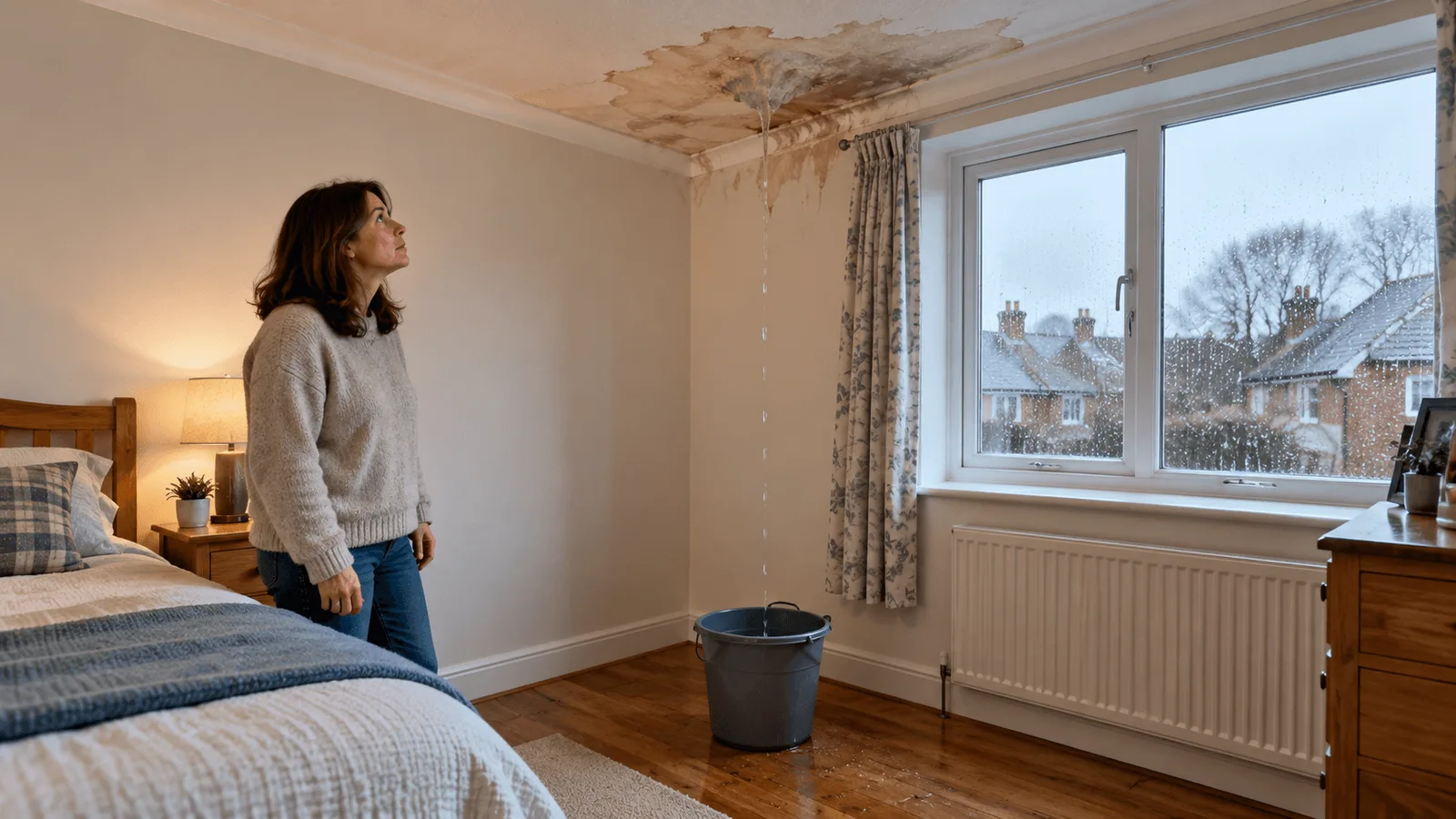
A small water stain on your ceiling might not seem like a big deal. But when rain starts dripping into your living room, plaster begins to sag, or water appears near electrical fittings, things can get serious very quickly.
By Aztech Roofing ·
Quick guide
When is a roof leak an emergency? A roof leak is an emergency when it poses an immediate danger to people, electrics, or the building, or when substantial water is actively entering your home.
- Water near electrical fittings: Moisture reaches lights, sockets, or wiring.
- Heavy or continuous water entry: Rainwater is entering faster than you can safely contain it.
- Sagging ceilings: Trapped water may be weakening plasterboard or other materials.
- Storm-related roof damage: Missing tiles or exposed roofing leave the property vulnerable.
- Structural damage: Roof timbers or supporting components show signs of serious deterioration.
- Leaks spreading rapidly: Water damage is affecting multiple rooms or large ceiling areas.
- Water entering around chimneys or roof junctions: Significant leaks may affect concealed roof components.
If there is an immediate danger to life or serious structural instability, contact the appropriate emergency services.
Introduction
So, when is a roof leak an emergency, and when can it wait for a scheduled repair?
A roof leak becomes an emergency when water entering your property creates an immediate safety risk, threatens structural stability, or causes significant ongoing damage.
Not every leak requires an emergency callout. However, knowing the difference between a minor roofing issue and an urgent problem could help you avoid extensive water damage and expensive repairs.
For homeowners in Worcester and the surrounding areas, Aztech Roofing provides roofing services to help assess leaks, storm damage, and other problems that may require prompt attention.
In this guide, we'll explain seven warning signs of an emergency roof leak, what you should do immediately, and when professional help is essential.
1. Water Is Leaking Near Electrical Fittings
Water and electricity are a dangerous combination.
If a roof leak reaches ceiling lights, sockets, electrical wiring, or other electrical installations, the situation should be treated as urgent.
Warning signs include:
- Water dripping through light fittings.
- Damp patches surrounding ceiling lights.
- Water entering near electrical sockets.
- Sparking, buzzing, or unusual electrical smells.
- Electrical circuits tripping during rainfall.
What to do: Keep away from affected electrical equipment and do not touch wet switches, sockets, or fittings.
If the electricity supply can be isolated safely from a dry, unaffected location, doing so may reduce the risk. Otherwise, leave it alone and seek qualified assistance.
The UK Electrical Safety First organisation provides guidance on electrical safety in the home.
Never attempt to investigate a roof leak by touching wet electrical components.
2. Water Is Pouring Through the Ceiling
A few drops of water may indicate a localised roofing defect.
However, a continuous stream of water entering during rainfall is a different matter.
Heavy water ingress can quickly damage:
- Ceiling plasterboard.
- Insulation.
- Flooring and carpets.
- Furniture.
- Internal walls.
- Electrical installations.
The longer substantial water entry continues, the greater the potential for damage.
What to do: Move people and belongings away from the affected area where safe.
If there is no danger from electricity or a weakened ceiling, you may be able to place a container beneath a drip to limit water spreading.
For substantial or uncontrolled water entry, professional Urgent Roof Repairs should be considered promptly.
3. Your Ceiling Is Sagging or Bulging
A sagging ceiling is one of the clearest warning signs that a leak may be more serious than it first appears.
When water collects above plasterboard or other ceiling materials, the additional weight can cause visible deformation.
Look for:
- Bulging ceiling sections.
- Sagging plasterboard.
- Large water stains that are spreading.
- Cracking around damp areas.
- Water dripping from multiple points.
Why it's dangerous: Saturated ceiling materials may fail unexpectedly.
What to do: Keep everyone out of the affected area and avoid standing beneath the damaged ceiling.
Do not puncture, push, or attempt to drain a bulging ceiling yourself.
Seek urgent professional assistance to assess the danger and identify the source of the water.
4. Storm Damage Has Left Your Roof Exposed
Strong winds, falling branches, and flying debris can damage roofing materials.
Sometimes, the damage is immediately obvious.
You might notice:
- Large sections of missing tiles.
- Displaced ridge tiles.
- Torn roofing membranes.
- Damaged flashing.
- Debris striking the roof.
- Visible openings in the roof covering.
If significant areas of the roof are exposed during heavy rainfall, water may enter the building rapidly.
The Met Office provides advice on preparing for severe weather and responding to challenging conditions.
What to do: Stay indoors and away from damaged roof areas while the storm continues.
Do not climb onto the roof or attempt temporary repairs during high winds.
Once conditions are safe, arrange a professional assessment.
For additional guidance, read What to Do After Storm Damage.
5. You Suspect Structural Roof Damage
A leaking roof can sometimes be associated with damaged structural components.
Prolonged moisture exposure may contribute to timber deterioration, while storms or fallen trees can cause more immediate damage.
Warning signs include:
- Visible roof sagging.
- Cracked or displaced structural components.
- Significant deformation of the roofline.
- Unusual cracking following storm damage.
- Signs that supporting timbers have failed.
Not every leak causes structural damage, but these symptoms deserve urgent attention.
What to do: Keep clear of the affected area and avoid entering any space where the structure may be unstable.
If you suspect an immediate risk of collapse, evacuate the affected building or area and contact emergency services.
A qualified professional should assess structural safety before roofing repairs begin.
6. Water Damage Is Spreading Quickly
Sometimes, the urgency of a roof leak depends on how quickly the situation is changing.
A small damp patch that has remained unchanged may allow time for a scheduled inspection.
A stain spreading rapidly across a ceiling during rainfall is more concerning.
Watch for:
- Water stains expanding within hours.
- Moisture appearing in multiple rooms.
- Water travelling down internal walls.
- Increasing dripping during heavy rain.
- Wet insulation or widespread loft moisture.
Why it matters: Water can travel along timbers, insulation, and other building components before becoming visible.
The point where water appears indoors may not be the original entry point.
For more information about potential leak sources, explore Common Causes of Roof Leaks.
What to do: Document visible damage from a safe position and arrange prompt professional assessment.
7. Water Is Entering Around a Chimney or Roof Junction
Chimneys and roof junctions are common areas where leaks can develop.
These locations depend on correctly installed flashing and weatherproof connections to prevent rainwater entering.
Problems may include:
- Loose or damaged flashing.
- Cracked chimney mortar.
- Deteriorating leadwork.
- Failed roof-to-wall junctions.
- Water entering through damaged chimney components.
A minor stain around a chimney isn't automatically an emergency.
However, significant water entry, rapidly spreading dampness, or signs of structural instability should be treated urgently.
The guide to Chimney Leak Causes explains how these problems develop and what repairs may be appropriate.
Emergency Roof Leak vs Minor Roof Leak: What's the Difference?
Not every roofing problem requires an emergency response.
The key is assessing the immediate risk and how quickly damage is developing.
Important: A small leak can still cause significant hidden damage over time.
Non-emergency doesn't mean you should ignore the problem.
Professional Roof Repairs can help address localised roofing defects before they worsen.
What Should You Do Immediately When Your Roof Is Leaking?
If you're facing an active roof leak, your first priority should be safety.
Step 1: Keep People Away From Dangerous Areas
Avoid rooms with sagging ceilings, exposed wiring, or significant water entry.
Keep children and pets away from affected areas.
Step 2: Protect Electrical Safety
Do not touch wet electrical fittings or operate equipment near leaking water.
If there is a risk involving electrical installations, seek advice from a qualified electrician.
Step 3: Limit Water Damage Where Safe
If the area is safe, place containers beneath drips and move furniture or belongings away from water.
Do not stand beneath damaged ceilings or attempt to collect water where electrical hazards exist.
Step 4: Photograph the Damage
Take pictures of visible leaks, staining, or damaged roofing materials from a safe location.
These records may be useful when discussing repairs or making an insurance claim.
Step 5: Contact a Roofing Professional
Explain what you're seeing, when the leak started, and whether there are any immediate hazards.
A roofer can advise on the urgency of the situation and assess suitable repairs.
Step 6: Notify Your Home Insurer
If the leak has caused significant damage, contact your insurer promptly.
Insurance cover depends on your policy and the cause of the damage, so don't assume every roof leak will be covered.
Keep records of the damage, communications, and any emergency work carried out.
Can an Emergency Roof Leak Be Temporarily Repaired?
In some cases, a roofer may be able to carry out temporary weatherproofing to reduce water entry until permanent repairs are possible.
Temporary measures might include:
- Securing an appropriate waterproof covering.
- Addressing an accessible localised defect.
- Making damaged roof components safe.
- Carrying out temporary weatherproofing around affected junctions.
However, the repair method depends on the roof's condition, access requirements, and weather conditions.
Temporary repairs are not always suitable or safe during severe storms.
Permanent work may need to wait until weather conditions improve and the roof can be assessed properly.
A reputable roofer should explain whether a temporary measure is appropriate and what further repairs may be required.
How to Reduce the Risk of Emergency Roof Leaks
You can't prevent every storm or unexpected roofing problem, but regular maintenance can help identify weaknesses early.
Consider these practical steps:
- Inspect your roof visually after storms. Look for missing tiles, damaged flashing, or debris from ground level.
- Keep gutters and downpipes clear. Blocked drainage can contribute to water overflowing around vulnerable roof details.
- Investigate small damp patches. Don't wait until a minor stain becomes an active leak.
- Repair damaged roofing materials promptly. Broken tiles and loose flashing can expose the roof to further moisture.
- Arrange periodic professional inspections. Older roofs and properties with recurring leaks may benefit from closer monitoring.
For additional information about professional roofing practices, visit the National Federation of Roofing Contractors.
Key Takeaways
So, when is a roof leak an emergency?
A roof leak becomes an emergency when it creates immediate safety hazards, threatens structural stability, or allows substantial water to enter your property.
Here's what matters most:
- Water near electricity requires urgent attention. Never touch wet electrical installations.
- Sagging ceilings are a serious warning sign. Keep clear of affected areas.
- Major storm damage can expose your home to rapid water entry.
- Quickly spreading leaks shouldn't be ignored. Hidden damage may extend beyond visible stains.
- Minor leaks still need investigation. Small problems can become more expensive if left untreated.
- Professional assessment helps identify the cause. The right repair depends on the roof's condition and the extent of the damage.
If you're experiencing a roof leak in Worcester or the surrounding areas, prompt advice can help you understand the severity of the problem and the appropriate next steps.
Explore Free Roof Inspections for an assessment of your roof's condition and available repair options.
When water starts coming through your roof, knowing when to act can make all the difference.
FAQs
When is a roof leak an emergency rather than a minor repair?
A roof leak is an emergency when water threatens electrical safety, causes ceiling instability, or enters the property in substantial amounts. Minor leaks without immediate hazards may allow time for a scheduled professional inspection. However, every active leak should be investigated promptly to prevent further damage.
Is a roof leak near a ceiling light an emergency?
Yes, water leaking near a ceiling light should be treated as an urgent electrical safety concern. Avoid touching the fitting, switches, or other affected electrical equipment, and keep people away from the area. Seek qualified electrical assistance and arrange for the roofing defect to be assessed.
Can I stay in my house if the roof is leaking?
Whether it's safe to remain depends on the severity of the leak and the presence of electrical or structural hazards. A small isolated leak may not require leaving the property, but sagging ceilings, major structural damage, or dangerous electrical conditions can make an area unsafe. If there is an immediate threat to life or building stability, leave the affected area and contact emergency services.
Does home insurance cover emergency roof leaks in the UK?
Some home insurance policies cover damage caused by sudden events such as storms, subject to their terms and exclusions. Gradual deterioration, poor maintenance, and general wear and tear are commonly excluded. Contact your insurer to confirm your cover and ask what evidence or emergency measures they require.
How quickly should an emergency roof leak be repaired?
An emergency roof leak should be assessed as soon as safely possible, especially when water is entering near electrical installations or threatening ceilings and structural components. Severe weather may prevent roof access until conditions improve, so temporary protection may sometimes be needed. Permanent repairs should follow once the damage has been assessed and safe working conditions are available.
Related reading
Explore local roofing help
A guide cannot diagnose a specific roof. Explore our services and local coverage, or arrange a free inspection.
Need advice on your roof?
Start with a free inspection and a clear explanation of the options.