
Urgent Roof Repairs
When Is a Temporary Roof Repair Needed After Storm Damage?
The storm has finally passed, but your roof might not have escaped unharmed. Perhaps a few tiles have landed in the garden, water is dripping through the ceiling, or part of your roof covering looks suspiciously out of place.
By Aztech Roofing ·
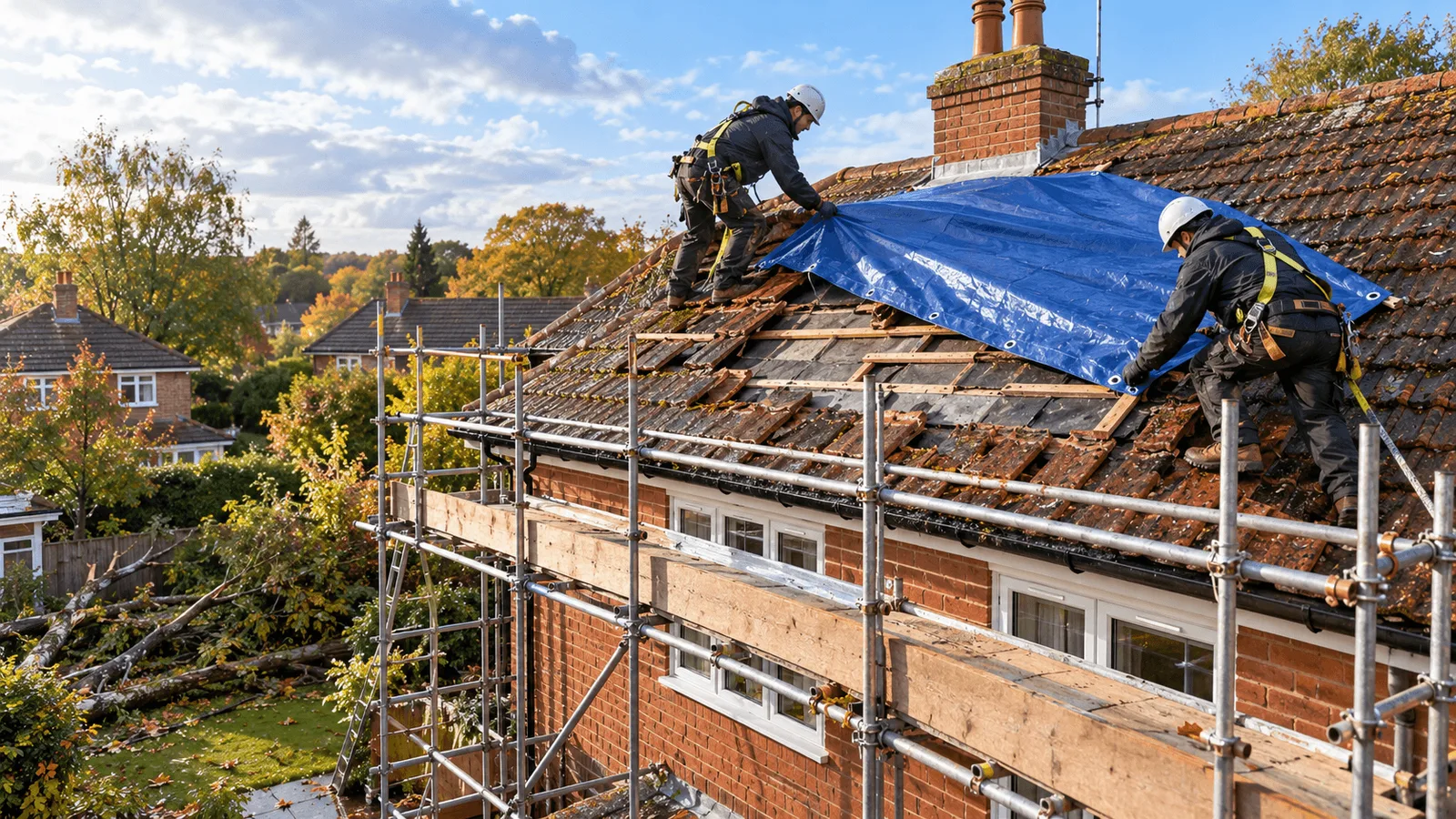
Quick guide
When is a temporary roof repair after storm damage needed?
- Missing roof tiles: Exposed areas may allow wind-driven rain to enter.
- Active roof leaks: Water is dripping or flowing into the property.
- Damaged flashing: Roof junctions are no longer properly weatherproofed.
- Torn flat roof membranes: The waterproof covering has split or lifted.
- Fallen branches: Impact damage has affected roof materials or supporting components.
- Displaced ridge tiles: Loose or missing ridge components expose vulnerable roof areas.
- Unsafe repair conditions: Severe weather or access problems prevent immediate permanent repairs.
Remember: Temporary repairs are designed to reduce immediate risks and water entry. They aren't necessarily a substitute for permanent roofing work.
Introduction
Now comes the big question: do you need a complete repair immediately, or will temporary protection keep your property safe until permanent work can begin?
A temporary roof repair after storm damage is often needed when the roof has lost some of its weatherproofing, rainwater is entering the property, or damaged materials create an immediate risk that cannot be permanently resolved straight away.
Strong winds, heavy rainfall, and falling debris can expose vulnerable areas of a roof. Acting quickly can help reduce further damage to insulation, ceilings, timber, and belongings.
For homeowners in Worcester and the surrounding areas, Aztech Roofing provides roofing services to help assess storm-related damage and identify suitable repair options.
But not every damaged roof needs temporary covering. Understanding when emergency weatherproofing is appropriate can help you make a safer, more informed decision.
1. Missing or Broken Roof Tiles Have Exposed the Roof
Strong winds can dislodge tiles, particularly when existing fixings or roofing components have deteriorated.
A single missing tile doesn't always mean extensive damage, but it can expose the underlay and other roof components to rainfall.
Several missing tiles may create a much larger vulnerable area.
Warning signs include:
- Gaps in the roof covering.
- Broken tiles scattered around the property.
- Visible underlay beneath missing tiles.
- Water staining inside the loft.
- Tiles hanging loose after strong winds.
When temporary protection may help: If the affected area cannot be permanently repaired immediately and further rain is expected, a roofer may recommend temporary weatherproofing.
For practical guidance on displaced roofing materials, read Slipped Roof Tiles.
2. Rainwater Is Actively Entering Your Property
An active leak is one of the clearest reasons to seek urgent roofing assistance.
Storm damage can allow rainwater to penetrate through missing tiles, damaged flashing, or torn waterproofing materials.
Once inside, water may travel along roof timbers, insulation, and internal surfaces before becoming visible.
Common warning signs include:
- Water dripping through ceilings.
- Rapidly spreading damp patches.
- Wet loft insulation.
- Water running down internal walls.
- Dripping around roof junctions.
When temporary protection may help: A professional may install a suitable waterproof covering or carry out a limited repair to reduce further water entry until permanent work is possible.
Important: If water is entering near electrical fittings, avoid touching affected equipment and seek qualified assistance.
For substantial leaks or hazardous roof damage, Urgent Roof Repairs may be appropriate.
3. Flashing Around Chimneys or Roof Junctions Is Damaged
Flashing helps prevent water entering where the roof meets chimneys, walls, dormers, and other structures.
During severe weather, already weakened flashing may become displaced or damaged.
This can create gaps that allow wind-driven rain to reach vulnerable areas.
Look for:
- Loose or lifted flashing.
- Gaps around chimney bases.
- Water staining near chimney breasts.
- Damaged roof-to-wall junctions.
- Debris or displaced metal roofing components.
When temporary protection may help: If flashing replacement requires specialist access or cannot be completed immediately, temporary weatherproofing may reduce water entry.
However, the final repair must restore the affected junction correctly.
Simply applying sealant over damaged flashing may not resolve the underlying problem.
4. A Flat Roof Membrane Has Torn or Lifted
Flat roofs rely on waterproof coverings such as EPDM rubber, felt, or other suitable roofing systems.
Strong winds can damage vulnerable edges, poorly secured details, or already weakened sections.
Falling branches and debris may also puncture the membrane.
Signs of damage include:
- Torn waterproofing materials.
- Lifting roof edges.
- Exposed roof decking.
- Water entering beneath the membrane.
- Visible impact damage.
When temporary protection may help: A roofer may use compatible temporary waterproofing measures to protect the damaged area until a permanent membrane repair can be completed.
The repair method depends on the existing material, roof condition, and weather.
Using incompatible adhesives or coverings can create additional problems, so professional assessment is important.
5. Falling Branches or Debris Have Damaged the Roof
Storms can bring down branches, dislodge nearby materials, or send debris onto roof surfaces.
Impact damage may affect more than the visible roof covering.
Depending on the force involved, it can damage:
- Roof tiles or slates.
- Ridge components.
- Flashing.
- Battens.
- Roof decking.
- Structural timbers.
When temporary protection may help: Once the area has been made safe and assessed, temporary weatherproofing may be needed to protect exposed sections while further repairs are planned.
If a large tree or branch is resting on the roof, do not attempt to remove it yourself.
There may be hidden structural damage or unstable debris.
The Met Office provides seasonal guidance on preparing for and responding to severe weather.
6. Ridge Tiles Have Become Loose or Displaced
Ridge tiles protect the highest point where two pitched roof slopes meet.
Their exposed position means they experience significant wind pressure during storms.
If ridge mortar has deteriorated or mechanical fixings have failed, ridge tiles may become loose or fall.
Missing ridge tiles can expose vulnerable roof junctions and increase the risk of water penetration.
When temporary protection may help: If the ridge cannot be permanently repaired straight away, a professional may recommend temporary measures to protect the affected section.
However, loose ridge tiles also present a falling-object hazard.
Keep people away from the area beneath visibly unstable roofing materials until the risk has been assessed.
7. Permanent Repairs Cannot Be Completed Immediately
Sometimes, a roof needs urgent attention even when the damage is relatively straightforward.
The challenge may be that permanent repairs cannot be completed safely or practically at that moment.
Possible reasons include:
- Continuing high winds.
- Heavy rainfall.
- Unsafe roof access.
- Specialist materials being unavailable.
- Scaffolding requirements.
- Hidden damage requiring further investigation.
In these situations, temporary weatherproofing may help protect the property until the correct permanent repair can be arranged.
Safety comes first: No temporary repair should require a roofer or homeowner to work in unsafe conditions.
If severe weather prevents roof access, internal damage limitation may be the safest immediate option.
What Types of Temporary Roof Repairs Are Used?
The most suitable temporary repair depends on the roof material, extent of damage, and accessibility.
Common professional approaches may include:
Not every method is suitable for every roof.
For example, waterproof sheeting must be secured appropriately and must not create additional wind hazards or interfere with drainage.
A temporary membrane patch also needs to be compatible with the existing roofing material.
A professional should explain what the temporary repair is intended to achieve, its limitations, and what permanent work remains necessary.
Temporary Roof Repair vs Permanent Roof Repair
Understanding the difference helps homeowners avoid assuming that a short-term solution has fully resolved the problem.
A temporary roof repair after storm damage can be a valuable first step, but it shouldn't become a forgotten patch.
If the roof remains vulnerable beneath temporary protection, further rainfall and weather exposure may still create problems.
Professional Roof Repairs can address the underlying defects once the damage has been assessed and suitable working conditions are available.
What Should You Do Immediately After Storm Damage?
If you suspect your roof has been damaged, take these steps in order.
Step 1: Stay Away From Dangerous Areas
Avoid standing beneath loose roof tiles, damaged gutters, or unstable branches.
If ceilings are sagging or the roof structure appears unsafe, keep everyone clear of the affected area.
Step 2: Check for Water Entry Indoors
Look for dripping water, ceiling stains, and wet insulation.
Do not enter unsafe loft spaces or touch electrical equipment near leaks.
Step 3: Limit Internal Damage Where Safe
Move belongings away from affected areas if doing so presents no risk.
Place containers beneath minor drips only where ceilings and electrical installations are safe.
Step 4: Photograph Visible Damage
Take pictures from a safe ground-level position.
Photographs can help explain the problem to a roofing contractor and may be useful for an insurance claim.
Step 5: Contact Your Insurer
Report significant storm damage promptly and check what your policy requires.
Some policies may cover sudden storm-related damage, while exclusions can apply to wear and tear or poor maintenance.
Ask whether the insurer requires photographs, quotations, or authorisation before permanent repairs.
Step 6: Arrange a Professional Roof Assessment
Explain what happened, whether water is entering, and whether any roofing components appear unstable.
A professional can determine whether temporary weatherproofing, immediate safety work, or permanent repairs are appropriate.
For more detailed guidance, read What to Do After Storm Damage.
How Long Can a Temporary Roof Repair Last?
There is no universal lifespan for temporary roof repairs.
The duration depends on the repair method, weather exposure, roof condition, and how securely the temporary materials can be installed.
A temporary covering may be suitable for a short period while permanent work is arranged, but it should not be assumed to withstand repeated storms indefinitely.
Factors affecting its performance include:
- Wind strength and direction.
- Continued rainfall.
- Roof pitch and shape.
- Quality of installation.
- Existing structural damage.
- Type of temporary waterproofing.
The safest approach is to arrange permanent repairs as soon as reasonably practical.
A roofer should explain whether the temporary work needs monitoring and what warning signs might indicate that it is no longer effective.
How Much Does a Temporary Roof Repair Cost in the UK?
Costs vary considerably because storm damage can range from a few missing tiles to extensive roof exposure.
The quotation may depend on:
- Size of the damaged area.
- Roof height and accessibility.
- Materials required.
- Whether scaffolding or specialist equipment is needed.
- Urgency of the work.
- Weather and safety conditions.
- Extent of underlying damage.
A small, accessible repair may cost less than protecting a large roof section requiring specialist access.
However, temporary work can involve significant access and safety costs, even when the visible damage appears limited.
Ask for a clear quotation explaining the temporary measures, any exclusions, and the likely next steps.
Avoid assuming that the cost of temporary weatherproofing includes the permanent repair.
How to Prevent Storm Damage From Becoming a Bigger Problem
You can't stop severe weather, but maintaining your roof can help reduce avoidable vulnerabilities.
Consider these practical steps:
- Arrange periodic roof inspections. Identify loose tiles, deteriorating mortar, and damaged flashing before storms.
- Keep gutters and outlets clear. Effective drainage helps prevent water accumulating around vulnerable areas.
- Repair minor defects promptly. Small weaknesses can become more serious during high winds.
- Check the roof after severe weather. Look for visible damage from a safe location.
- Address recurring leaks. Repeated water entry may indicate an unresolved roofing defect.
If you're unsure what a professional assessment involves, explore the Roof Inspection Process.
For information about professional roofing practices and standards, the National Federation of Roofing Contractors is another useful resource.
Key Takeaways
A temporary roof repair after storm damage is needed when the roof requires urgent protection but permanent repairs cannot yet be completed safely or practically.
Here's what homeowners should remember:
- Missing tiles, damaged flashing, and torn membranes can expose your property to water entry.
- Active leaks and unstable roof components require prompt attention.
- Temporary weatherproofing can help limit further damage, but it may not resolve the underlying defect.
- Unsafe weather conditions can delay roof access, making safety the immediate priority.
- Permanent repairs should follow as soon as practical to restore the roof's long-term weather resistance.
- Professional inspections help determine the right response and identify damage that isn't visible from the ground.
If your roof has been damaged by strong winds or heavy rain in Worcester or the surrounding areas, don't assume that every problem requires a full replacement—or that a temporary patch will be enough.
Explore Free Roof Inspections to understand the extent of the damage and the available repair options.
A temporary repair can buy valuable time, but a properly completed permanent repair is what puts the storm behind you.
FAQs
When is a temporary roof repair after storm damage necessary?
A temporary roof repair may be necessary when storm damage leaves the roof exposed to rain or creates a risk of further water entry. It is particularly useful when permanent repairs cannot be completed immediately because of weather, access, or material availability. A professional roofer can determine whether temporary weatherproofing is appropriate.
Can I cover a storm-damaged roof with a tarpaulin myself?
Climbing onto a damaged roof to install a tarpaulin is dangerous, especially during or shortly after severe weather. Improperly secured coverings can also become wind hazards or cause additional damage. Temporary roof coverings should be installed by professionals using suitable access and safety equipment.
How long can temporary roof repairs remain in place?
The suitable duration depends on the materials used, roof condition, installation method, and expected weather. Some temporary measures may provide short-term protection while permanent work is scheduled, but their performance cannot be guaranteed indefinitely. Arrange permanent repairs promptly and follow the roofer's advice about monitoring the temporary protection.
Will home insurance cover a temporary roof repair after storm damage?
Some UK home insurance policies may cover reasonable emergency measures taken to prevent further damage following an insured storm event. Coverage depends on the policy wording, cause of damage, exclusions, and any authorisation requirements. Contact your insurer promptly and keep photographs, invoices, and records of the work.
Do I need a full roof replacement after storm damage?
Not necessarily, because isolated storm damage can often be addressed through targeted roof repairs. Replacement may be appropriate when large sections of the roof are extensively damaged or the existing roofing system is already significantly deteriorated. A professional inspection can establish whether local repairs, broader refurbishment, or replacement offers the most suitable solution.
Related reading
Explore local roofing help
A guide cannot diagnose a specific roof. Explore our services and local coverage, or arrange a free inspection.
Need advice on your roof?
Start with a free inspection and a clear explanation of the options.