
Solar Panel Installation
How Does Roof Flashing for Solar Panels Prevent Leaks?
Discover how roof flashing for solar panels prevents leaks, protects mounting points, and keeps your roof watertight during solar installation.
By Aztech Roofing ·
Quick guide
- Discover how roof flashing for solar panels prevents leaks, protects mounting points, and keeps your roof watertight during solar installation.
TL;DR – Quick Guide
- What is solar panel roof flashing? Weatherproof detailing that protects vulnerable areas around solar mounting points.
- How does it prevent leaks? It directs rainwater over and away from roof penetrations and exposed junctions.
- Is flashing always required? The exact waterproofing method depends on the roof covering and mounting system.
- What causes leaks? Poor installation, cracked tiles, unsuitable flashing, and incorrectly sealed penetrations.
- Can existing roofs support solar panels? Many can, provided the roof structure and covering are suitable.
- Best preparation: Arrange a roof inspection and address existing defects before installation.
What Is Roof Flashing for Solar Panels?
Roof flashing is a weather-resistant component used to protect vulnerable areas where water could enter a building.
Traditional flashing is commonly found around chimneys, skylights, roof valleys, and wall junctions.
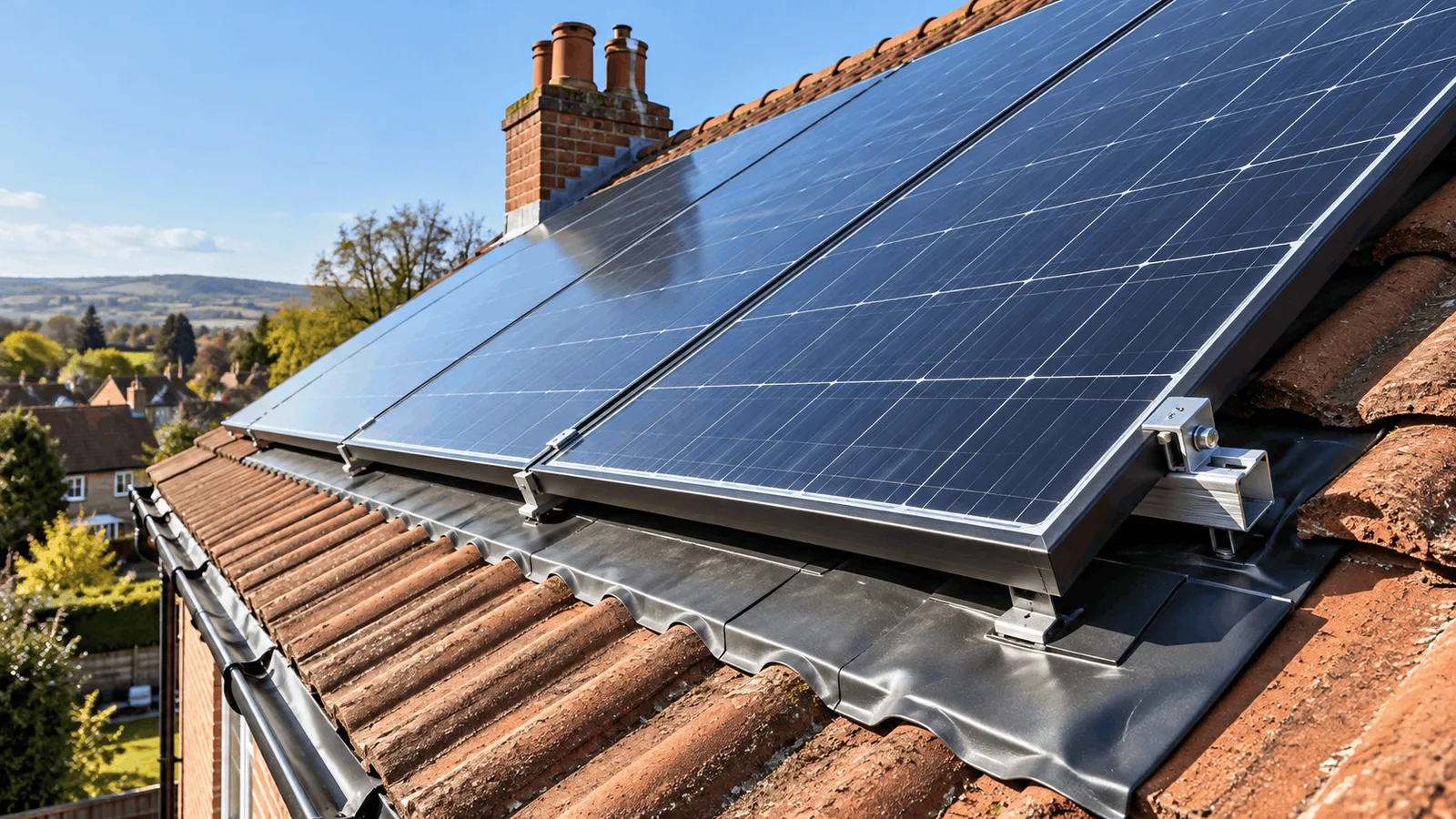
Solar installations may require similar protection where mounting equipment passes through or interfaces with the roof covering.
Depending on the roofing system, roof flashing for solar panels may include purpose-designed metal components, proprietary weatherproof mounting assemblies, or compatible flashing details.
Its purpose is straightforward: keep rainwater moving down the roof instead of allowing it beneath the covering.
For homeowners planning a new system, Aztech Roofing's Solar Panel Installation service is a useful starting point for understanding the roofing and installation work involved.
How Does Roof Flashing for Solar Panels Prevent Leaks?
Flashing protects the areas where mounting equipment interacts with the roof.
It does this through several important functions.
1. Directing Rainwater Away From Mounting Points
Rainwater naturally travels down a pitched roof.
Correctly installed flashing works with this drainage pattern, guiding water over vulnerable junctions rather than allowing it to enter beneath them.
Proper overlaps are essential because wind-driven rain can travel in unexpected directions.
2. Protecting Roof Penetrations
Some solar mounting systems require fixings that pass through the roof covering to reach suitable structural supports.
These penetrations need appropriate waterproofing.
Purpose-designed flashing or weatherproof mounting components help protect the fixing locations from rainwater.
The exact method varies between tiled, slate, metal, and flat roofing systems.
3. Accommodating Roof Movement
Roofing materials naturally expand, contract, and move slightly as temperatures change.
A suitable mounting and flashing system must account for these movements without losing its weatherproof connection.
Incorrectly installed components can loosen, distort, or place pressure on surrounding materials.
4. Protecting Surrounding Tiles and Slates
Solar brackets must be positioned carefully to avoid placing unnecessary pressure on roof coverings.
Poorly fitted brackets can lift tiles or crack slates, creating openings for water.
Correct mounting details and compatible flashing help maintain the roof's existing drainage path.
For more information about weatherproof roof junctions, see Aztech Roofing's Lead Work & Flashing service.
What Causes Roof Leaks After Solar Panel Installation?
Solar panels don't automatically cause roof leaks.
Problems usually arise when mounting equipment, flashing, or existing roofing materials fail to provide adequate waterproofing.
Common causes include:
- Incorrectly installed flashing: Poor overlaps or incompatible components allow water beneath the roof covering.
- Cracked tiles or slates: Damage during installation creates gaps around mounting points.
- Poorly sealed penetrations: Unsuitable or incorrectly applied waterproofing fails to protect fixings.
- Loose mounting brackets: Movement may affect surrounding roofing materials.
- Existing roof defects: Old flashing, damaged underlay, or deteriorated tiles may already be vulnerable.
- Inadequate installation planning: Solar equipment may be fitted without properly assessing the roof's condition.
If flashing is already damaged, it makes sense to repair it before adding solar equipment.
Aztech Roofing's guide to Roof Flashing Repairs explains common flashing problems and why timely repairs matter.
Does Every Solar Panel Installation Need Roof Flashing?
Not necessarily.
Different roofing materials and mounting systems require different waterproofing approaches.
Some mounting systems use integrated weatherproof components rather than separate, traditional flashing pieces.
The important question isn't simply whether flashing is visible.
It's whether the entire mounting system preserves the roof's weather resistance.
How Can You Tell If Solar Panel Roof Flashing Is Damaged?
Flashing defects aren't always easy to spot because solar panels may partially conceal mounting points.
However, several warning signs can suggest a problem:
- Damp patches appearing after rainfall
- Water stains on ceilings or loft timbers
- Cracked or displaced tiles near solar panels
- Visible gaps around mounting equipment
- Loose or distorted flashing components
- Recurring leaks during heavy or wind-driven rain
These symptoms don't always mean the flashing is responsible. Damaged roof coverings, condensation, or unrelated defects can produce similar signs.
A professional roof inspection can help identify the actual cause before repairs begin.
Should You Repair Your Roof Before Installing Solar Panels?
Absolutely—if the roof has existing defects.
Solar panels are a long-term investment, and fitting them over a damaged roof can create avoidable complications.
Once panels are installed, accessing certain roofing materials may require temporary removal of solar equipment.
Before installation, check for:
- Damaged tiles or slates: Replace cracked, missing, or slipping roof coverings.
- Deteriorated flashing: Repair defective chimney, valley, or wall flashing.
- Existing leaks: Identify and resolve water entry before installing mounting equipment.
- Structural concerns: Confirm the roof can accommodate the proposed system and associated loads.
- Ageing roofing materials: Consider whether substantial roof repairs are likely to be needed soon.
Aztech Roofing's guide to Preparing Your Roof for Solar Panels covers the steps homeowners should consider before installation.
You can also explore Free Roof Inspections to find out about having your roof assessed before committing to solar work.
Can Damaged Solar Panel Flashing Be Repaired?
Yes, many localised flashing defects can be repaired.
The appropriate solution depends on the roof covering, mounting system, and extent of the damage.
Repairs may involve:
- Replacing cracked or incorrectly positioned tiles
- Renewing defective flashing components
- Correcting unsuitable mounting details
- Restoring weatherproof connections around penetrations
- Repairing damaged roofing underlay where necessary
However, solar panels may need to be temporarily removed or made safe to access certain mounting points.
Roofing repairs and electrical solar work should be coordinated by appropriately competent professionals.
Avoid attempting to lift panels, disconnect electrical equipment, or repair roof penetrations yourself.
How Much Does Roof Flashing for Solar Panels Cost?
The cost of roof flashing for solar panels depends on the roof type, mounting system, accessibility, and work required.
Several factors affect the price:
For a new solar installation, compatible mounting and waterproofing components should be included in the overall system design and quotation.
For existing leaks, request a detailed assessment before paying for repairs.
Key Takeaways
Proper roof flashing for solar panels helps protect your home from water damage while supporting a reliable solar installation.
- Solar mounting points must be integrated correctly with the existing roofing system.
- Flashing and compatible waterproof components direct rainwater away from vulnerable areas.
- Incorrect mounting details, damaged tiles, and poorly protected penetrations can cause leaks.
- Different roof types require different mounting and waterproofing solutions.
- Existing roof damage should be repaired before solar panels are installed.
- Localised flashing defects can often be repaired without replacing the entire roof.
- Professional inspections help identify hidden problems and avoid unnecessary repairs.
If you're planning solar panels or concerned about existing roof flashing, Aztech Roofing can help you explore roofing, leadwork, and solar installation solutions.
A successful solar installation shouldn't just generate electricity—it should leave your roof properly protected against the British weather.
FAQs
Is roof flashing for solar panels always necessary?
Not every solar installation requires separate, traditional flashing components. Some mounting systems use integrated waterproofing details designed for specific roofing materials. The important requirement is that the completed installation maintains the roof's weather resistance.
Can solar panel roof flashing prevent all roof leaks?
Correctly installed flashing helps prevent water entering around vulnerable solar mounting points. However, it cannot prevent leaks caused by unrelated problems such as cracked tiles, damaged valleys, or deteriorated roofing materials. A roof inspection helps identify existing weaknesses before installation.
How long does roof flashing for solar panels last?
The lifespan depends on the flashing material, mounting system, installation quality, and weather exposure. Suitable components can provide many years of reliable protection when correctly installed and maintained. Damaged or loose flashing should be assessed promptly rather than waiting for a leak to develop.
Can damaged solar panel flashing be repaired without removing the panels?
Some flashing repairs can be completed without removing solar panels if the affected area remains accessible. Other repairs require temporary panel removal to reach concealed mounting points or damaged roofing materials. A professional assessment can determine the safest and most practical approach.
Should I have my roof inspected before solar panel installation?
Yes, a roof inspection can identify damaged tiles, deteriorated flashing, existing leaks, and potential structural concerns. Addressing these problems beforehand reduces the likelihood of difficult repairs once solar panels are installed. It also helps ensure the proposed mounting system is suitable for the roof's condition and construction.
Related reading
Explore local roofing help
A guide cannot diagnose a specific roof. Explore our services and local coverage, or arrange a free inspection.
Need advice on your roof?
Start with a free inspection and a clear explanation of the options.