
Solar Panel Installation
What Happens When Replacing a Roof With Solar Panels Already Installed?
Replacing a roof with solar panels? Learn how removal, roof replacement, reinstallation, and costs work before starting your project.
By Aztech Roofing ·
Quick guide
- Replacing a roof with solar panels? Learn how removal, roof replacement, reinstallation, and costs work before starting your project.
TL;DR – Quick Guide
- Can you replace a roof with solar panels installed? Yes, but the panels usually need to be temporarily removed.
- Who removes the panels? Competent solar professionals should handle electrical isolation, disconnection, and reinstallation.
- What happens to the roof? Roofers remove the existing covering, inspect the underlying structure, and install the new roofing system.
- Can the same panels be reused? Usually, provided they're in suitable condition and compatible with the new roof.
- Will the solar system be offline? Yes, electricity generation will normally stop while the system is disconnected.
- What affects the cost? Roof size, roofing materials, panel removal, access requirements, and any necessary repairs.
- Best preparation: Arrange a roof assessment and coordinate both teams before work begins.
Can You Replace a Roof Without Removing Solar Panels?
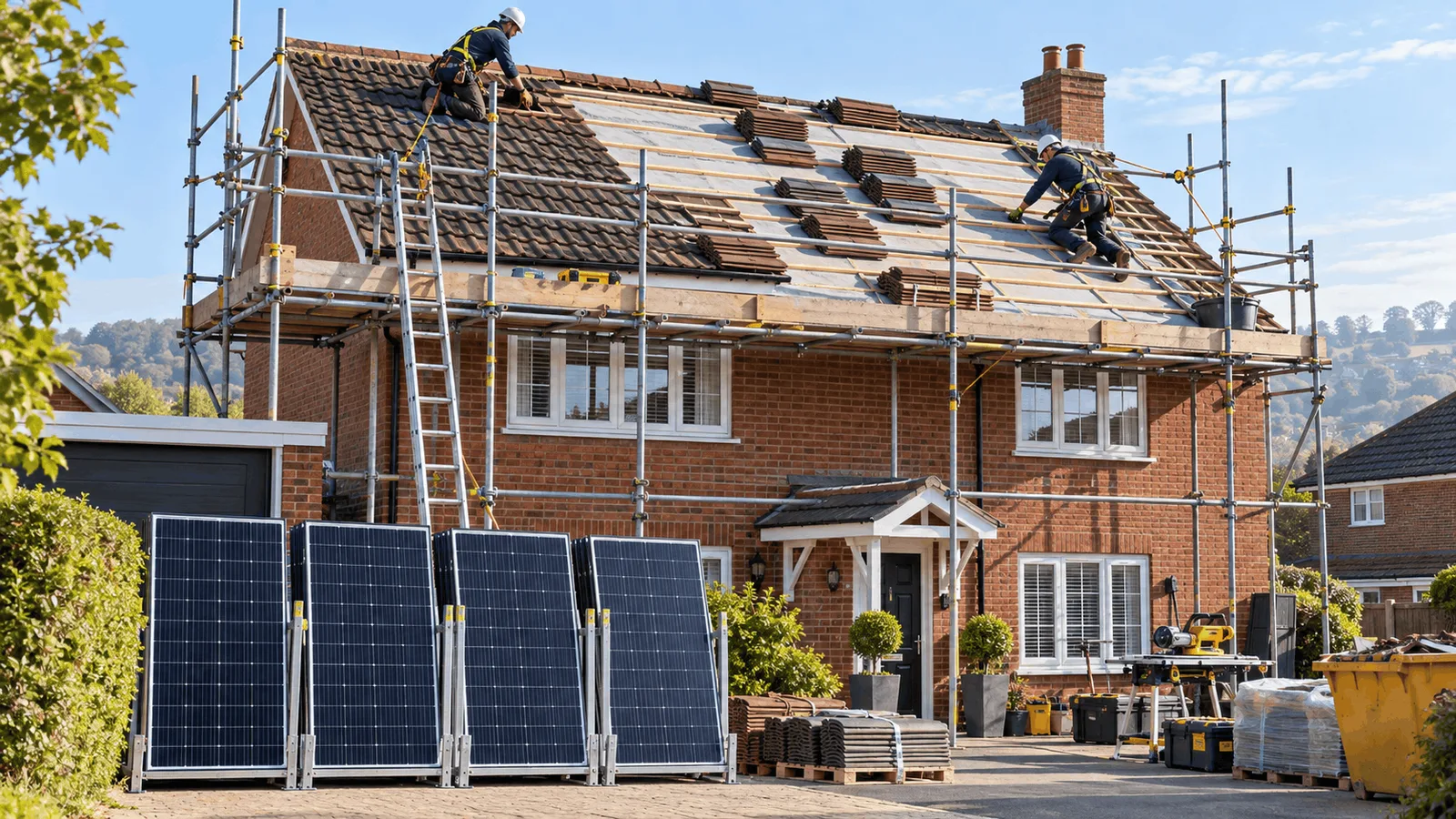
In most cases, solar panels must be removed before the underlying roof covering can be replaced.
Panels and mounting rails can obstruct access to tiles, slates, underlay, battens, and other roofing components.
Attempting to replace roofing materials around an installed solar array may leave inaccessible areas untreated and compromise the finished roof.
Temporary removal allows roofers to inspect the roof properly and complete the replacement without working around sensitive electrical equipment.
For homeowners considering a new roof, Aztech Roofing's Roof Replacements service provides a starting point for exploring the work involved.
What Happens When Replacing a Roof With Solar Panels? Step by Step
The process typically involves six main stages.
1. Inspecting the Existing Roof and Solar System
Before work begins, professionals assess the condition of the roof and the solar installation.
This helps identify:
- Damaged tiles or slates
- Deteriorated underlay and battens
- Structural concerns
- Existing leaks or flashing defects
- Solar mounting arrangements
- Access and scaffolding requirements
The assessment also helps determine whether the existing panels and mounting equipment can be reused.
Homeowners can explore Aztech Roofing's Free Roof Inspections page when planning their next steps.
2. Safely Disconnecting and Removing the Solar Panels
Before roofing work starts, competent solar professionals arrange the appropriate electrical isolation and disconnection procedures.
They then remove the panels and, where necessary, the mounting rails and brackets.
The equipment should be labelled, handled carefully, and stored securely to reduce the risk of damage.
Solar panels can remain electrically hazardous in daylight, even when parts of the system are switched off. Removal and electrical work should never be treated as an ordinary DIY roofing task.
3. Removing the Existing Roof Covering
Once the solar equipment has been removed, roofers can begin stripping the existing roof.
Depending on the project, this may involve removing:
- Old tiles or slates
- Roofing battens
- Damaged underlay
- Deteriorated flashing
- Other roofing components requiring renewal
The exposed structure can then be inspected for hidden damage.
If you're unfamiliar with the stages involved, Aztech Roofing's guide to the Roof Replacement Process explains what homeowners can expect during a typical project.
4. Installing the New Roof
Roofers repair or replace defective components and install the new roofing system.
This may include suitable underlay, battens, roof coverings, ventilation details, and flashing.
The new roof must also be compatible with the intended solar mounting arrangement.
For example, changing from concrete tiles to natural slate may require different mounting components.
It's important to plan these details before the roof is completed, rather than discovering compatibility problems during solar reinstallation.
5. Reinstalling the Solar Panels
After the roof is ready, competent solar installers refit the mounting system and panels.
Existing equipment may be reusable if it remains serviceable and meets the requirements of the new installation.
However, damaged brackets, unsuitable fixings, or incompatible mounting components may need replacing.
The installation must maintain the new roof's waterproofing and accommodate the relevant structural and wind loads.
Aztech Roofing's Solar Panel Installation service is relevant for homeowners planning roofing work alongside solar equipment.
6. Testing and Recommissioning the System
Once the panels are reinstalled, the solar system needs appropriate electrical checks before being returned to service.
These may include checking connections, mounting security, and system performance.
The installer should confirm that the equipment is operating correctly and provide relevant documentation for the work completed.
Can You Reuse Existing Solar Panels After Roof Replacement?
Yes, many homeowners can reuse their existing solar panels.
However, several factors determine whether this is practical.
Reusing suitable panels can help avoid the cost of purchasing a completely new solar system.
However, replacement may be worth considering if the existing equipment is damaged, incompatible, or nearing the end of its useful life.
How Much Does Replacing a Roof With Solar Panels Cost?
The cost of replacing a roof with solar panels is generally higher than a comparable roof replacement without solar equipment.
That's because the project includes additional labour and specialist work.
Typical cost factors include:
- Roof size: Larger roofs require more materials and labour.
- Roofing material: Slate, concrete tiles, and other coverings have different installation costs.
- Number of solar panels: Larger arrays usually take longer to remove and reinstall.
- Access requirements: Scaffolding and difficult roof layouts can increase costs.
- Mounting compatibility: New brackets or rails may be required.
- Hidden damage: Deteriorated timbers or other structural defects can increase the scope of work.
For a clearer breakdown of roofing expenses, read Aztech Roofing's guide to Roof Replacement Costs.
Request a quotation that separates roofing work from solar removal and reinstallation. This makes it easier to understand the total cost and compare proposals.
How Long Does the Process Take?
The timeline depends on the roof's size, complexity, condition, and the availability of both roofing and solar professionals.
A straightforward domestic roof replacement may take several working days, while larger or more complicated projects can take longer.
Solar panel removal and reinstallation add extra stages to the schedule.
Weather delays, unexpected structural repairs, or replacement mounting equipment can also affect completion.
During the period when the solar system is disconnected, it will not generate electricity for the property.
Coordinating the roofing and solar teams in advance can help minimise unnecessary downtime.
Should You Replace Your Roof Before Installing Solar Panels?
If your roof is already approaching the end of its useful life, replacing it before installing solar panels may be the more economical choice.
Installing panels on a deteriorating roof can lead to additional costs if they need to be removed again for roofing repairs.
Before fitting a new solar system, consider:
- Roof condition: Are there damaged tiles, leaks, or deteriorated flashing?
- Remaining roof lifespan: Is substantial roofing work likely in the near future?
- Structural suitability: Can the roof support the proposed mounting system?
- Roofing material: Is the covering compatible with the planned installation?
- Future access: Could maintenance become more difficult once panels are installed?
Aztech Roofing's guide to Preparing Your Roof for Solar Panels explains how to assess and prepare your roof before installation.
What Mistakes Should Homeowners Avoid?
When replacing a roof with solar panels, poor planning can create unnecessary expense.
Avoid these common mistakes:
- Hiring contractors without coordinating their schedules: The roof may be ready before the solar team is available.
- Assuming all mounting equipment can be reused: A new roof covering may require different components.
- Ignoring existing water damage: Hidden defects should be addressed while the roof is exposed.
- Overlooking waterproofing details: New mounting points must be integrated correctly with the replacement roof.
- Skipping system checks: Reinstalled solar equipment should be appropriately tested before operation.
- Choosing solely on price: Poor workmanship can create expensive roofing and electrical problems later.
A coordinated plan helps protect both investments: the new roof and the existing solar system.
Key Takeaways
Replacing a roof with solar panels requires additional planning, but it is a manageable project when the right professionals are involved.
- Solar panels usually need to be temporarily removed before a complete roof replacement.
- Competent solar professionals should handle electrical isolation, removal, and reinstallation.
- The existing panels can often be reused if they're in good condition.
- New roofing materials may require different solar mounting components.
- Roofing and solar teams should coordinate their work to minimise disruption.
- The project typically costs more than a standard roof replacement because of the additional solar work.
- Inspecting and repairing the roof before solar installation can prevent unnecessary future expenses.
If your roof needs replacing and you already have solar panels, Aztech Roofing can help you explore suitable roofing and solar installation solutions.
Your solar panels don't have to stand in the way of a better roof. They just need to be part of the plan.
FAQs
Do solar panels have to be removed when replacing a roof?
Yes, solar panels usually need to be temporarily removed when the entire roof covering is being replaced. This allows roofers to access the underlying materials and complete the work properly. Competent solar professionals should handle the electrical disconnection and removal process.
Can you reuse solar panels after a roof replacement?
Existing solar panels can often be reused if they're in good condition and compatible with the new roofing arrangement. However, damaged panels or unsuitable mounting equipment may need replacing. A professional assessment can determine which components are suitable for reinstallation.
How much extra does replacing a roof with solar panels cost?
The additional cost depends on the number of panels, roof accessibility, and complexity of removal and reinstallation. New mounting equipment, electrical work, or unexpected roof repairs may also increase the total. Requesting separate roofing and solar quotations helps clarify the additional expense.
How long will my solar panels be disconnected during roof replacement?
Your solar system will normally remain disconnected while the panels are removed and the roof replacement is completed. The duration depends on the roofing schedule, weather conditions, and availability of the solar installation team. Coordinating both contractors in advance can help reduce downtime.
Is it better to replace an old roof before installing solar panels?
Replacing an ageing or damaged roof before installing solar panels can help avoid future removal and reinstallation costs. A roof in good condition may not need replacement simply because solar panels are being added. A professional roof inspection can help determine the most practical approach for your property.
Related reading
Explore local roofing help
A guide cannot diagnose a specific roof. Explore our services and local coverage, or arrange a free inspection.
Need advice on your roof?
Start with a free inspection and a clear explanation of the options.