
Roof repairs
Roof Flashing Repairs Explained: Signs Your Flashing Needs Attention
Flashing protects the roof junctions where water is most likely to find a route inside.
By Aztech Roofing ·
Quick guide
- Flashing protects the roof junctions where water is most likely to find a route inside.
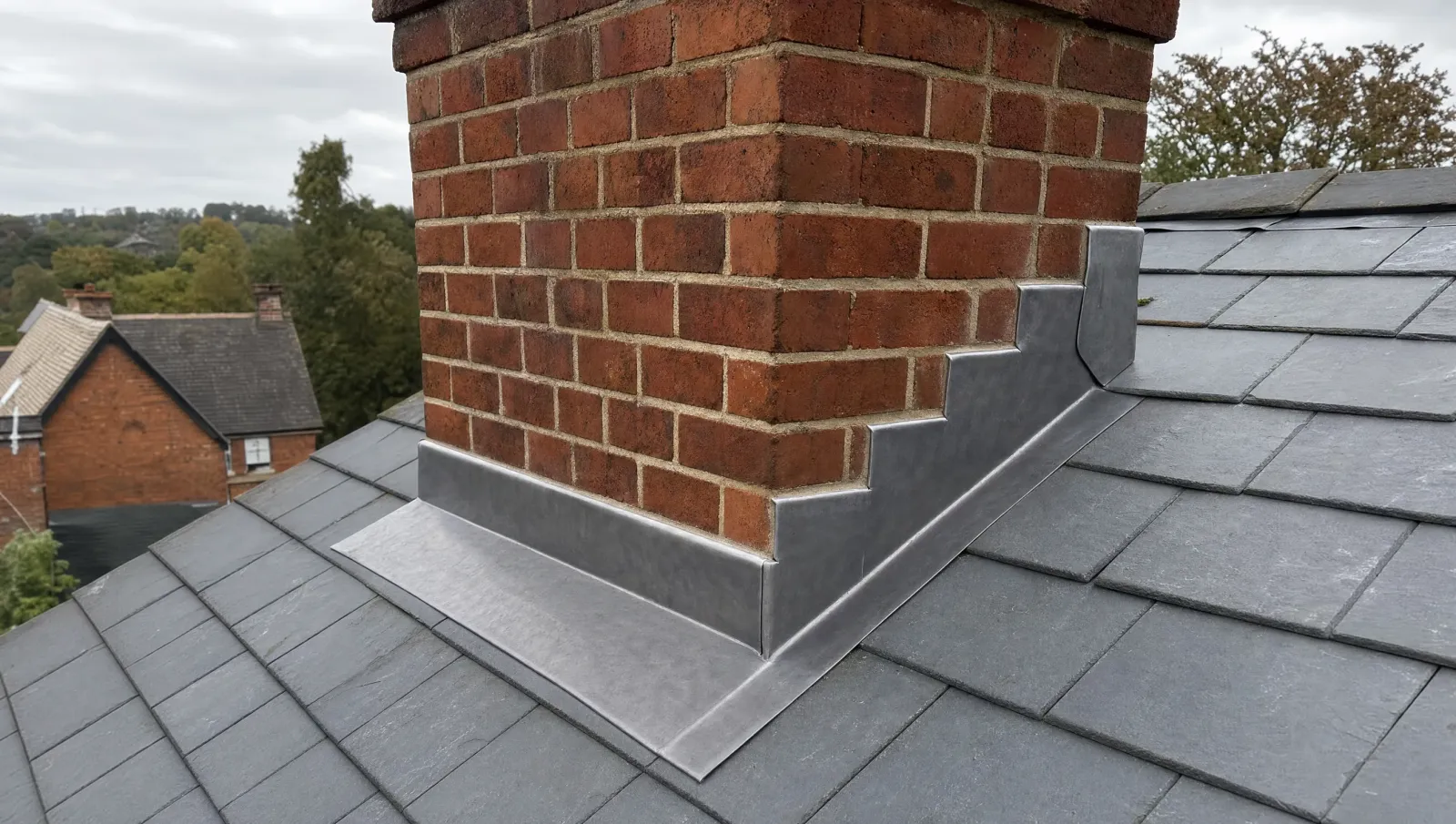
- Chimneys, abutment walls, roof windows and valleys rely on correctly formed flashing to direct water away.
- Book an inspection to trace the water route and determine whether the affected leadwork should be repaired, re-dressed or renewed.
What to look for
Chimneys, abutment walls, roof windows and valleys rely on correctly formed flashing to direct water away. The condition of the surrounding roof matters as much as the one visible sign. A fault at a tile, roof edge, flashing or outlet can affect nearby materials before it shows up as an indoor problem. Looking at the pattern of the issue gives a more useful starting point than assuming the most obvious surface is the source.
The visible symptom is still valuable information. Dark staining near a chimney breast, lifted edges, loose mortar and recurring damp after wind-driven rain are useful clues. Note when it began, whether it is getting worse, and whether it changes after prolonged rain or wind. These observations do not replace an inspection, but they help a roofer focus safely on the relevant part of the roof.
How the cause is assessed
Roof coverings, drainage and junction details work together to keep water out. Water can travel beneath tiles or slates, across underlay, along timbers or around masonry before it becomes visible inside. A reliable assessment follows that possible route rather than applying sealant or a surface patch to the first mark that appears.
A roofer will consider the accessible roof covering and the details around it, including flashings, valleys, ridge, roofline and drainage. The purpose is to establish whether the issue is limited to one detail or whether nearby materials are also under strain. That distinction makes the recommendation clearer and helps avoid repeat visits for the same underlying fault.
Repair, maintenance or wider work
A focused repair can be the right answer when the rest of the roof is sound and the cause is clearly limited. Where defects are repeated, spread across several areas, or involve tired materials below the covering, monitoring or wider renewal may be more dependable. The appropriate option should follow the condition found, not a one-size-fits-all rule.
Ask for a clear scope before work starts. It should explain the relevant material, access, weatherproof details and the reason the proposed work addresses the cause. This makes it easier to compare options and to understand what is included if the project needs scaffolding, replacement materials or follow-up work.
Planning with confidence
Good roofing decisions are easier when they are made from a clear diagnosis rather than during a stressful leak or immediately after poor weather. If the issue is not urgent, use the inspection to discuss timing, access and how the work will fit around other planned projects such as an extension, loft work or solar installation. Early planning gives more choice and reduces the pressure to make a decision before the scope is understood.
Keep the written recommendation and any photographs from the inspection with your property records. They provide useful context if the issue changes, if other trades are involved, or if you need to compare repair and replacement options later. A well-defined repair should make clear what has been addressed and which parts of the roof should simply be monitored over time. This also gives you a practical baseline for future maintenance conversations.
Choosing the next step
Book an inspection to trace the water route and determine whether the affected leadwork should be repaired, re-dressed or renewed. Avoid climbing onto the roof or attempting a temporary repair from a ladder. If water is entering, move belongings from the affected area where it is safe to do so and collect drips, but do not put yourself at risk to investigate the source.
For homes in Worcester and the West Midlands, Aztech Roofing can inspect the relevant roof area and explain the practical options before work is agreed. A calm, evidence-based assessment helps separate an urgent safety concern from planned maintenance or a longer-term roofing project.
FAQs
When should I act on roof flashing repairs?
Book an inspection to trace the water route and determine whether the affected leadwork should be repaired, re-dressed or renewed. Do not wait for a small issue to become a major internal leak; the right response depends on the cause, safe access and the wider roof condition.
Can I inspect the roof myself?
Do not climb onto a roof or use a ladder to inspect a high-level defect. Record what you can see from a safe position, keep people clear of any falling-material risk, and arrange professional assessment when repair work is needed.
What will a roofer check?
The inspection considers the visible symptom alongside the roof covering, junctions, drainage and nearby details. Dark staining near a chimney breast, lifted edges, loose mortar and recurring damp after wind-driven rain are useful clues. The aim is to explain the cause and the proportionate options before work is agreed.
Related reading
Explore local roofing help
A guide cannot diagnose a specific roof. Explore our services and local coverage, or arrange a free inspection.
Need advice on your roof?
Start with a free inspection and a clear explanation of the options.