
New Roofs
How Long Does It Take to Install a New Roof on a New Build?
Building a new home is exciting, but keeping the project on schedule? That's where things can get interesting.
By Aztech Roofing ·
Quick guide
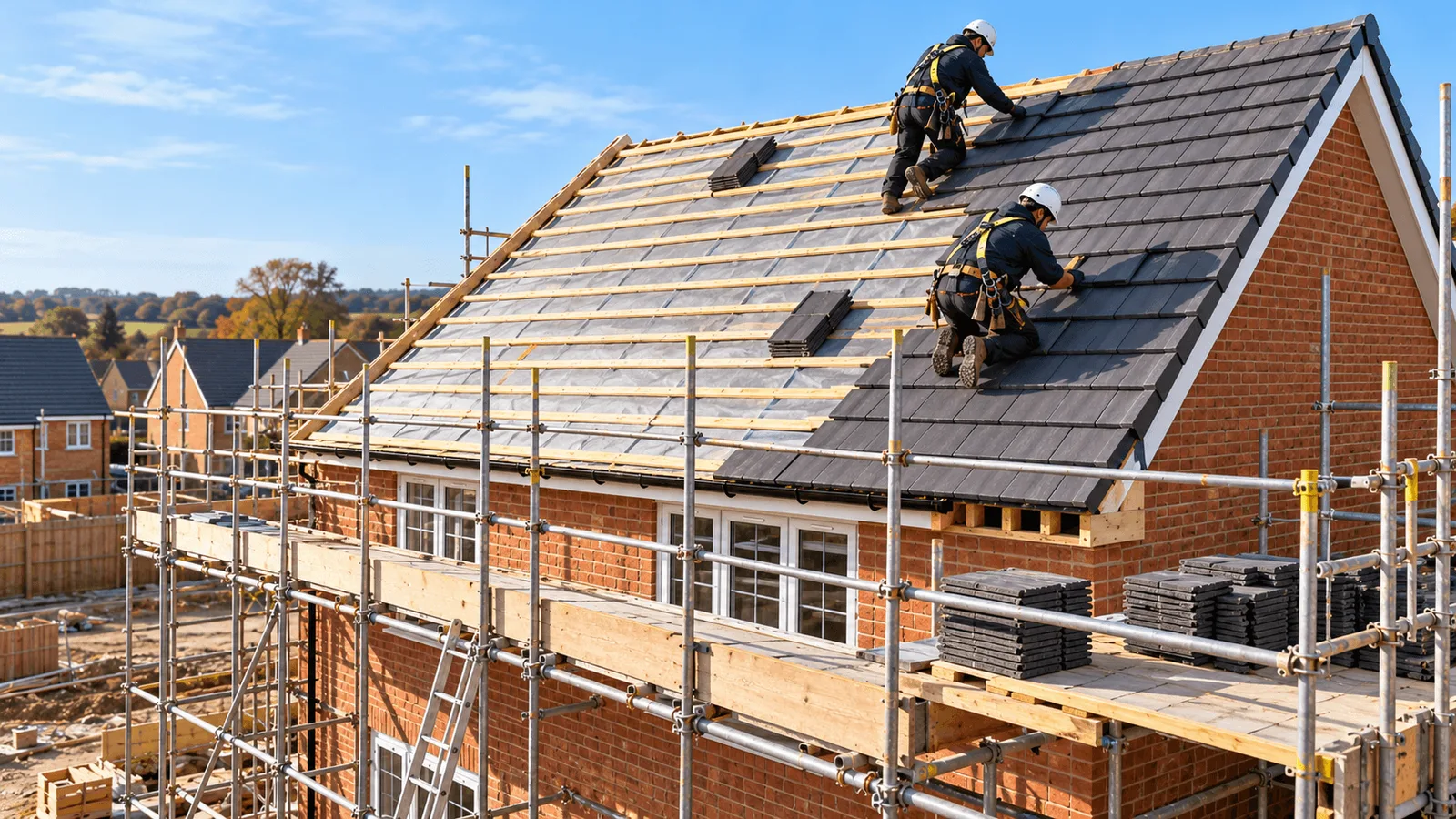
How long does it take to install a new roof? For many standard UK new-build homes, installing the roof covering can take around 3–7 working days once the roof structure is ready.
- Roof size and complexity.
- Roofing material.
- Weather conditions.
- Structural readiness.
- Scaffolding and site access.
- Availability of materials and contractors.
- Number of roof junctions and finishing details.
Bottom line: A straightforward roof may be completed within a working week, while a more complicated installation can take considerably longer.
Introduction
Between groundwork, bricklaying, roofing, and interior finishes, every stage needs careful coordination. And one of the biggest milestones is getting the roof installed so the building can be protected from the British weather.
So, how long does it take to install a new roof on a new build in the UK?
For a typical house with the roof structure already prepared, installing the roof covering may take approximately 3–7 working days. However, a complete new roof installation, including structural roof construction, weatherproofing, tiles or slates, and finishing details, can take 1–3 weeks or longer, depending on the project.
These are broad planning estimates rather than guaranteed installation times.
For homeowners and developers in Worcester and the surrounding areas, Aztech Roofing provides roofing services for new properties, helping ensure the roof is suitable for the building's design and requirements.
In this guide, we'll explain the typical installation timeline, what happens at each stage, and which factors can speed up or delay your project.
1. Roof Structure Preparation: Approximately 2–5 Days or More
Before tiles or slates can be installed, the roof needs a suitable supporting structure.
Depending on the building design, this may involve prefabricated roof trusses or a traditionally constructed timber roof.
The work can include:
- Installing roof trusses or rafters.
- Securing structural connections.
- Constructing roof valleys and other features.
- Checking alignment and dimensions.
- Preparing the structure for the roofing system.
A straightforward roof using prefabricated trusses may be assembled relatively quickly.
However, complex roof shapes, difficult lifting arrangements, or traditional cut-roof construction can take longer.
Important: Structural roof installation and roof covering installation may be carried out by different trades, so confirm which stages are included in your roofer's quotation.
2. Underlay and Battens: Approximately 1–2 Days
Once the roof structure is ready, the next stage typically involves installing the appropriate underlay and battens.
The underlay forms part of the roof's weather-resisting system, while battens provide fixing points for tiles or slates.
Work may include:
- Installing roofing underlay.
- Fitting counter-battens where specified.
- Securing roofing battens.
- Preparing eaves and ventilation details.
- Checking spacing for the chosen roof covering.
Correct batten spacing is particularly important because it affects how tiles or slates overlap and shed rainwater.
The National Federation of Roofing Contractors provides information about professional roofing practices and industry standards.
Why it matters: Rushing the preparation stage can create problems that are difficult to correct once the roof covering is installed.
3. Installing Roof Tiles or Slates: Approximately 2–5 Days
This is usually the stage homeowners picture when they think about a new roof installation.
Roofers work across the prepared roof structure, installing tiles or slates according to the roof design and manufacturer's requirements.
The installation time depends on the chosen material.
Concrete roof tiles can be relatively efficient to install on straightforward roof designs, particularly when larger-format tiles are specified.
Clay roof tiles may require more individual units and additional detailing, depending on their profile and format.
Natural slate often requires careful setting out, fixing, and detailing, which can affect installation time.
For help comparing materials, explore Tile vs Slate Roofing.
How long does it take to install a new roof with slate rather than tiles? Slate installation can take longer on some projects, but the actual difference depends on the roof layout, slate size, fixing method, and installation requirements.
4. Flashing, Ridge Tiles, and Roof Details: Approximately 1–3 Days
Once the main roof covering is installed, attention turns to the details that help make the roof weather-resistant.
These can include:
- Ridge and hip tiles.
- Lead or alternative flashing.
- Roof valleys.
- Chimney junctions.
- Verge and eaves details.
- Ventilation components.
- Roof windows and penetrations.
These features are important because roof junctions are common locations for water entry when poorly constructed.
A simple roof with few penetrations may require less finishing work than a roof containing several dormers, chimneys, and valleys.
Some of these tasks are completed alongside the main roof covering rather than as a separate stage.
5. Final Checks and Site Clearance: Approximately 1 Day
Before the roofing work is considered complete, the contractor should check the finished installation.
Depending on the project, this may involve:
- Inspecting tile or slate alignment.
- Checking ridge and verge details.
- Reviewing flashing and roof junctions.
- Confirming ventilation components are correctly installed.
- Removing roofing waste.
- Checking the work against the agreed specification.
Any required building control inspections or approvals should also be coordinated with the wider construction programme.
Remember: A roof looking finished doesn't automatically mean every inspection, document, or related building task has been completed.
Roof Size
A larger roof generally requires more materials and labour.
However, roof area isn't the only consideration.
A large, simple roof may be easier to install than a smaller roof with several complex junctions.
Roof Shape and Complexity
Features such as dormers, valleys, hips, chimneys, and roof windows increase the amount of cutting and detailing required.
These areas need careful installation to maintain effective weather protection.
Roofing Materials
Different roofing products require different installation techniques.
Tile size, slate dimensions, fixing requirements, and specialist components can all influence the schedule.
Weather Conditions
Rain, high winds, frost, and snow can delay roofing work.
Contractors must assess whether conditions allow safe access and proper installation.
The Met Office provides useful guidance about seasonal weather conditions in the UK.
Labour and Equipment
A properly coordinated roofing team with suitable equipment can complete work more efficiently.
However, the required workforce depends on the project's complexity and safe working arrangements.
Material Deliveries
Late deliveries or unavailable specialist components can interrupt progress.
Confirming material availability before installation begins helps reduce avoidable delays.
New Build Roof Installation vs Roof Replacement
Although the work involves many similar materials, installing a roof on a new building differs from replacing an existing roof.
For homeowners considering work on an existing property, professional Roof Replacements can help address ageing roof coverings and associated defects.
The guide to the Roof Replacement Process also explains how a replacement project is typically organised.
How Does Roofing Affect the Overall New Build Timeline?
Roof installation is an important construction milestone because it helps move the building towards becoming weather-resistant.
Once the roof covering and other external elements are sufficiently complete, certain internal works can proceed with less exposure to rainfall.
However, a completed roof alone doesn't make the entire building watertight.
Windows, doors, external walls, openings, and other construction details must also be properly finished.
For example, a new-build project may be delayed if roofing work is completed but roof windows or adjoining wall details remain unfinished.
Planning tip: Coordinate roofing work with the site manager, structural contractor, window installers, and other relevant trades.
If your project involves extending an existing property rather than building a new home, the guide to Roofing for Home Extensions explains additional design considerations.
Can a New Roof Be Installed in Winter?
Yes, new roof installations can take place during winter when conditions are suitable.
However, cold weather can introduce additional challenges.
These include:
- Shorter daylight hours.
- Frost and slippery roof surfaces.
- Heavy rainfall.
- Strong winds.
- Temperature restrictions for certain products.
- Delays to mortar-based or adhesive applications.
The Health and Safety Executive provides guidance on working safely at height during construction.
The key consideration is safe, correct installation—not simply finishing by a particular date.
A professional contractor should allow for weather-related delays when planning winter roofing work.
How Much Does a New Roof Installation Cost in the UK?
The cost of a new-build roof depends on much more than the installation timeframe.
Key factors include:
- Roof size: Larger roof areas require more materials.
- Roof design: Complex shapes and junctions increase labour.
- Material choice: Slate, clay, and concrete tiles have different costs.
- Structural requirements: New trusses or specialist structural work add to the project scope.
- Access arrangements: Scaffolding and lifting equipment may be required.
- Additional features: Roof windows, chimneys, valleys, and ventilation details affect pricing.
- Labour and location: Contractor availability and site conditions influence quotations.
A shorter installation isn't necessarily better value if important details are rushed.
Request an itemised quotation that clearly explains whether the price includes structural roof work, roof coverings, flashing, access equipment, waste removal, and final checks.
For new construction projects, professional New Roofs services can help homeowners understand the scope of roofing work required.
How to Avoid Delays During a New Roof Installation
A little preparation can prevent unnecessary disruption to your construction schedule.
1. Finalise the Roof Design Early
Confirm the roof pitch, materials, ventilation, roof windows, and other details before ordering materials.
Late design changes can affect both costs and installation time.
2. Confirm Material Availability
Check that tiles, slates, battens, underlay, flashing, and specialist components will be available when needed.
3. Coordinate Trades
Ensure the roof structure is ready before the roofing team arrives.
Delays to trusses, structural connections, or scaffolding can push back the installation.
4. Allow for Weather Delays
Build some flexibility into the schedule, particularly during autumn and winter.
5. Confirm Access and Safety Arrangements
Scaffolding, lifting equipment, and safe material storage should be planned in advance.
6. Arrange Appropriate Inspections
Coordinate any required inspections with building control and the project manager.
For homeowners who want to understand what a roofing assessment involves, Free Roof Inspections provides a starting point for discussing the property's roofing needs.
Key Takeaways
So, how long does it take to install a new roof on a new build in the UK?
For many straightforward homes, installing the roof covering may take approximately 3–7 working days, while a complete roof installation involving structural work and finishing details may take 1–3 weeks or longer.
Here's what matters most:
- Roof size and complexity have a major impact on installation time.
- Tiles, slates, and specialist roofing materials require different installation methods.
- Structural preparation must be completed before the roof covering can be installed.
- Weather conditions can delay work, particularly during winter.
- Flashing, ridge details, and ventilation are essential parts of the installation.
- Good coordination between trades helps avoid unnecessary delays.
- Quality matters more than speed when protecting a new home from the elements.
If you're planning a new-build property in Worcester or the surrounding areas, understanding the roofing schedule early can help keep the wider construction project on track.
Explore Free Roof Inspections to discuss your roofing requirements and understand the next steps.
A new roof is one of the biggest milestones in a building project. Getting it right is worth more than getting it done in record time.
FAQs
How long does it take to install a new roof on a typical UK house?
Installing the roof covering on a straightforward UK house may take approximately 3–7 working days once the supporting structure is ready. A complete installation involving structural construction, underlay, battens, coverings, and finishing details may take 1–3 weeks or longer. The actual timeframe depends on roof size, complexity, weather, and contractor availability.
Does a slate roof take longer to install than a tiled roof?
Slate roofing can take longer than some tiled roofing systems because individual slates often require careful setting out and fixing. However, installation speed also depends on slate size, roof complexity, and the experience of the roofing team. A contractor can provide a more accurate comparison once the roof design and materials are confirmed.
Can roof installation continue when it rains?
Some roofing tasks may be possible during light rain, depending on the materials, working conditions, and safety arrangements. Heavy rainfall can make roof surfaces hazardous and increase the risk of water entering the unfinished building. Contractors should assess conditions and protect exposed areas before deciding whether work can continue.
How long does it take to make a new build roof watertight?
The timeframe depends on the roof structure, underlay, covering, and completion of vulnerable junctions and openings. Some projects may achieve substantial weather protection within several working days, while complex roofs can take longer. The contractor should confirm when the roof is sufficiently weather-resistant for the next construction stages.
What causes delays during a new roof installation?
Common causes include poor weather, late material deliveries, unfinished structural work, difficult access, and changes to the roof design. Complex details such as dormers, valleys, chimneys, and roof windows can also extend the installation schedule. Early planning and coordination between contractors help reduce avoidable delays.
Related reading
Explore local roofing help
A guide cannot diagnose a specific roof. Explore our services and local coverage, or arrange a free inspection.
Need advice on your roof?
Start with a free inspection and a clear explanation of the options.