Flat & EPDM Roofs
How Long Does an EPDM Roof Last in the UK?
When investing in a new flat roof, one of the biggest questions homeowners ask is how long the roofing material will actually last. After all, nobody wants to pay for a replacement only to face leaks, repairs or another major roofing project a few years later.
By Aztech Roofing ·
Quick guide
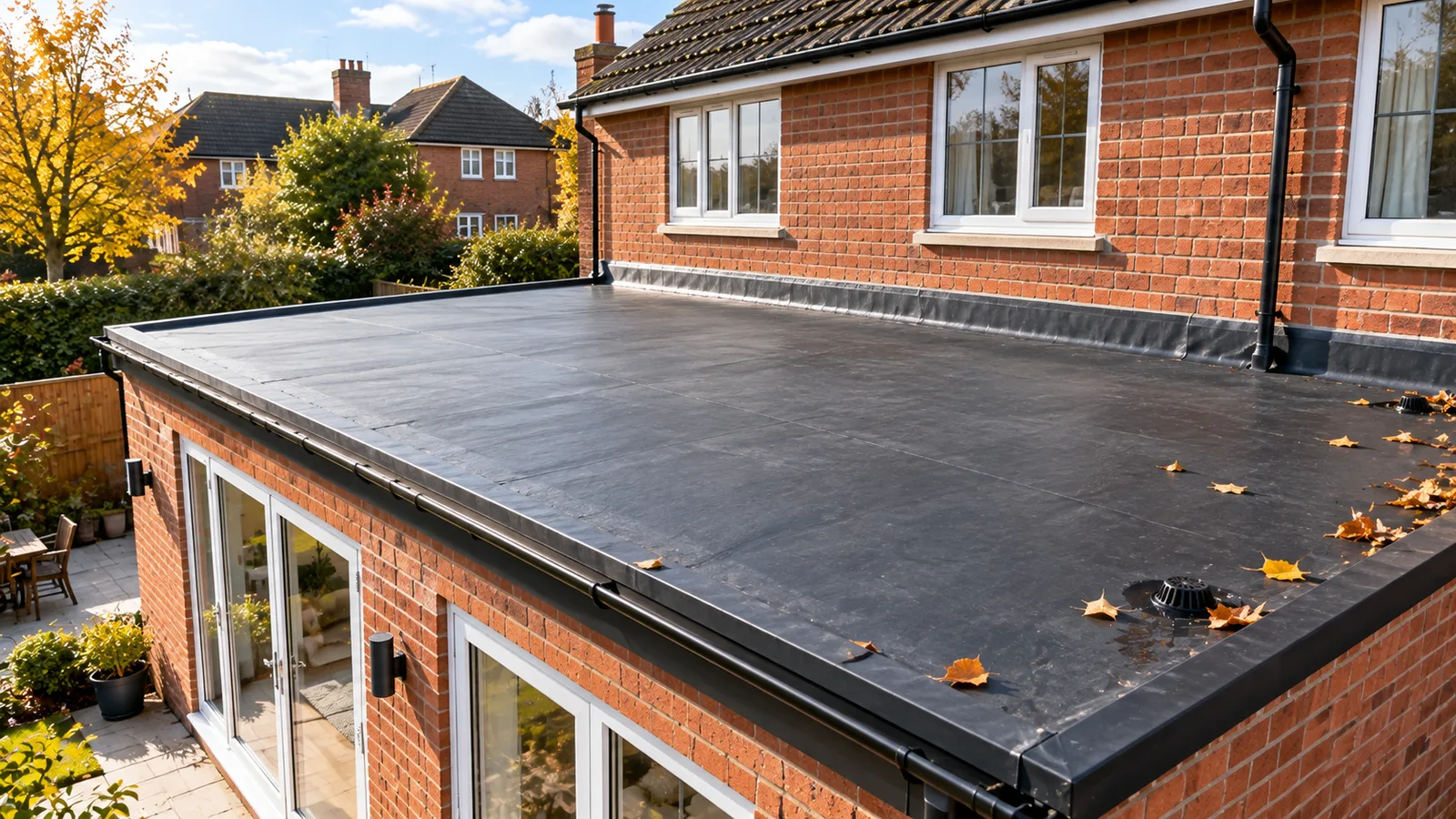
How long does an EPDM roof last? A well-installed EPDM rubber roof can potentially provide 40 to 50 years or more of service, provided the roofing system is suitable for the property and remains in good condition.
- Typical lifespan: EPDM roofing can often last 40–50 years or longer under suitable conditions, although individual results vary.
- Installation quality matters: Poorly formed seams, edges or junctions can cause problems well before the membrane reaches its expected service life.
- Drainage is essential: Persistent standing water can indicate drainage problems that deserve investigation.
- UK weather is an important consideration: EPDM is designed to tolerate outdoor exposure, including rain, temperature changes and ultraviolet radiation.
- Maintenance supports longevity: Regular visual checks and timely repairs can help prevent localised defects from developing into larger problems.
- Age alone does not determine replacement: An older EPDM roof may remain serviceable, while a newer roof with installation defects may require attention.
- Guarantees and lifespan are different: A 20-year workmanship or system guarantee does not automatically mean a roof will need replacing after 20 years.
The main takeaway is that EPDM can be a long-lasting flat roofing option, but achieving its potential lifespan requires more than choosing a durable rubber membrane.
Introduction
So, how long does an EPDM roof last in the UK? A properly designed and installed EPDM rubber roof can often last 40 to 50 years or more, although its actual lifespan depends on installation quality, drainage, environmental exposure and ongoing maintenance. This is a potential service-life estimate, not a guaranteed lifespan for every roof.
EPDM, which stands for ethylene propylene diene monomer, is a synthetic rubber roofing membrane commonly used on flat and low-slope roofs. Its flexibility, weather resistance and relatively straightforward maintenance make it a practical option for garages, extensions and other suitable residential roofing projects.
For homeowners in Worcester and the surrounding West Midlands, understanding EPDM roof longevity is especially useful when planning a new installation or assessing an ageing flat roof.
At Aztech Roofing, we assess flat roofing systems with attention to drainage, roof deck condition and weatherproof detailing. Understanding what influences EPDM performance can help you make informed decisions about installation, maintenance and eventual replacement.
What Is EPDM Roofing and Why Is It Used on Flat Roofs?
EPDM is a synthetic rubber membrane developed for applications requiring flexibility and resistance to outdoor weather conditions.
Unlike pitched roofing systems that use overlapping tiles or slates, EPDM provides a continuous waterproofing layer across suitable flat or low-slope roof areas.
It is commonly installed on:
- Garage roofs
- Single-storey extensions
- Garden buildings
- Residential flat roofs
- Suitable low-slope roofing structures
- Certain commercial roofing applications
The membrane is typically bonded or mechanically secured as part of a specified roofing system, depending on the roof design and installation requirements.
Its performance depends on more than the visible rubber surface. The roof deck, insulation arrangement, drainage outlets, perimeter trims and junctions must all work together to maintain weather resistance.
Our Flat & EPDM Roofs service covers suitable flat roof installations, repairs and renewals, including garages and extensions.
For suitable EPDM projects, our installations carry a 20-year guarantee. This should be distinguished from the membrane's potential overall service life, which may extend beyond the guarantee period depending on the system and conditions.
How Long Does an EPDM Roof Last Under Normal UK Conditions?
When considering how long an EPDM roof lasts, it helps to distinguish between the potential durability of the membrane and the actual service life of the complete roofing system.
A high-quality EPDM membrane can remain functional for several decades. A commonly cited expectation for properly installed and maintained systems is approximately 40 to 50 years, with some roofs potentially lasting longer.
However, that estimate should not be interpreted as a fixed replacement schedule.
Why EPDM Can Last for Decades
EPDM has several material properties that support long-term roofing performance.
Flexibility: The membrane can accommodate a degree of movement associated with normal temperature changes and building conditions.
Weather resistance: EPDM is designed to withstand prolonged exposure to rain, sunlight and outdoor temperatures.
Ultraviolet resistance: Suitable EPDM roofing membranes are formulated to resist deterioration caused by sunlight exposure.
Continuous waterproofing: Correctly installed membrane systems can reduce the number of vulnerable joints across a roof surface.
Repairability: Some localised defects can be repaired using compatible materials and appropriate installation techniques.
These advantages help explain why EPDM is frequently considered for long-term flat roofing applications.
However, the membrane's durability cannot compensate for defective drainage, unsuitable roof construction or poor installation details.
What Factors Affect How Long an EPDM Roof Lasts?
Two EPDM roofs installed at the same time may have different service lives.
One may remain in good condition for decades, while another develops problems much earlier because of its design, installation or exposure.
Understanding the main factors can help homeowners recognise what contributes to reliable performance.
1. Installation Quality
Correct installation is one of the most important influences on EPDM roof longevity.
The membrane must be installed over a suitable substrate using the appropriate adhesives, fixings and detailing methods for the selected system.
Particular attention is needed around:
- Membrane seams and overlaps
- Roof edges and perimeter trims
- Wall abutments
- Drainage outlets
- Roof penetrations
- Changes in roof level
- Corners and other complex junctions
Poorly bonded areas, unsuitable materials or incorrectly formed details may create weaknesses that allow moisture to enter.
Even when the main membrane remains in good condition, defective edge or junction details can cause leaks.
2. Roof Drainage and Standing Water
Flat roofs are not intended to be completely level in every situation. They generally require suitable falls and drainage arrangements to direct rainwater towards outlets or gutters.
If water repeatedly collects in the same areas, it may indicate inadequate falls, blocked outlets or changes in the roof structure.
EPDM is designed to resist water exposure, and temporary standing water does not automatically mean the membrane has failed.
However, persistent ponding deserves investigation because it can highlight drainage problems, place additional loads on the roof and increase the consequences of defects around seams or outlets.
Keeping drainage components functioning correctly is therefore an important part of long-term roof care.
3. Condition of the Roof Deck
The roof deck provides the supporting surface beneath the waterproofing system.
Depending on the construction, it may include timber-based boards or other suitable materials.
If the deck becomes damaged, damp or structurally unsound, the performance of the entire roofing system may be affected.
Installing a new membrane over an unsuitable deck can create problems even when the EPDM material itself is durable.
A professional assessment should therefore consider the condition of the supporting structure before recommending installation or replacement.
4. Exposure to UK Weather
EPDM is suitable for many UK roofing applications because it can tolerate a range of outdoor conditions.
However, weather exposure still influences the performance of the complete roof.
Strong winds can place pressure on perimeter details, while heavy rainfall tests drainage systems and waterproof junctions.
Temperature changes also cause normal expansion and contraction within roofing materials.
A correctly specified system should account for these conditions, but damaged trims, poorly secured edges or defective junctions may become vulnerable during severe weather.
5. Maintenance and Physical Damage
EPDM membranes are relatively low-maintenance, but they are not maintenance-free.
Falling branches, sharp objects, inappropriate foot traffic and work carried out by other trades can damage the waterproofing surface.
Regular visual checks can help identify these issues before moisture reaches the roof deck.
For practical advice on looking after a flat roof, our Flat Roof Maintenance guide explains the areas homeowners should monitor and when professional attention may be needed.
What Are the Main Benefits of EPDM Roofing?
EPDM offers several advantages that make it worth considering for suitable flat roofing projects.
However, the best roofing system always depends on the property, roof design and intended use.
Long-Term Durability
One of EPDM's main attractions is its potential to remain serviceable for several decades.
When correctly installed and maintained, the membrane can provide long-term weather protection without requiring frequent replacement.
This can make EPDM an appealing option for homeowners planning improvements with long-term value in mind.
Flexibility During Temperature Changes
Roofing materials experience temperature-related movement throughout the year.
EPDM's flexibility allows it to accommodate some of this movement without behaving like a rigid covering.
This characteristic is useful on roofs exposed to seasonal temperature variations.
Resistance to Outdoor Exposure
EPDM membranes are designed for prolonged outdoor use.
Their resistance to ultraviolet radiation, moisture and temperature changes supports their suitability for many UK flat roofing applications.
However, installation details and drainage arrangements remain essential to the performance of the complete roof.
Suitable for Different Roof Types
EPDM can be considered for garages, extensions and other low-slope roof structures where the design supports its use.
The membrane can be adapted to different roof layouts, although complex penetrations and junctions require careful detailing.
Our guide to the Benefits of EPDM Flat Roofing explores its suitability and the practical considerations involved in choosing a rubber roofing system.
How Can You Tell If an EPDM Roof Is Nearing the End of Its Life?
An EPDM roof does not necessarily need replacing simply because it has reached a particular age.
Its condition, repair history and overall performance provide more useful information.
Some older roofs remain serviceable, while others develop defects much earlier.
Persistent or Recurring Leaks
A leak does not automatically mean the entire EPDM membrane has failed.
Water may enter through a localised puncture, defective seam, damaged outlet or poorly formed junction.
However, repeated leakage across several areas may indicate more extensive deterioration.
Visible Splits or Punctures
Physical damage can create openings in the membrane.
Depending on the location and extent of the defect, compatible repair methods may be suitable.
Damage should be assessed promptly to reduce the risk of water reaching the underlying roof structure.
Loose Edges or Damaged Trims
Perimeter details help secure and protect the membrane around roof edges.
If trims become loose or the membrane lifts at an edge, wind and rain may exploit the exposed area.
These defects should be investigated rather than ignored.
Persistent Standing Water
Water remaining for an extended period after rainfall may indicate drainage or structural issues.
Although EPDM can tolerate water exposure, repeated ponding should be assessed alongside the condition of outlets, falls and supporting materials.
Internal Damp Patches
Staining, peeling paint or damp ceilings beneath a flat roof may indicate water ingress.
However, condensation and other building defects can produce similar symptoms.
A proper inspection helps establish whether the roof covering is responsible.
Our guide to Flat Roof Warning Signs explains the changes worth investigating before they develop into more serious problems.
How Often Should an EPDM Roof Be Maintained?
Regular maintenance helps homeowners understand the condition of their roof and identify changes over time.
As a practical starting point, visual checks from a safe location once or twice a year, and after significant storms, can be useful.
The appropriate frequency depends on the roof's exposure, surrounding trees, drainage arrangements, age and previous repair history.
What Should You Check?
Look for:
- Leaves and debris collecting around drainage outlets
- Water remaining in the same areas long after rainfall
- Loose or damaged perimeter trims
- Visible splits, punctures or lifting membrane edges
- Deteriorated flashing around walls or roof penetrations
- New damp marks on ceilings beneath the roof
- Changes in the roof surface following severe weather
Do not walk on a flat roof simply to inspect it or remove debris.
A roof may have concealed weaknesses, slippery surfaces or areas not designed for regular foot traffic.
Our Flat Roof Maintenance Checklist provides a practical reference for identifying potential problems from safe observation points.
Professional maintenance may be necessary where outlets are inaccessible, defects are suspected or safe access equipment is required.
Can an EPDM Roof Be Repaired Instead of Replaced?
Yes, many EPDM roofing problems can be addressed through targeted repairs when the surrounding membrane and supporting structure remain in suitable condition.
For example, a small puncture or isolated defect may be repairable using compatible EPDM repair materials and the appropriate preparation methods.
However, not every problem can be solved with a surface patch.
When Repairs May Be Appropriate
A localised repair may be suitable when:
- Damage is limited to a clearly identified area
- The surrounding membrane remains sound
- The roof deck is in acceptable condition
- The cause of water ingress can be identified
- The repair can be completed using compatible materials
When Replacement May Be More Practical
Wider renewal may be worth considering when:
- Leaks repeatedly develop across different areas
- The membrane has extensive deterioration
- The underlying deck is damaged
- Drainage or roof falls require substantial correction
- Previous repairs have not addressed the underlying problems
- The existing system is unsuitable for the roof's intended use
The decision should be based on an assessment of the complete roofing system, rather than age alone.
A targeted repair can be cost-effective when the rest of the roof remains serviceable, while replacement may offer better long-term value where deterioration is widespread.
Is an EPDM Roof Worth the Investment for UK Homeowners?
For suitable properties, EPDM can be a practical long-term roofing option.
Its potential lifespan, flexibility and relatively straightforward maintenance requirements make it worth considering for garages, extensions and other flat roof structures.
However, value should be assessed using the complete installed system rather than the membrane price alone.
Important considerations include the condition of the roof deck, insulation requirements, drainage improvements, access arrangements and the complexity of roof junctions.
A cheaper installation that overlooks essential detailing may result in greater repair costs later.
Conversely, a properly specified roofing system can help reduce avoidable problems and provide reliable protection over many years.
Homeowners should request a clear explanation of the proposed materials, installation method, guarantee terms and any additional work needed to prepare the roof.
When Should You Arrange a Professional EPDM Roof Inspection?
A professional inspection is worthwhile when you notice a new leak, visible membrane damage, repeated ponding or deterioration around roof edges and outlets.
It may also be useful when purchasing a property with an existing flat roof or planning an extension that involves roofing alterations.
An inspection can help determine whether the problem is limited to one detail or whether wider work may be required.
Our Free Roof Inspections provide homeowners in Worcester and the surrounding West Midlands with an opportunity to understand the visible condition of their roof and discuss appropriate next steps.
The assessment considers relevant roofing materials, drainage and accessible junctions, with the exact scope depending on the roof and safe access.
Understanding the roof's condition before committing to repairs or replacement can help avoid unnecessary expenditure and support better long-term decisions.
Key Takeaways
So, how long does an EPDM roof last in the UK? A properly installed and maintained EPDM roofing system can potentially remain serviceable for 40 to 50 years or longer, although the actual lifespan varies according to the materials, installation, roof design and conditions.
The most important factor is not simply the age of the rubber membrane, but how effectively the entire roofing system continues to perform.
Here are the main points to remember:
- EPDM can provide several decades of service. A potential lifespan of 40–50 years is often used as a general expectation for suitable systems, not a guarantee.
- Installation quality strongly influences longevity. Correct seams, edges, outlets and junctions are essential for weather resistance.
- Drainage should never be overlooked. Persistent standing water may indicate problems requiring investigation.
- Regular maintenance helps protect the roof. Safe visual checks can identify damage before it develops into a larger issue.
- Age alone does not determine replacement. A sound older roof may remain serviceable, while a newer roof with defects may need repairs.
- Localised damage may be repairable. Replacement is not automatically necessary when a puncture or seam defect develops.
- Professional inspections support informed decisions. Assessing the membrane, deck and surrounding details helps establish the most appropriate solution.
Ultimately, EPDM can be a durable and practical roofing material for UK homes, but long-term performance depends on choosing the right system and maintaining it appropriately.
By paying attention to drainage, installation quality and early warning signs, homeowners can give their EPDM roof the best opportunity to reach its potential service life.
FAQs
Can an EPDM roof really last 50 years in the UK?
Yes, a properly designed, installed and maintained EPDM roof can potentially last 50 years or longer under suitable conditions. However, the actual lifespan depends on installation quality, drainage, weather exposure and the condition of the supporting roof structure. A professional inspection can help determine whether an existing EPDM roof remains serviceable.
Does an EPDM roof need regular maintenance?
Yes, although EPDM is generally considered a relatively low-maintenance roofing material, periodic checks remain important. Homeowners should watch for blocked drainage outlets, visible membrane damage, loose edges and signs of internal dampness. Any maintenance requiring roof access should be carried out using appropriate safety precautions and professional assistance where necessary.
Can heavy rain shorten the lifespan of an EPDM roof?
EPDM is designed to withstand rainfall, so ordinary rain exposure should not automatically shorten its lifespan. However, persistent drainage problems, defective seams or damaged junctions can allow moisture to affect the roof structure and reduce the performance of the complete system. Investigating repeated ponding or leaks helps prevent avoidable deterioration.
Is a 20-year EPDM roof guarantee the same as a 20-year lifespan?
No, a 20-year guarantee and the expected lifespan of an EPDM roof are different things. A guarantee provides specified coverage under its terms, while the roof may remain serviceable beyond that period depending on its condition and maintenance. Homeowners should always check what the guarantee covers, including any exclusions or maintenance requirements.
How do I know whether my EPDM roof needs repairing or replacing?
The decision depends on the extent of damage, condition of the membrane, drainage performance and whether the supporting roof deck remains sound. Localised punctures or isolated defects may be repairable, while widespread deterioration or recurring leaks may justify more extensive work. A professional roof inspection can help identify the underlying problem and determine the most suitable option.
Related reading
Explore local roofing help
A guide cannot diagnose a specific roof. Explore our services and local coverage, or arrange a free inspection.
Need advice on your roof?
Start with a free inspection and a clear explanation of the options.