
Roof maintenance
How Long Does a Roof Last in the UK?
There is no single lifespan for a UK roof. How long it lasts depends on the covering, how well it was installed, the weather it faces and how well it is maintained. This guide explains what to expect and what to look for.
By Aztech Roofing ·
Quick guide
- There is no single lifespan for a UK roof. How long it lasts depends on the covering, how well it was installed, the weather it faces and how well it is maintained. This guide explains what to expect and what to look for.
Why there is no single answer
Roof lifespan is often quoted as a neat number of years, but real roofs do not follow a neat number. A well-installed roof that is looked after can outlast a poorly installed one of the same material by a long way. Exposure matters too: a roof facing prevailing wind and rain, or shaded and damp under trees, ages differently from a sheltered one. The honest answer is a range, and the condition of your own roof is a better guide than any average.
How long different roof coverings tend to last
- Natural slate: among the longest lasting coverings, often outliving the fixings and flashings around it
- Clay tiles: long lasting and durable when the tiles and the fixings stay sound
- Concrete tiles: a durable, common covering on many UK homes, with a shorter typical life than slate or clay
- Felt flat roofs: a shorter life than most pitched coverings and more prone to cracking and blistering
- EPDM and other single-ply flat roofs: generally longer lasting than felt when installed well, though seams and details can fail
- Lead: a long lasting metal, used for flashings and other roof details
Manufacturers and installers publish their own expected lives and guarantees, and those are the figures to ask for on any particular product. Treat any rule of thumb as a starting point, not a promise.
What shortens a roof's life
- Poor installation, such as incorrect fixings, laps or flashing details
- Blocked gutters and valleys that let water back up under the covering
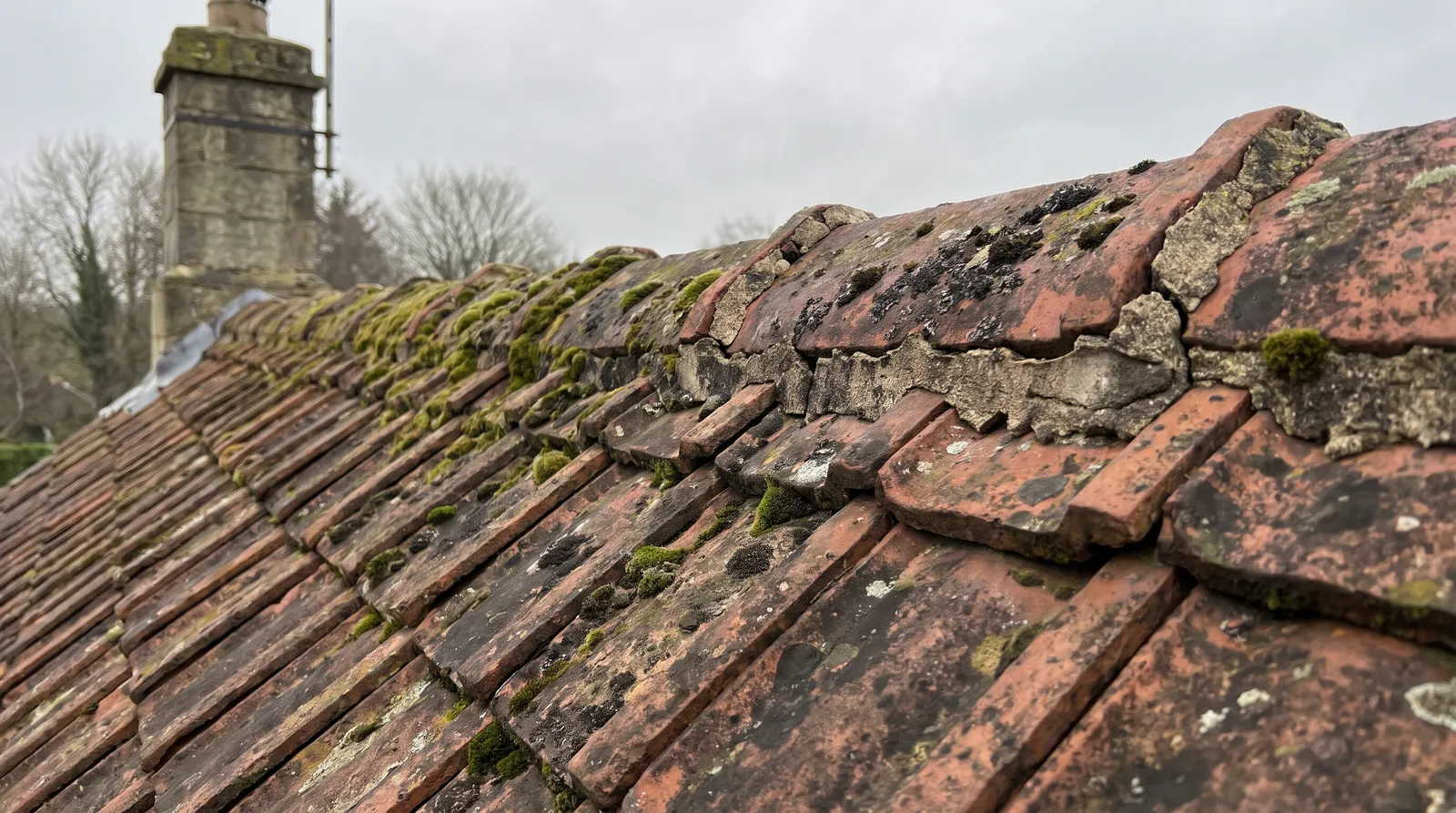
- Heavy moss and debris that hold moisture against the surface
- Frost and repeated wet and dry cycles that crack older tiles and mortar
- Storm damage that is left unrepaired
- Foot traffic from aerials, solar panel work and unqualified access
Water is the common thread. Most roofs fail at the details, such as flashings, valleys, ridges and penetrations, before the main covering wears out.
Signs your roof is reaching the end of its life
Look for patterns rather than single faults. One slipped tile is a repair. Many cracked, crumbling or slipping tiles, ridge mortar breaking away, sagging in the roof line, damp patches on ceilings, daylight visible in the loft and brittle or torn underlay all point to general wear. On a flat roof, look for ponding water, splits, blistering and lifting seams. Check from the ground with binoculars and never climb on the roof yourself. If you can safely see the loft, look for damp timbers, stains and condensation.
How to get more years from your roof
- Check the roof after storms and at least once a year, from the ground
- Keep gutters, downpipes and valleys clear
- Repair slipped or broken tiles, flashings and ridge details promptly
- Have moss cleaned off carefully by a roofer, avoiding aggressive pressure washing that can damage tiles
- Keep the loft ventilated to limit condensation
- Use a competent roofer for any work, including aerials and solar panels
Small, early repairs are usually far cheaper than repairing the damage that water causes once it gets in.
Repair or replace?
If the faults are limited and the rest of the roof is sound, repair is often the proportionate answer. If problems keep returning, or the roof is worn across most of its area, repeated repairs can cost more over time than a planned replacement. An inspection is the reliable way to decide, because a roofer can see the condition of the covering, the underlay and the structure beneath.
Get your roof assessed in Worcester and the West Midlands
Aztech Roofing is fully insured and offers free roof inspections across Worcester and the West Midlands. We tell you honestly what condition your roof is in, how much life it may have left and what the practical options are.
FAQs
How long does a typical UK roof last?
It varies widely by material and condition. Natural slate and clay tiles can last for generations when well maintained, while felt and some single-ply flat roofs have shorter lives. A roofer can give a realistic view after inspecting yours.
How do I know when my roof needs replacing?
Widespread slipped or cracked tiles, sagging, repeated leaks, daylight in the loft and perished underlay all suggest the roof is wearing out. An inspection will show whether repair or replacement makes more sense.
Does maintenance really make a roof last longer?
Yes. Clearing gutters, fixing slipped tiles and checking flashings and ridges early stops small faults letting water in and causing larger damage.
Is the roof covering the only thing that wears out?
No. Underlay, flashings, valleys, ridge mortar, fixings and the timbers beneath can all age at different rates, and any of them can fail before the main covering does.
Explore local roofing help
A guide cannot diagnose a specific roof. Explore our services and local coverage, or arrange a free inspection.
Need advice on your roof?
Start with a free inspection and a clear explanation of the options.