
Roof Replacements
Can You Replace a Roof in Winter in the UK?
Winter isn't exactly the season most homeowners associate with major roofing work. Between freezing mornings, unpredictable rain, and shorter daylight hours, replacing a roof in December or January might sound like asking for trouble.
By Aztech Roofing ·
Quick guide
Can you replace a roof in winter? Yes, but the work must be planned around suitable weather conditions and safe installation practices.
- Winter roof replacement is possible: Cold weather alone doesn't prevent roofing work.
- Rain and ice can cause delays: Roofers need suitable conditions to work safely.
- Materials have installation requirements: Some roofing products cannot be installed below specified temperatures.
- Shorter days may affect scheduling: Reduced daylight can limit working hours.
- Temporary weather protection matters: Exposed roof areas must be managed carefully.
- Costs vary: Access, materials, roof condition, and delays can affect the final quotation.
- Urgent replacements shouldn't always wait: Significant leaks or deterioration may justify winter work.
Bottom line: Winter roof replacement can be practical, but the right decision depends on your roof's condition, the weather forecast, and the installation method.
Introduction
But can you replace a roof in winter, or should you wait until spring?
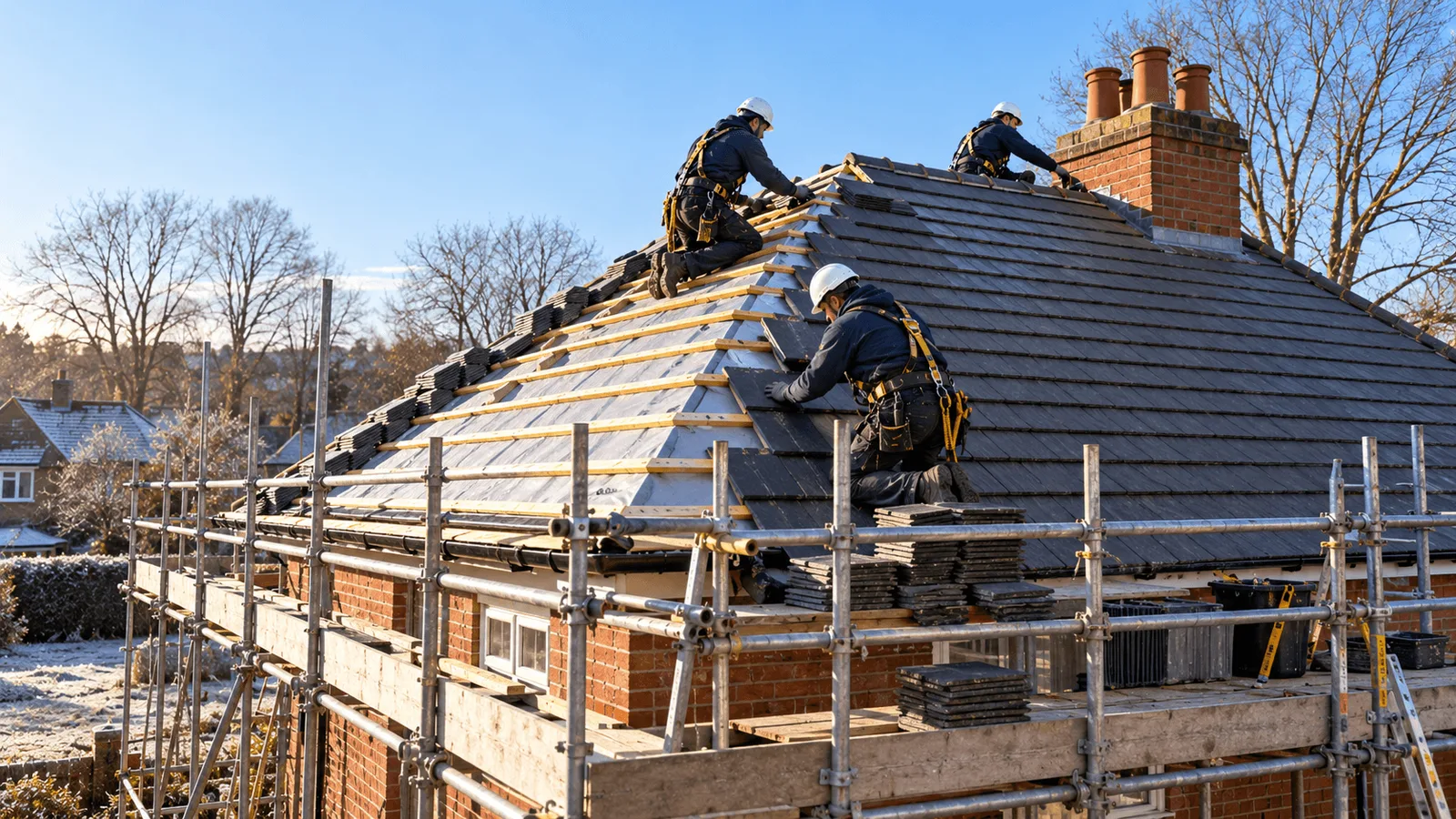
Yes, you can replace a roof in winter in the UK. Professional roofers can carry out roof replacements during colder months, provided weather conditions, materials, access arrangements, and safety requirements allow the work to proceed.
The challenge isn't simply the temperature. It's managing rain, ice, strong winds, reduced daylight, and the need to keep your home protected while the existing roof covering is removed.
For homeowners in Worcester and the surrounding areas, Aztech Roofing provides roofing services to help assess ageing or damaged roofs and determine suitable replacement options.
If your roof is leaking or showing serious signs of deterioration, waiting several months might not be practical.
Let's explore when winter roof replacement makes sense, the challenges involved, and how to prepare for the work.
1. Winter Roof Replacement Is Possible in Suitable Weather
Roofing work doesn't automatically stop when temperatures fall.
Professional roofing contractors work throughout the year, including during winter, when conditions allow.
For example, replacing a tiled roof during a dry, calm winter period may be entirely feasible.
However, roofers must consider several factors before starting:
- Rainfall and the likelihood of prolonged wet weather.
- Frost or ice on roof surfaces.
- Wind speeds and exposure.
- Temperature-sensitive materials.
- Safe access and scaffolding.
- The time required to make exposed sections weatherproof.
The key distinction: A cold, dry day can be suitable for roofing work, while a warmer day with heavy rain or strong winds may not be.
The Met Office provides seasonal weather advice and forecasts that can help homeowners understand winter conditions.
2. Rain and Snow Can Delay Roof Replacement
One of the biggest challenges of replacing a roof in winter is keeping the property dry during installation.
A roof replacement generally involves removing the existing covering and installing new roofing components.
Depending on the project, this may include:
- Removing old tiles or slates.
- Inspecting and replacing damaged battens.
- Installing suitable roofing underlay.
- Renewing flashing and roof junctions.
- Installing the new roof covering.
- Completing ridge, verge, and drainage details.
During this process, sections of the roof may be temporarily exposed.
If heavy rain or snow is expected, contractors may need to postpone certain stages or arrange suitable weather protection.
Why it matters: Water entering during installation can damage insulation, ceilings, and internal finishes.
A professional roofer should explain how the property will be protected throughout the project.
For a closer look at the stages involved, read the Roof Replacement Process.
3. Frost and Ice Create Safety Risks
Roof surfaces can become extremely slippery when covered in frost, ice, or snow.
These conditions increase the risk of falls and make it harder to handle materials safely.
Ice may also affect scaffolding platforms, ladders, and access routes.
Under UK health and safety requirements, work at height must be properly planned and carried out using suitable precautions.
The Health and Safety Executive provides guidance on working safely at height during construction.
What this means for homeowners: If roofers postpone work because conditions are unsafe, that's a sensible safety decision rather than an unnecessary delay.
No roofing deadline is worth risking someone's life.
4. Some Roofing Materials Have Temperature Restrictions
Not all roofing materials behave the same way in cold weather.
Clay tiles, concrete tiles, natural slate, underlays, adhesives, membranes, and sealants have different handling and installation requirements.
For example:
- Clay and concrete tiles: May be installed in suitable winter conditions, provided safe working practices and manufacturer requirements are followed.
- Natural slate: Can be installed during colder weather when conditions are safe and the supporting roof system is suitable.
- Roofing membranes: Certain products require minimum application temperatures.
- Adhesives and sealants: Cold temperatures can affect curing, bonding, or application.
- Mortar-based details: Freezing conditions can interfere with proper curing and increase the risk of defective work.
Can you replace a roof in winter using any roofing material? Not necessarily.
A contractor must check the specifications for the exact materials being installed.
For roofing standards and industry guidance, the National Federation of Roofing Contractors is a useful reference.
5. Shorter Daylight Hours Can Affect the Schedule
Winter days are noticeably shorter in the UK.
That means roofers may have fewer daylight hours available for tasks requiring good visibility.
This can influence:
- Daily working hours.
- Material deliveries.
- The amount of roof covering removed at once.
- Weatherproofing arrangements.
- Overall project duration.
For example, a roofing team may choose to work on smaller sections to ensure each area is properly protected before the end of the day.
This approach can reduce the risk of leaving vulnerable sections exposed overnight.
What to expect: A winter roof replacement may take longer than an equivalent project completed during a period of consistently favourable weather.
However, the actual duration depends on the property's size, roof design, materials, and site conditions.
When Should You Replace Your Roof During Winter?
Not every ageing roof needs immediate replacement.
However, some situations make postponing the work more difficult.
1. Your Roof Has Widespread Leaks
A small, isolated leak may be repairable.
But if water is entering through multiple areas, the roofing system may have more extensive defects.
Repeated moisture exposure can damage insulation, internal finishes, and timber components.
If repairs are unlikely to provide a reliable solution, replacement may be worth considering sooner rather than later.
2. Large Sections of Roofing Are Damaged
Severe storms can dislodge tiles, damage flashing, or expose substantial areas of the roof.
Sometimes, localised repairs are sufficient.
However, extensive damage may require more significant work, particularly when the supporting components have also deteriorated.
3. Your Roof Is Near the End of Its Service Life
An older roof doesn't automatically need replacing.
The important question is whether its components remain capable of providing reliable weather protection.
Warning signs may include:
- Widespread cracked or broken tiles.
- Repeatedly slipping roof coverings.
- Extensive deterioration of roof battens.
- Recurring leaks.
- Significant problems with flashing or ridge components.
- Increasing repair requirements.
The guide to Signs You Need a New Roof explains additional indicators that replacement may be appropriate.
4. Temporary Repairs Are No Longer Effective
Temporary repairs can sometimes help control water entry until permanent work is possible.
However, repeated patching may become impractical if the roof has extensive deterioration.
In such cases, winter replacement may provide a more dependable solution than continuing with short-term measures.
Professional Roof Replacements can address the wider roofing system rather than repeatedly treating individual defects.
Is It Better to Replace a Roof in Winter or Summer?
Both seasons have advantages and challenges.
Which season is best?
For a planned replacement on a roof that's still performing adequately, spring through early autumn may offer more predictable working conditions.
However, if your roof is failing during winter, delaying essential work could allow further water damage.
The best timing depends on the urgency of the problem and the contractor's ability to complete the work safely.
How Much Does It Cost to Replace a Roof in Winter in the UK?
There's no fixed winter roof replacement price.
Costs depend primarily on the property, roof design, materials, and work required.
Factors That Affect the Price
Roof size and complexity: Larger roofs and those with multiple valleys, dormers, or chimneys require more labour and materials.
Roofing materials: Natural slate, clay tiles, concrete tiles, and other systems have different supply and installation costs.
Access requirements: Scaffolding, difficult access, and roof height can influence the quotation.
Underlying damage: Rotten battens, defective timbers, or damaged roof decking may increase the scope of work.
Weather-related delays: Poor conditions can affect scheduling and potentially increase certain project costs, depending on the contract.
Waste removal: Removing and disposing of old roofing materials forms part of the overall project cost.
It's worth remembering that winter doesn't automatically mean cheaper or more expensive roofing work.
A clear, itemised quotation is more useful than assuming seasonal discounts or surcharges.
For further information, explore Roof Replacement Costs.
How to Prepare for a Winter Roof Replacement
If you're planning to replace your roof during colder months, preparation can help the project run more smoothly.
1. Arrange a Professional Roof Inspection
Before committing to a full replacement, confirm whether the roof genuinely needs renewing.
A professional inspection can help distinguish between isolated repairable defects and widespread deterioration.
2. Discuss Weather Contingency Plans
Ask your roofer how unexpected rain, snow, or strong winds will affect the schedule.
Find out how exposed roof areas will be protected if work needs to pause.
3. Confirm Material Suitability
Make sure the proposed roofing system is suitable for the expected installation conditions.
Temperature-sensitive materials should be installed according to the manufacturer's instructions.
4. Understand the Project Timeline
Ask how long the work is expected to take and what might cause delays.
Winter projects may need additional flexibility.
5. Prepare Your Property
Before work begins:
- Move vehicles away from the immediate work area.
- Protect valuable items stored in the loft where appropriate.
- Keep access routes clear.
- Discuss scaffolding arrangements.
- Make sure children and pets remain away from working areas.
6. Review the Quotation Carefully
Confirm what the price includes, particularly scaffolding, waste removal, replacement materials, and any potential additional work.
Ask how unforeseen defects will be handled and approved.
Can You Stay in Your Home During a Winter Roof Replacement?
In many cases, homeowners can remain in their properties while a roof replacement takes place.
However, this depends on the scale of the project, the building's condition, and the work being undertaken.
You may experience:
- Noise from removing and installing roofing materials.
- Temporary disruption around entrances or outdoor spaces.
- Scaffolding around the property.
- Increased activity from deliveries and waste removal.
- Restrictions on accessing certain areas.
If extensive structural repairs are required or the property cannot be kept safely weatherproofed, temporary alternative arrangements may be necessary.
Your contractor should explain any expected disruption before work begins.
Key Takeaways
So, can you replace a roof in winter in the UK?
Yes. Roof replacements can take place during winter, provided the weather, materials, and working conditions allow safe and effective installation.
Here's what homeowners should remember:
- Cold weather alone doesn't prevent roof replacement.
- Heavy rain, ice, snow, and strong winds can delay work because safety and weather protection come first.
- Some roofing materials have minimum installation temperatures that must be respected.
- Shorter daylight hours can affect project scheduling.
- Urgent roof replacements shouldn't automatically wait until spring when significant deterioration or water damage is ongoing.
- A professional inspection helps determine whether replacement is necessary or whether repairs could provide a suitable alternative.
If your roof is leaking, deteriorating, or showing signs of serious damage during winter in Worcester or the surrounding areas, it's worth understanding your options before making a decision.
Explore Free Roof Inspections to assess your roof's condition and discuss whether repairs or replacement would be more appropriate.
Winter might complicate the schedule, but it doesn't have to put a necessary roof replacement on ice.
FAQs
Can you replace a roof in winter when temperatures are below freezing?
Roof replacement may be possible during winter, but freezing conditions can make certain tasks unsafe or unsuitable. Ice on roofing surfaces and temperature restrictions on materials can prevent work from proceeding as planned. A professional roofer should assess the conditions and follow the relevant product installation requirements.
Does replacing a roof in winter take longer?
Winter roof replacement can take longer because of shorter daylight hours and interruptions caused by rain, snow, frost, or strong winds. The actual project duration also depends on roof size, complexity, and the materials being installed. A contractor should provide an estimated schedule while explaining how weather-related delays will be managed.
Is it more expensive to replace a roof in winter in the UK?
Winter roof replacement isn't automatically more expensive than work carried out in other seasons. However, weather delays, access requirements, and additional protective measures may affect some project costs. An itemised quotation is the best way to understand the likely price for your particular roof.
Will my house be exposed to rain during a winter roof replacement?
Roof replacement involves temporarily removing sections of the existing covering, so weather protection must be carefully planned. Professional contractors may work in manageable sections and use suitable protective measures when necessary. Ask your roofer how they intend to keep the property weatherproof throughout the project.
Should I wait until spring to replace my roof?
Waiting until spring may be reasonable if your roof is still sound and the replacement is mainly planned rather than urgent. However, widespread leaks, serious storm damage, or significant deterioration may make postponement unwise. A professional inspection can help determine whether the roof needs immediate attention or whether the work can safely be scheduled for later.
Related reading
Explore local roofing help
A guide cannot diagnose a specific roof. Explore our services and local coverage, or arrange a free inspection.
Need advice on your roof?
Start with a free inspection and a clear explanation of the options.